
Living Radically During Lent

Several years ago I read the book by Father Daniel Homan, OSB and Lonni Collins Pratt titled Radical Hospitality: Benedict’s Way of Love. An easy book to read, it offers real stories of regular people following the example of Jesus by welcoming “others” among us. In its simplicity, the book entices the reader with real-life examples of hospitality and it tacitly challenges the audience to be more Christ-like in daily living.
In the chapter “listening: the deep truth of hospitality” the authors write, “There is nothing more human than our desire to be heard. It is our cry for permission to live.” Elaborating that folks who complain, tell the same stories over and over, or speak only of their ailments and strife are difficult to be around, the authors remind us that all too often these same individuals are simply “looking for someone to affirm them and give them permission to be.” The authors then boldly conclude that the simple act of listening “is the most hospitable thing we can do.”
After reading this book for the first time recently, my friend Kathryn shared that she has been avoiding communication with her neighbor because the neighbor had nothing but complaints, despair and frustration in every conversation. Kathryn made a decision to open herself up to listen to this woman. She was intentional to look her in the eye, acknowledge within her heart that this grumpy neighbor was also a sacred child of God. Kathryn was determined to try to listen, even when it would be difficult with all the hurt and bitterness being spewed.
What began an intentional decision to really listen to someone became a life altering experience not only for the neighbor, but for my friend also. When intentionally listening, Kathryn learned that the angry, bitter woman before her was once a celebrated ballerina in Eastern Europe. After a near-fatal car wreck, the once beautiful, graceful ballerina was reduced to poor posture and an inability to care for herself easily. Now a widow, she lives in near seclusion with only her pain and her lost dreams.
Prompted by her commitment to live a life in tune with Christ’s own radical hospitality, Kathryn cautiously asked if the neighbor would accompany her to a local ballet performance. The neighbor politely accepted and the plans were arranged, but as the date drew closer, Kathryn privately expressed fear at being worn out by the woman’s grumbling all night. What happened next was nothing but pure transformation –the kind that we read about in the Bible…and it was happening right here, in our town, in our circle.
Kathryn wrote me in an email the following week: I’m pleased to tell you that she didn’t complain once….When the program ended, she asked, “Is it over already? I could sit here another hour!”
My friend and her neighbor are planning another excursion together –at the neighbor’s treat. What took place between them some may say was all about spending money and treating the neighbor to a fancy event, but what my friend really did was listen. She intentionally listened and acknowledged, even through her own discomfort, that her neighbor was a human being, a fellow child of God, and one with broken dreams and a hurting heart. The transformation was radical.
For Lent this year, I am not giving up any food at all; instead, I want to take up living more radically…like Jesus. For those who know me, they know that I am comfortable in talking when others are not. But I wonder if I can become comfortable in listening when others are not as well. I’ve heard with my own ears now, not just read it from a book: intentional, radical hospitality can be transforming. It is the kind of transformation that we read about in the Gospels. Transformation like that in the Gospels sometimes gets us using the word “miracle” and that is something profound…and yet something as simple as listening to another human being. It makes me wonder…if the Kingdom of God is really like the tiniest mustard seed that grows into the greatest shrub, what great things might happen if I actually try to listen to someone like Jesus did? Perhaps I might even see a beautiful glimpse of God’s Kingdom on earth – a Holy transformation –a miracle in action – just like my friend Kathryn did.
All quotes used are found on p.216 in the 2002 edition of the book Radical Hospitality: Benedict’s Way of Love. The revised, expanded edition, published in 2011, has the same chapter, but the page number is different.
Photo Credit
Spotting God in the Big Blind

I was ordained to the gospel ministry in 1982. At the time, I filled the pulpit of Parkwood Hills Baptist Church in Decatur, Georgia. In the years that followed, I enjoyed three decades of uninterrupted Sundays in the pulpits of Baptist churches. On Sunday, February 12, I preached my last sermon as a parish pastor…at least for a while…
This past Sunday, February 19, was my first Sunday out of the pulpit in three decades. What to do? I flew to Las Vegas, Nevada. At 8:00 o’clock on Sunday morning (when I’m usually knotting my tie and printing my sermon) I walked into the Poker Room of the Monte Carlo Hotel and Casino and signed up for the casino’s No Limit Texas Hold’em Poker Tournament. An hour later, I was seated at the table and the first cards were dealt…
For the next three hours, I traded pew sitters for poker players. Instead of leading the blind, I was throwing blinds into the pot. As the hands were dealt, I won a few and lost a few – not much different than church work. At times I felt I was too easy to read. That was true in the pastorate, however. I never held my cards very close during my pastoral ministry. People typically knew my hand when it came to issues like homosexuality, interfaith issues, church/state relations, universalism and the like. I folded several times in the early years of ministry (not certain my hand would hold up against what others held) but in later years, I played the cards I was dealt and was confident of their value….
The tournament ended a little after noon…and the rumor is true. I won! Yep. I didn’t place second or third or thirtieth. I won! And just in case you were wondering…I entered the evening tournament that began at 11:00 pm. I was interested in determining if my earlier success had been a fluke or a result of beginner’s luck. I placed second in the evening tournament…
Maybe I heard God wrong thirty years ago…maybe I missed my calling?!? Or maybe…God was simply allowing me to relax and enjoy what might otherwise have been a lonesome and awkward day. I like it when God goes all in…
Mardis Gras

It’s been almost 26 years since I left Louisiana with my parents, and I still really miss the Mardi Gras season. Mardi Gras is one long, enormous party – in the best, and sometimes the worst, sense of the word. Every single day for a few weeks leading up to Fat Tuesday there is something exciting going on all over the New Orleans region.
It was only in recent years that I began to reflect a lot about the Christian meaning behind the season of Mardi Gras, and I’ve discovered that as a Baptist, I may have missed out on what Mardi Gras can teach me about faith and celebration.
We Baptists need to lighten up, let our hair down, and live it up from time to time. Even King David got so excited he danced through the the streets in a big parade, eventually stripping down to his Fruit-of-the-Looms. Sounds like Mardi Gras to me.
Remember the story of Jesus turning the water into wine? Yes, my Baptist brethren, it was real wine – as in the Tom Paxton song, “bottle of wine, fruit of the vine, when you gonna let me get sober?” I’m certainly no biblical scholar, it seems to me that Jesus was giving his blessing to a party (not a dignified and quiet reception, but a par-TAY).
All Baptists know that Jesus was supposed to turn out the lights and declare the party over. Jesus should have stopped the party and preached on the evils of alcohol. Some Baptists know that Jesus was supposed to throw a good-old-fashioned-guilt-trip on everyone about how they were wasting all that money on fun when it could be spent on helping the poor and neglected. Jesus should have stopped this selfish party and got them busy doing some justice.
That’s what my Baptist Jesus would have done. But as I remember Mardi Gras in New Orleans, I’m reminded that Jesus wasn’t and isn’t (and nor will He ever be) a Baptist.
The story of Jesus turning water into wine – in order to keep the party going! – is about Jesus enjoying a celebration. It’s about Jesus contributing to the party. To the dancing. It’s about Jesus doing his part to let the good times roll.
There are plenty of reasons why my hometown shouldn’t be partying. Murders and high crime rates still make the national news. Racial tensions are still high. Poverty is still a big problem. And over six years later, Hurricane Katrina still haunts large portions of the region.
And yet, once a year, in the midst of all the messiness of everyday life, everyone comes together to celebrate. And maybe Jesus – the not-so-Baptist Christ who turned to water into wine to keep the party going longer – can be found along Canal Street yelling out laissez les bon temps rouler!
It’s been over twenty years since I’ve returned home for Mardi Gras. I’ve gotta go back soon. And, when I do finally get back, and I see an overly joyous man dancing in his underwear at front of the parade, in honor of King David I’m going to toss him some beads …
One More Mile
Editor Note: This is a sermon based on the text Isaiah 40:21-31
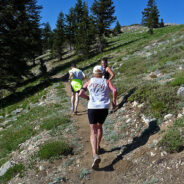
This may surprise you, but about 3 years ago, I ran a marathon: 26.2 miles. I have this medal to prove it. It is a giant fish, because this was the Bass Pro Marathon in Springfield, MO. I know some of you are really impressed right now, thinking that this medal means I won the race – or that I maybe came in third since it is bronze. Well, I’m sorry to both surprise and disappoint you on the same morning, but I didn’t win. In fact, I was dead last. Or, perhaps I should say that I was dead last of those who finished the race, because there were a lot of people who started the race behind me and never caught up, and there were several people I passed – but they all quit somewhere along the way.
The Springfield Bass Pro Marathon is a very small race. That was only the second year of the race and about 300 people were signed up. To offer a little comparison, nearly 2,000 people completed the Go! St. Louis marathon this year. Looking back on my experience, I should have chosen a larger race with people cheering on the sides of the streets. Because being in a race of only 300 people means that for long stretches of time, you run alone. For the first 13 miles or so, I was around other people. There were other runners to talk to, but somehow along the way, they kept disappearing. Some quit, others were running the half marathon and were finished, and others seemed to be machines who could speed up at the 15 mile mark.
Did I mention it was nearly 80 degrees. . . in November? While that doesn’t seem surprising this year, we were having normal fall weather that year – so all my of long training runs were done outside in 40-50 degree weather. While 80 degrees is pleasant to stand around in, once you’ve run the distance from St. Louis to Belleville (roughly 16 miles), it feels like an oven. And when you aren’t used to running distance in heat? You get worn out QUICKLY.
And there is nothing particularly exciting about running alone. My running partner was running the race with me . . . only, we weren’t exactly running together. She was feeling really good that day and had gotten ahead. And so there I was . . . me and my thoughts . . . for mile after mile after mile. At one point, I wondered if I’d made a wrong turn and was lost. But I kept going and eventually found another person.
The last 5 miles, I couldn’t run any more. I was walking – and probably not very quickly. I began collecting race volunteers who knew I was the last runner. I can assure you that the lines “they shall run and not be weary, they shall walk and not faint” were going through my mind repeatedly. Only I *was* weary. And when my GPS watch started beeping that I had completed 26.2 miles when the race volunteers were telling me I still had a mile to go, I was ready to hurt someone… that is, if I’d had the energy.
“One more mile” is a popular race slogan. In fact, starting at the beginning of many races, spectators will hold signs that say “one more mile.” People say it long before it is true to try and get you to smile, and remind you that you can, in fact, finish this thing.
Runners, however, see things differently. By the time we are in intense pain, the thought of one more mile is torture. Every single thought revolves around quitting. Until you can see the finish line, it might as well not exist.
I find it particularly fitting that running is one of the metaphors used in our Scripture passage today. At this point in the book of Isaiah, the Israelite people are in exile – exile is a big fancy word for not belonging. The Israelites have been taken from their homes, brought to a foreign land. The people around them speak a different language, eat funny foods and do not treat the Israelites particularly well. The prophets have been warning that this will happen – they’ve been saying that the people will be punished for breaking covenant will God.
And this text is beautiful – chapter 40 of Isaiah begins with God telling Isaiah to comfort the people. “Comfort, O Comfort my people, says your God. Speak tenderly to Jerusalem, and cry to her that she has served her term, that her penalty is paid, that she has received from the Lord double for all her sins.”
I recently heard a pastor describe comfort as the moment after you fall and skin your knee, when your mother scoops you up, kisses the boo boo and puts a bandaid on it. Moms know how to make everything better.
But the people are tired. They are homesick for a home that is gone – it’s been destroyed. They are having trouble remembering who they are. Isaiah is bringing comfort, but instead of being a kiss and a bandaid, it is the promise that the kiss and bandaid are coming. He’s telling the people that they have one more mile.
Have you ever felt worn out? Do you feel worn out now? Perhaps you’re experiencing stressful times at work or at school. Maybe a time of grief that feels like it will consume you. Maybe you don’t even know why you feel worn out, but life just seems more difficult than it should.
In times like those, the encouragement of “one more mile” doesn’t seem like much. In fact, sometimes it seems downright brutal. We really want the easy answer, don’t we? We’d like to be picked up and have the puzzle pieces of our lives put back into order – and perhaps glued down like the puzzles that hang in the hallways. But our pains, griefs, distresses, angers, and fears linger, don’t they? Any answer that is easy does not ease the hurt – and often, they make things worse. A pastor friend told me yesterday that he has a list of things not to say to people in the hospital. It includes the sort of easy answers that deny the difficulty of real life.
Making everything “right” for a people in exile takes more than a bandaid – it is a process. Sometimes for all of us there is more pain before we can see or feel the comfort. But Isaiah reminds us that the God who makes these promises is the God who knows the stars by name and calls them forth. That God, Isaiah says, is able to renew us, to give us the strength to keep moving forward, even when we think we are through. The God who is never weary sees when we are. That last mile won’t be easy. Every step may feel like it will be your last. Running columnist John Bingham describes the last 6 miles of a marathon like this:
“Mile 20 is ‘the Wall.’ For many runners and walkers, ths is where the marathon starts. As a friend of mine used to say, the marathon is 20 miles of hope followed by 6 miles of truth. I know that’s where everyone says the Wall is, but this wasn’t like hitting a wall. This was like someone handing me a refrigerator and asking me to carry it to the finish line. It wasn’t that anything hurt. It was as if I suddenly weighed 800 pounds.”
For those of you who like sports metaphors, I’m afraid running is all I’ve got. But my guess is that we’ll all had moments where we felt like we were carrying around a refrigerator-sized weight. Perhaps you have one now. I wish I could find a convenient bandaid, but I have none. What I do know is that you aren’t carrying that refrigerator alone, and that God is whispering the strength that all of us need to go just a little farther. Step by step, moment by moment we are being renewed.
Will you pray with me?
God of comfort, many of us come today with more hurt than we can carry. And those of us who don’t know and care about others who are. We ask for the strength to continue. We ask for the renewal you offer. Give us what we need to continue on our journey. In Jesus’ name we pray, Amen.
photo credit
Read more from Jennifer at her blog.
If My Dad Were To Have a Retirement Party, This Is What I Would Say

Instead of talking about Dad, I would like to tell you about my life. For as long as I can remember, I have been known as the daughter of Ron and Susan Little. It’s time that my side of the story is told! Dad doesn’t really want the focus to be on him anyway.
It started early. At 6 weeks old, I accompanied my parents and their youth group to Panama City Beach, the first of many trips I would take with them to that beach and that very hotel. Too young and too innocent to recognize the foreshadowing of things to come, I imagine I enjoyed the warmth of the sun and the sounds of the waves, the water’s movement and rushing breath a not too distant memory.
At 10 weeks old, I moved from my comfortable home in Birmingham, Alabama, to a one bedroom, family housing apartment in Louisville, Kentucky, where Dad attended seminary. In total, I have been on a seminary campus for four different degrees—it doesn’t really matter that they weren’t all mine. My Greek proficiency should probably be better.
I enjoyed making Dad’s textbooks more colorful and I believe he secretly enjoyed my Crayola crayon interpretations of theological images and pastoral care scenarios. Somehow, Mom, Dad, and I survived the experience of close quarters, no money, and the Louisville winters. Even though a meal at Shoney’s was the splurge of those days, it was nice to share them with families in the same position. I’m just glad that the seminary daycare workers were there to take me in when Dad dropped me off—it truly took a village to take care of me!
After his graduation, we moved to Athens, Georgia, where Dad took a position as Campus Minister at the Baptist Student Union. Though Dad was the one who received a paycheck, I think that Mom and I were nearly as involved. BSU was a family ministry. We went to square dances and coffee house nights and Dinner Theaters. If our family was away for the weekend, most likely we were at a BSU function or on a BSU retreat. Rock Eagle, Toccoa Conference Center, and Ridgecrest were our weekend homes. Our Spring Break and summer vacations often included college students, on mission trips to various locations. The three-week family trip out west, from Georgia to California and back included a stop in Las Vegas, where the Southern Baptist Convention just happened to be held that year.
On one mission trip to Key West, Mom and I slept together on a twin air mattress and took showers in a high school girls’ locker room. However, Mom mysteriously avoided some of the most character-building trips with Dad. She missed out on the winter retreat where the facility’s heating system was broken. Dad and I were so cold at night that we slept underneath the covers, knowing that if we were to let even the tips of our noses out that they would quickly be covered with frost. In the evening, during the worship services with the students, we would all huddle together, thankful for the fireplace and the three space heaters.
Later on, when I was in college, Mom didn’t make the trip to South Korea, either. The trip did not start off well for me. On the plane ride over, the 13-hour plane ride, I sat, wedged between Dad and a large Korean man. The airplane food gave me a sense of what was to come—for the many days that we were there, I survived on rice and the pre-packaged Rice Krispie snacks that I thankfully had packed in my suitcase. One heavenly meal came with lettuce, the best lettuce I have ever tasted. I still can’t be in the same room with anything that smells like fermented cabbage or fresh, and I mean fresh, fish.
Dad was smart, though. He’d planned a two day respite in Hawaii—the hook that would bring suckers, like me, back for more. Our first meal in Hawaii was a quick lunch at Subway. Even though I was ready to savor what was sure to be one delicious sandwich, I put my head down on the concrete picnic table, waiting for Dad to return with our meal. I fell asleep, exhausted from it all.
Truly, I just never caught on. Mom and Dad left Athens when Dad started working in the collegiate ministry office of the Georgia Baptist Convention. He called me one day and invited me to go skiing with him. Still in college, the thought of free meals sounded nice. Having never learned to ski before, I thought that Dad might teach me on this trip. A few days before we were to depart, he called and said, “Do you want to stay in a room with two Chinese women or me and another campus minister?” “What?,” was my dumbfounded reply, “What did you say?” In his “ha, ha, I got you” tone, he said, “I told you this trip was for the international students.” “No, Dad, no you didn’t.” It was too late to back out though, so I went along. I still don’t know how to ski.
Though the accommodations were never 5-star rated, all of these trips were a special part of my childhood and young adult years. I’ve logged an abnormal number of hours in 15-passenger vans. I’ve slept in sleeping bags, on hard floors of churches and in Korean hotels. I’ve eaten brown bag lunches in any number of places. But, I’ve seen the Grand Canyon. I’ve seen the beautiful waters off Key West and Oahu. I’ve met people from all over the world and have been exposed to a number of different cultures.
On these trips, I learned to ice skate and I learned to snorkel. I learned how to pray with people and was given the opportunity to do so, on my own. Supported and nurtured by my family’s home church, the First Baptist Church in Athens, I encountered God within a formal worship setting, but I also encountered God, learned about God, and saw God move outside the walls and within the world, the world that was and is bright and lovely and satiated, and the world that was and is dark and dirty and hungry.
Whether Dad seeks out situations or just has an unfortunate “I will help you” sign on his forehead, Mom and I could never be sure. We have heard the life stories of several waitresses and the tragic tales of many a cashier. We have sat closely together in the front seat of our car, holding each other’s hand as two strangers were suddenly occupying the back seat, their car visible in the rearview mirror, smoldering along the side of the road. Quietly, I sang Kum Ba Ya to myself. I think Mom was rolling her eyes at Dad, laughing at me, and praying, all at the same time.
Mom doesn’t exactly get off the hook, though. I have seen her be both mom and minister to her high school students, through education or with a comforting hug. Mom sat with many a student after school, either hearing about his or her home situation or going over the day’s lesson with someone who needed a little extra help. I waited around, happy to share my Mom, but eager to get home, too.
I am the only biological child of my parents, but truly, I have never been an only child.
Dad, yes, has spent his last 30 years ministering to college students. But, his definition of ministering isn’t always neatly summarized. His Bible study groups frustrated a lot of students because he never supplied answers for them. The groups would study verses—learning historical context and not skipping over the ugly or difficult parts of Scripture.
He taught students about budgeting, never going to lunch without a coupon. If he saw a young couple headed in the wrong direction or engaged in a toxic or even abusive relationship, he tried to help them go a different way, often separate ways. His counsel would continue with the girl (or the guy), encouraging the courage of either of them to maintain that separation. He would continue his counsel with the guy (or the girl) whose tongue or touch had become out of line.
Dad has picked up the phone to call the mom of a student who was skipping class—and then handed the phone to the student. He has told a naïve, a poor naïve, but cocky freshman, that if God could speak through a jackass then God could probably speak through him too. Dad had a witch visit him in his office on multiple occasions, threatening to put a spell on him, but I’ll let him tell you the rest of that story—I’m not really sure how it turned out.
I have previously mentioned his work with International students. He dressed up like Santa Claus for the children of those students. He has taken students who have never seen snow skiing, white-water rafting in ice cold water, and hiking up and down Stone Mountain in the Georgia summer sun. He always tries to make them laugh, even though humor is understood a bit differently in their cultures. He has seen students relish the opportunity to worship as Christians, freely and openly, visibly and loudly.
Dad is not perfect. He refuses to give up the word “sike,” he is often too honest, and he can’t help but look for the best deal on anything, from cars to apples to lunch. However, inside and out, at work or at home, in the United States or in some other part of the world, Dad carries the command to “Love thy neighbor” everywhere. My parents have both taught me and demonstrated to me what “this” life is about. It’s not always convenient, it’s not always clean, it’s not always comfortable. But, they go as they are guided and they will continue to do so, following Jesus wherever he may lead.
Dad may be retiring, but he is not done. Ministry is ministry, no matter the title or the venue. As long as there are students who need help sorting things out, as long as there are unstable fast food workers, as long as there are poor souls who just need to smile at something, Dad will be ready. I’m pretty sure he’s already bugged several friends, looking for somewhere to plug in and operate.
As I sit in our family housing apartment, watching my daughter dismantle her dad’s stack of New Testament books, I have intermingled feelings of pride, excitement, and fear on her behalf. Oh child, what a life you will have, the daughter of a chaplain and a soon-to-be professor, the granddaughter of a crazy man and a crazy woman who married that man. My prayer is that my life, as it intersects with yours, and as we are led by Jesus, will continue in this ministry of laughter, study, and love.
Read more from Stephanie at her blog.
Have You Hugged Your God Today?

I was, sitting in court last week, looking at an attorney-consultant who looked for all the world like Brett Younger after he’s had a few frozen smoothies too many on a hot day. Seriously, if he was about 20 percent less fossilized, I would have thought he really was Brett! It was an interesting trial (I don’t know if we won or not as I write this), but in the in between moments, I had the time to think about an unrelated thing that I thought worth taking on. I don’t know how to put this delicately, so I thought I’d ask y’all straight up. When was the last time you told anyone that you love God?
That might sound like a dumb question, but is it really? A lot of us, especially the minister types, tend to take this for granted. “Of course I love God,” we’d say, “Why else would I be stupid enough to be a minister?” The problem is that, unless we hang out with certain crowds, we’re not all that comfortable talking about it, and when we do hang out with such crowds, we might just be saying it because that’s what everyone expects from us. Seriously now, how often do you talk about loving God? I mean really loving God, and not because you’re paid to?
I don’t think that I’ve done nearly enough of that. When I look back at my years in ministry, it seems like something that we’ve not talked about much. We all sort of assumed it, or we all said “our actions will show it.” Maybe our actions do show whether or not we love God, but don’t you think God would have appreciated hearing about it once in awhile? Couldn’t some other people have benefited from hearing it?
I kind of think so. What have I got to say in my defense? Not much.
When I was young and even more emotionally unstable than I am today, I used to write a lot of music. It was a good way to deal with the stresses of being a young adult who had trouble relating to other people. I could occasionally write a song about whether God heard my prayers or an endless string of dirges for girlfriends that didn’t work out, but songs about being happy and loving God or anyone else were really hard to come by. They still are. There are times when I really want to write some piece of poetry or song or something about God and how good she has been to me, but something always interrupts my chain of thought, and even though the good feelings don’t go away, the words eventually fail me. As someone who has ministered to so many people over such a long time, both in person and in print, you’d think that I tell people that I love God until they get tired of hearing it, but, in fact, I don’t remember saying it. So there’s the first defense: the words come hard. Every guy who ever tried to get the girl knows how that is, but we’ve already got God, so why is it so hard now? Wait a minute! There are a lot of us who also have got a spouse that we adore and cherish beyond everyone else in the world, and we have a hard time with them, too. Could it be that some feelings just happen to go beyond rational expression? Maybe we need
to practice a little irrational expression then.
And this brings up my second “defense.” I love God and all his works. I think about God constantly, and talk and otherwise consult with God frequently. I understand that God has placed all the people who are
special to me into my life for a reason, and I do my best to care for God by caring for those people around me. Unfortunately, I’m just not that good at it. That whole “sin” thing comes into play here, of course, but I guess I take it beyond that. For me, every day seems to end with a sense of “reckoning,” where God and I talk it out and go over things. Sometimes, I can look back at the day I had and feel that there were some good things that happened. Mostly, though, I think about missed opportunities, or things that I did that were just plain wrong. I often regret letting God down, as a husband, father, or person in general, and after many years of fretting about it, it finally dawned upon me that God wants to give me the same breaks that I would give other people in that regard. Knowing that God knows that I really suck at the whole “loving God” thing, but is okay with me anyway, is a really big thing. It’s not an excuse to do what I please, so much as a sort of safety net for those times when I inevitably screw things up. Getting back to what I was talking about, I think that not ever telling people that I really do love God is one of those little ways I screw up. I’ll work on that.
So how does one actually say such a thing without sounding like another smarmy “praise chorus” that you can buy on Cd at your local Wal-Mart? Somehow, using some of Eric Cartman’s tunes doesn’t seem to fit, either. I honestly got stumped trying to find a piece of music that is appropriate for this subject, which is why you do not have a new piece of music in the “files” section this time. In fact, I’m having a hard time finding a scripture, so the one I listed above is the same one that I remember singing way back when I was a member of the BSU choir in college. All that confessed to, I’ll take a crack at it. God is the center of everything I am or ever hope to be. She keeps me going and is in everything I see and do. The way she talks to me when I need support, finds things to motivate and educate me, fills my life with people who love me, and even smacks me upside the head when I need it is all light and life to me. She even uses her wicked sense of humor on me, gently shaping me, sometimes taunting me, and otherwise working with me in ways that won’t be apparent to me for along time, if ever. In short, while there is obviously no life without God, I wouldn’t even want to think of one if it were possible.
I’m sure I can go on, but all of us have our own dialog with God to advise us, and no two relationships are the same. That’s another part of the richness of an experience with God. Now if I can just find some way to find a comfort level with expressing this, I’ll be home free.
Have you hugged your God today?
Spotting God…In Burning Books

These are my last days of my last week as pastor of Highland Hills Baptist Church. For the last couple of weeks, the hours have been filled with hugs and ‘well wishes’ and cups of coffee and lunches and laughter and tears. This week, I’m packing…
Everything has been boxed except the books. Procrastination has ruled the day in this realm. I have fifty-six shelves, each shelf measuring forty-eight inches and each holding anywhere from twenty to fifty books – depending on the length of the book. (These are the kinds of things we calculate when procrastinating.) My procrastination has multiple sources: the sheer number of books, the grief of leaving a space I’ve inhabited for almost fifteen years and, well, laziness. The primary problem, however, is…the books are beckoning me – hundreds of burning bushes inviting me to take off my shoes…peruse a page or two…look for sacred sentences…underlined long ago…
As I slip each book from its resting place, I can’t resist the urge to open and read; passages leap out at me. I remember God’s voice in days past and God seems to speak again…
“I’m beginning to trust that the gods are not going to snatch my firstborn if I happen to enjoy my life.” Frances Mayes, Under the Tuscan Sun
“…music is vibration, a disturbance in the air.” Glenn Krutz, Practicing: A Musician’s Return to Music
“I used to think, ‘Life is great, but people suck,’ but now I’ve had to learn the opposite, ‘Life sucks, but people are great.” Neil Peart, Ghost Rider: Travels on the Healing Road
“One day you finally knew what you had to do and began…” Mary Oliver, ‘The Journey,’ Dream Work
I’ve got three boxes filled. Approximately fifty boxes more to go. Two days to finish. I think I’ll make it…
I like it when God wants to chat…
A World Changer

My plan was to join the Air Force and fly jet planes. They fascinated me. Our home was just a few miles north of a Strategic Air Command base. Bad vision took care of that plan. It was not a disappointment. By the time I knew that one needed good eyes to fly jet planes, I had bigger plans. I was going to change the world.
“How,” you ask? I would become a lawyer, become involved in local politics, run for a local office, and from there move up the ladder. I could see myself as Governor of my home state. From there? Well, Presidents have come from humbler beginnings than mine.
All of those plans were before I became aware that God might have other plans. Ministry wouldn’t be so bad, I thought. Billy Graham was in his heyday and he was certainly changing the world, or so it seemed to me. I knew I would have to start small, but I was sure a big and powerful church was in my future. I was out to change the world!
I didn’t enter politics, except for the church’s version, and my relatively small church in small-town America does not offer a bully pulpit from which I can bellow world-changing words. Sometimes I despair. The despair doesn’t usually last long. I keep thinking about George.
After years of bouncing from one dead-end job to another, George finally landed the one for which he was created. Some of his friends didn’t think the job was so great, but George did. He liked the work. He got along with his co-workers, he had a good relationship with his supervisor, and the company’s clients liked him. Plus, the salary, while not great, paid the bills. George was a good employee. He gave a full day’s work for his pay, and he was willing when necessary to stay past quitting time or to come in early.
Then the accident happened. George was rushed from his work to the hospital. His injuries resulted in the necessity of surgery—surgery, the doctor said, would make him like new. It didn’t. The first surgery was followed by two more. He spent months going to rehab, doing everything he was told to do. The mobility didn’t return; nor did the pain go away. George, who a year ago was happy and employed and able to provide adequately for his family, is now homebound. Well, he was homebound. Without a regular paycheck, he couldn’t keep up the modest monthly payment. The home is gone. To add insult to injury, George picked up his mail to find a certified letter from his employer, notifying him that his employment was being terminated.
When I saw George, his anger, frustration, and depression were evident. “They say that God won’t put more on you than you can take,” he said to me. Then he added, “They are wrong! What’s God trying to do to me? I’ve had enough!” he shouted, pleading with his eyes for an answer and for hope.
There are no easy answers when life throws more at us than we can take. Clichés, no matter how well-meaning, are useless at best and destructive at their worst.
Are “they” right? Did God bring all this rotten luck down on George? NO! “They” are dead wrong! I Corinthians 10:13 states: “No testing has overtaken you that is not common to everyone. God is faithful, and he will not let you be tested beyond your strength, but with the testing he will provide the way out so that you may be able to bear it” (New Revised Standard Version). Doesn’t that imply that God is doing the testing, the trying? No. The Scripture states that the trials that come our way are “common to everyone.” Life comes with a hard truth we would rather ignore—that life is not fair and justice does not always prevail. The truth is that good things happen to good people and to bad people, and bad things happen to bad people and to good people. As Jesus reminded us, “. . . he makes his sun rise on the evil and on the good, and sends rain on the righteous and the unrighteous” (Matthew 5:45).
Is there a word of hope for George? For the rest of us when the bad happens to us? There is. Our hope is in a God whom Jesus described as love. It is in a God who understands suffering at its worst. Witness the cross on which Jesus was crucified.
Will there be a better day for George? Probably, but for the moment his hope, our hope, rests in a God who not only knows suffering but also dares to remain with us in the midst of it. In the midst of the worst that can happen, God is present working for our good, not causing our troubles (Romans 8:28). Jesus reminds us that when we are at our lowest, there is an invitation to hope and life: “Come to me, all you that are weary and are carrying heavy burdens, and I will give you rest” (Matthew 11:28).
In the meantime, I’ll walk alongside George. I will let him cry out in anger at God and at me whenever he needs to do so. God can handle it, and, with God’s help, I can too. With God’s help, I will not abandon George (or any other George or Betty or Jim or Sally). By my presence, and on occasion by my words, I will remind him that his hope, my hope, rests in a God who wills wholeness and blessing for us.
I may never change the world, but I’m changing George’s world and George is changing mine. I wonder . . . If George’s world is changed and my world is changed, have George and I together not changed the world?
Jewish Muslim Day of Service | Invocation

Editor’s Note:What follows is an invocation given by Rabbi Justin Kerber for the Jewish Muslim Day of Service, Jewish Federation, in Saint Louis, Missouri on December 25, 2011.
December 25, 2011; the 29th of Kislev (5th of Chanukah), 5772; 30 MuHarram 1433
Hi –I’m Rabbi Justin Kerber, from Temple Emanuel – and I long for the day when this will be pointless.
That’s right: I am longing for the day when the very notion of Jews and Muslims joining together (with other people of good faith) to serve the most miserable, downtrodden, lonely or unfortunate on the most joyous day of the Christian calendar will be absurd – simply because there will be no one left to need our help.
Oh, we’ll still do it, of course. Good habits die very, very hard.
We’ll carefully collect protein-rich, nutritious and appetizing food and bring it down to the Harvey Kornblum Jewish Food Pantry, Operation Backpack, and the ___. And they’ll laugh in our faces.
“A hungry child?” they’ll sneer. “Why, we haven’t seen that in years!”
And we’ll say, “we know. (beat) We just like to hear it.”
We’ll bring cosmetics and toiletries to the battered women’s shelter…
They’ll say, “Battered women? What kind of spouse or partner or lover would do such a thing?”
And we’ll say, [wink – invite the group to join in on the refrain] “we know. (beat) We just like to hear it.”
We’ll bring brightly colored paints and stuffed animals and large-print books to freshen up the rec room for seniors in need
They’ll say, “No thanks, got all we need. Say, why don’t you take it down to the Defense Department? We hear they’re hurting pretty bad!”
And we’ll say, “we know. (beat) We just like to hear it.”
We’ll send our press release to KDSK (or whatever news media is covering the event) and they’ll say,
“Kid, in the news business, if it bleeds, it leads. And there hasn’t been any blood spilled between Jews and Muslims since the St. Louis Peace Accords ended the Israeli-Palestinian conflict and established the Concordat of Canaan”
And we’ll say… (that’s right!).
When I tell you I don’t just yearn for this great day, I fully expect to see it, I hear that mocking laugh. Naïve, they call me when I say so. Well, I’ve been called worse.
Naïve? Really?
Look around this room this morning, this Christmas morning (Merry Christmas, all you Christian friends and family!). Here we are, in real life: Muslims and Jews together, ready to carry out the will of our God— Bismillah el rahman el rahim – in the name of a merciful G1d, a compassionate G!d, and not in the name of some deranged god of territorial expansion, vengeance, and violence.
Here we are, Jews, Muslims and allies alike; ready, willing, and able to fulfill the sacred imperative to engage in tikkun olam: to act as God’s partners in order to heal, repair, and transform God’s world.
This is no dream. The reality of a bold, generous new day without want and without fear is dawning, right here, right now.
Once, Reverend Martin Luther King, Jr. dreamed his children would be judged not by the color of their skin but by the content of their character. Just days ago, I personally witnessed an African-American incumbent President campaigning to a Jewish audience declared proudly that his was the most Israel friendly administration in history. Rev. King and his close friend and ally Rabbi Abraham Joshua Heschel would not have believed their eyes and ears.
Once, Theodor Herzl promised that an independent and free homeland for Jews was no dream if we would but want it badly enough. Today, Israel is free and independent, even if it still falls far short of the ideals of the Biblical prophets of being a light unto the nations.
Once, the Soviet Union walled off the very heart of a city that had once been the most cultured in Europe, and drew an iron curtain across a continent that shut off the light for half a century. Yet people of faith, Jews, Christians, and Muslims kept the light of hope burning until suddenly the curtain fell on the final act of that particular horror.
So why’s it so hard to believe in miracles?
I’ll challenge all of us to do this again — before next Christmas. (Rev. King’s birthday is coming up!) While we’re at it, let’s make it carbon-neutral, too.
Be sure to make a friend today – be sure to befriend and agree to stay in contact with at least one other person you have never met before. Be sure to share something of your own faith tradition as well as to learn something of your new partner’s. Be sure to remain in dialogue after today. Be sure you both come back to the next day of service and bring some more allies. Be sure to thank __, ___, and ___, who have done so much to make this Day possible. Let’s all join them in saying:
Blessed be the Holy One, for giving us this opportunity to heal, repair and transform our world. Blessed be the Holy One, who has enlivened us, sustained us, and enabled us to reach this day.
Read this news article on the Jewish Muslim Day of Service.
Thomas Aquinas, Doctor, Theologian, Monastic

Thomas’ parents had especially high expectations for how his life should proceed. As members of the southern Italiannobility, their several sons all had very precise blueprints for how their lives and ambitions should flow. Thomas was one of the youngest of his brothers and they all shared an uncle who was an abbot in a Benedictine monastery. Without every considering questions of calling and how Thomas felt about it, his family simply assumed that young Thomas would become a Benedictine abbot and monk. They provided him with an exemplary education in a great institution but a war broke out and it became necessary to send Thomas to a school in Naples where he was introduced to the works of Aristotle, Averroes, and Maimonides. Further–and to the eventual dismay of his mother and father–he was introduced to a Dominican preacher by the name of John. As Thomas heard the stories of the Faith again from the lips of John, he felt a buzzing within him that seemed to call him inexorably toward service to God. This much had been expected but to serve in a Dominican monastery would have been considered unacceptable. Their plan had been made and there was no room for God’s calling within it.
The Dominicans were pleased to have an able mind like Thomas and knew well that his family would resist his desire to become a Dominican monk. Consequently, they arranged for him to be taken to Rome and sent to Paris from Rome. The plan was mapped out and executed but Thomas’ mother had a plan of her own. A few of Thomas’ brothers were waiting for him in Rome and they seized him and dragged him back to the home of their mother and father so that he might be dissuaded from following after God’s leading. It’s easy to look back and wonder why Thomas insisted on the Dominicans over the Benedictines if both are monastic groups that devote themselves to God. It’s easy for our minds to think that it would have been better for Thomas to give in and become a Benedictine because it would be “close enough.” But, this falls into the same trap that Thomas’ family fell into: a feeling that if our own will is “close enough” to God’s will, then that will be good enough without actually having to turn over our lives and wills to God. They imprisoned their own son and brother and did everything within their power to bend his will to theirs and away from God’s.
 At one point, his brothers decided that it would be better to ruin Thomas then see him become a Dominican. Their dehumanization of their brother had reached its completion and they now saw him as a commodity to be traded for family honor and influence. They paid a prostitute to seduce Thomas and led her into his room where Thomas could not escape. He refused to be seduced and ran the woman out of his room with a burning stick from the fireplace. All the while, he was a tutor and teacher to his family–specifically his sisters. Eventually, Thomas’ mother arranged for him to escape and leave the home because she wanted to be rid of him but did not want to go through the indignity of disowning and abandoning her own son. Thomas escaped and eventually became a Dominican monk and theologian. He served the Church as a writer and thinker. His answers to theological questions–memorialized in his master work: Summa Theologica–informed and educated not only audiences of his day but also Christians of all subsequent generations. The one who had been imprisoned and persecuted for his call became a teacher and wise man whose words and works would carry God’s message into the hearts of many discerning the first inklings of God’s call upon their lives.
Follow Us!