
Skip the PDF

The next time you are tempted to post a PDF to your church website, pause for a moment to consider if that’s the best way to share the information it contains.
The trick is to think like someone using the website, rather than someone posting to it. If your PDF contains a newsletter, for example, you may think of posting it as a PDF because you originally created it to be printed and mailed. Creating a PDF is a quick and easy way to share the same information on the website, right? (Wrong). It is easy for you – the person posting the info – but it is not easy or convenient for the people using the website.
Remember that the purpose of the newsletter is to share information and promote involvement. There is significant planning and preparation being invested in providing the events and ministries promoted through the newsletter… So it makes sense to make it as easy as possible for people to learn about these things.
If you post the newsletter as a PDF, then the website visitor has to 1) find the newsletter link, 2) without knowing what it contains, choose to download it, then 3) open the PDF either in their browser or in a PDF reader. Only then can they begin to learn about the events, ministries and prayer needs. If they happen to be using a smartphone or iPad, the PDF may also be harder to read and navigate.
What’s the alternative? If our goal is to make getting to the info fast and easy… The best approach is to repost the info contained in the newsletter as web page content. In other words, each newsletter article is placed on your website as a new web article.
With this approach, a visitor to your website, regardless of the device, can quickly see the full list of announcements without extra steps or having to download and open anything… The content is right there.
There are additional advantages to this approach:
1. If your site has a built-in search engine, web page info is searchable.
2. If your site has a mobile view, the articles will also be formatted for easy viewing.
3. Because the articles are listed (much like a set of blog articles) on your site, people can quickly scan articles and announcements – some who would not take the time and effort to deal with a PDF. This is especially true for visitors who may just be checking out your site to see if they have interest in your church.
When are PDFs appropriate to use on a website? They can be good ways to share forms that need to be printed and signed, or for sharing more complex data such as full budget reports.
But for most information, it is a much better practice to post that content as a web article.
Shameless plug: Faithlab can provide your church or organization with a website that makes this approach fast and easy. Let us know if we can help.
Fannie Lou Hamer, Civil Rights Activist, “the lady who sings the hymns,” “that illiterate woman”
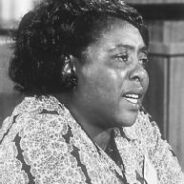
Reverend James Bevel had preached several sermons just like the one he had just preached. In it he proclaimed the liberation and healing that Jesus promised to those who would take up the yoke of discipleship. He fearlessly identified the racism inherent in the system and the use of it by those in power to oppress and repress black Americans. James Bevel was a part of the Student Nonviolent Coordinating Committee and was a friend and colleague of Martin Luther King, Jr. He was well aware that there were costs associated with activism because he had been involved in the activist life that led to pain and punishment at the hands of those who opposed them all. Yet at the end of his sermon he went ahead and asked if any of those who had heard it would volunteer to be a part of the solution–to register to vote even though it might cost them something significant. Fannie stood up and volunteered nearly immediately. She had already suffered at the hands of the powerful when she had been unknowingly sterilized a year before. The powers had decided that black citizens in Southern Mississippi could be controlled if they weren’t allowed to reproduce–so they took it upon themselves to perpetrate atrocities. Fannie volunteered to become a voter and have her voice heard.
Fannie lost her job as soon as her employer found out she had registered. She would later say of that night: “I guess if I’d had any sense, I’d have been a little scared – but what was the point of being scared? The only thing they [white people] could do was kill me, and it seemed they’d been trying to do that a little bit at a time since I could remember.” Fannie’s faith lent her a prophetic awareness of what was happening in the United States–people were giving up their lives piece by piece so that they might not lose it all at once. They were purchasing a degree of security by selling any hope of future security or equality. Given the lynchings and abuse suffered by those who did not agree to this Faustian bargain it is understandable but tragic. Fannie boarded a bus that was loaded with people like herself who were going to register. As they traveled and anticipated the vicious resistance that would meet them there, Fannie began singing hymns and inviting others to join her. As they sang “This Little Light of Mine,” Fannie must have considered how this bus ride represented a painful commitment not to “hider [her light] under a bushel.” Fannie’s use of the hymns underscored to those who joined her that this was a spiritual struggle and not simply a matter of politics and influence.
In the summer of 1963 she and others on a bus returning from a literacy class were arrested on a trumped up charge by police officers looking to punish black people for being unsatisfied with the status quo. They were taken to prison and were offered the opportunity to leave by the police officers. Though they were tempted to do so they refused because they knew what was down that path–the police officers would shoot them in the backs and later claimed that “those savage blacks” had attacked them and tried to escape. Instead, they were incarcerated, beaten savagely, and left unfed in their cells to defecate and urinate on themselves. Some nearly died from these abuses. They were eventually released when it was determined that their nonviolence could not be manipulated to defame or kill them.
 A year later she became a leader in a new political group known as the Mississippi Freedom Democratic Party. These “Freedom Democrats” insisted that Mississippi was unfairly represented at the Democratic National Convention–all of the delegates were white and there were active black voters in Mississippi. They insisted that changes be made and that Mississippi democrats needed to send black delegates. Lyndon Johnson became upset with this group because they represented a thorny political issue that would eliminate his southern support. Fannie was an easy story to cover for the news outlets because of her hymn-singing and soon Johnson was wondering what it would take to shut up “that illiterate woman.” He sent a delegation to negotiate a compromise that might leave him politically powerful but Fannie was unpersuaded by their attempts to buy off their support and play political games. Her faith guided her and she rejected their compromise. She said she would “pray to Jesus” for them. She did but it cost her her seat on the negotiation committee. Eventually, a compromise was struck that stipulated that one of those delegates could not be Fannie Lou Hamer because she could not be trusted to play the political game.
Fannie Lou Hamer died in 1977 and was buried under a grave marker that read: “I’m sick and tired of being sick and tired.”
New! The Interview with Thomas Merton

Faithlab has released The Interview with Thomas Merton as an ebook short. You can get it here.
Check out this video about The Interview with Thomas Merton, by Bert Montgomery:
Good Medicine for Business is Good for Your Green Team, Too

Ben Brooks is a very sharp fellow in the world of business (he is VP and Practice Leader for Marsh, Inc. see www.linkedin.com/in/benbrooksny), and I was listening to him present some advice to a corporate training group last week. What struck me as I took notes is how applicable his insights were for those of us working in environmental ministry among religious communities. What is true for those trying to move forward in the world of business is true for those trying to move forward in the world of ministry. Let me make some translations of his advice from the one context to the other.
1. Find an Itch and Scratch it
While this may seem obvious to those of us committed to the idea that the environmental crisis constitutes a very significant itch indeed, we must not miss the point – the itch we are trying to scratch is not our own. It is the itch of those whose cooperation and investment we seek. The distinction is much closer to home than we may think. I often hear complaints from eco-warriors of how absent bishops and reluctant clergy hamper efforts at moving the eco-ministry forward. We do our best to paint for them a picture of urgency and crisis as we try to raise the stakes and the volume about the heart of the matter. But what we are doing in this is bringing to our faith leaders problems we want them to help us solve. In other words, we are often trying to create an itch – not scratch one.
In this day of declining participation and finances in religious institutional life, what is it that makes your religious leader itch? While we may wish it was climate change or eco-justice, it is far more likely their attention is being drawn to declining attendance, weakening patterns of commitment, challenges to the faith, the loss of younger generations and other forms of spiritual lethargy and disconnect. Make connections to those issues and you will get a hearing. Connect eco-justice to moral renewal. Help make the faith attractive through relevance and the joy of living rightly in creation. Show how congregations can grow by engaging people in loving those who suffer most from our misuse of stewardship. Bring to your leader solutions, not problems.
2. Make Learning Covert
Making learning covert is to blur the line between work and training. In the business world, this means bringing information and learning so close to people’s everyday tasks that it becomes a natural part of their work flow rather than an “event” for which they must set time aside to attend. To accomplish this, you change processes around the people and make needed information available in the moment and right at hand.
In churches, this could mean doing more but saying less – less preachy, less teachy and certainly less wagging of the green finger. Set up recycling, bring in fair trade coffee, replace thermostats, reduce the trash output and green the grounds as the simple and natural course of good stewardship without stressing the political connections to the environmental war around us. And follow up with a garden as a fun and educational project for both children and adults. Then let people learn something about ecology in the process. Work on making green behaviors natural, easy and close at hand. Yes there is great urgency as our natural systems collapse around us, but we still must go gently into the noise and haste.
3. Go Where There is Energy
Which battles should you choose to wage for the good of the cause? The answer, according to Ben Brooks, is those where people already display some energy. If your community loves food but seems unconnected to issues of energy and climate – go with food justice, food wisdom and food fun. If you live in a community awash in the impact of toxins in air, water or soil – tap into the local pain and anxiety. If you have a good group of members in your community ready to get their hands dirty for the sake of the local wilderness or watershed – let that direct you to your next step. This is an application of the adage, “Think globally, but act locally.” It may not be wise to begin with the world’s largest problems. It may be better to start with your closest one.
4. Create an Engagement Sink
A “carbon sink” is something in nature that captures carbon and sequesters it (like a forest of trees capturing carbon from the air and turning it into wood and soil). An engagement sink captures people’s intention and willingness and joins it with others. In business, this means creating systems that help identify interest, talent, skills and availability and then connects them with opportunities. In a church or other ministry, these would be the communications, invitations, activities and the like that invite a range of opinions, ideas, participation and energy. In other words, these are the systems that engage people outside the established green committee, the church board or the obvious members of the green choir.
Look for related issues outside the “choir” that would attract engagement. Look for channels for listening to not just the core but the edges of the green conversation. What avenues are there for new or even opposing ideas to find voice? What opportunities are there for the less-committed to play a role? Use honey, not vinegar, to build the ministry.
5. Talk Business, Not Code
In the corporate training world, a training department may be responsible for delivering learning, but it is often some other executive department that determines its budget and priorities. If the training department wants the support of the business, it had better know how to be understood by the business. To do this, it must present its plans and priorities in business-speak, not training-speak.
So it is with environmental ministries within the religious community. Many of the concepts, methods and priorities for environmental ministry have been adopted from the secular environmental movement (for good reason, since they have been at this so much longer). This sets up a potential disconnect, however, when translating these into congregational life. We must be careful lest we fall into the trap of simply recruiting our fellow communicants to join us in our secular work. In other words, we must not, in our environmental zeal, view the faith community as primarily a storehouse of willing hands and open pocketbooks. To stay out of this trap, those involved in eco-ministry need to remain first and foremost people of faith that help congregations do what is most central to them – connect people to God’s story and live it out in time and place. To do this, green teams must themselves be connected to God’s story and about the business of living it out. Thus, faith, not science, is the primary language of eco-ministry within communities of faith.
6. Treat Associates Like Customers
In business, when a training team loses it focus, it will often fall into the trap of treating the corporate associates like so much chattel meant to fill their rosters and support their programs. A similar trap awaits the eco-ministry which uses the people as tools to serve their causes, ideals and institutional functions. The real work of an eco-ministry is to heal the environmental disconnects within, among and around the community of faith and its members. Our customers are the people we invite to join us in the healing and through which we might bring healing.
But sometimes, in the midst of the despair and foolishness of our human enterprise, we turn from or turn against the people and take refuge in the ideals. We know we have made this turn when we dwell upon people as the source of the problem more than their potential to be a solution. By then we have doomed our ministry. We must always first love the people; inviting them into God’s abundant life. People respond best to being loved.
First Things
What is clear in both business and ministry is that effective change is primarily people work. Basic rules of integrity, service and love apply across the board no matter where you are. To lose sight of this will diminish and doom your work, no matter whether you are in a corporation or a congregation. So, while an important element of your eco-ministry may be to speak for the trees, the heart of your ministry is to speak of faith, hope and love.
The Rev. Jerry Cappel is Associate for Justice Ministries, St. Matthews Episcopal Church and President, of the Kentuckiana Interfaith Community in Louisville, Kentucky.
Where Are You God?

Perhaps it’s too soon. The debris is still strewn, the cuts barely bandaged, the loss not fully realized.
As we prepared for the storms this past Friday, I prayed. I worried, but I prayed. As my family huddled in a bathroom crammed with kids, a dog, and a twin mattress, I prayed. “God be with us. God protect us. Please God, please.”
I imagine the people of West Liberty, Kentucky and Henryville, Indiana did the same.
I’ve heard it over and over in the aftermath: “God was with us,” and, “God sure did watch over us.”
I know that we all mean well when we say those words and I don’t want to diminish them, but I wondered how the victims of Friday’s storms felt. Was God any less watching over them when they lost their homes, loved ones, and even their lives? Was God any less present? Did my house and loved ones being spared reflect my intrinsic worth to God or the depth of my faith? The more I sat with this, the more I thought, “No!”
As I rocked my little boy to sleep, with a roof over my head, my “no!” was echoed by the whisper of God and the cries of Jesus.
I remembered that dreadful moment on the cross when Jesus cries out to His father, “Why have you forsaken me?” There’s been much scholarship and time devoted to these words. A common stream of thought is that as Jesus took on the sin of mankind, it was so despicable that God turned away from him.
Well, that’s just not my experience with God. I think, and I’m not alone in this, that God was more fully present with Jesus at that point in time than any other. How could God rip away from his own self? After all, we all sin and God is still there, still watching.
It is us who step away. We feel the vast emptiness of pain eating away at us and wonder, “Where are you God?”
God is there in a moment of peace under the crushing pain. God is there when the walls cave, the sky opens, and we lose everything. I see God in the kind help of a stranger, in the offer of shelter from a friend, in the prayers and tears of so many as the pieces of lives are being gathered and the remnants of what was is sewn together with what is.
May we turn to that presence and take comfort there.
Spotting God on the Coast

I’M FOLLOWING…Don Fink’s training plan toward my first ironman distance triathlon. In his book titled Be Iron Fit, he provides three 30-week workout schedules: a competitive schedule (time consuming and tough), a ‘just finish’ schedule (relatively easy for the amateur athlete) and an intermediate schedule (somewhere in between the other two). I’m committed to the ‘intermediate schedule’ and I’ve only got twenty weeks to go. The Vineman Ironman – in Napa Valley, California – is held on July 29, 2012. I’m registered. I’m going to be an ironman…
I’M CONTEMPLATING…adjusting Don Fink’s schedule. Last Saturday, I was scheduled to ride my bike for 2 hours and 45 minutes. I happened to be out of town – away from my bike. The weather was threatening; I couldn’t ride outside. Fortunately a local fitness center allowed me to make use of one of their stationary bicycles for the allotted time. Two hours into the ride I had a thought. (Always a dangerous moment for me.) ‘I’m riding at a steady pace…I’m constantly spinning the pedals…but if the race is partially uphill…then it must be partially downhill…so I need to add a little coasting into my training!’ Having pedaled for two hours, I assumed it would be fine to skip the last forty-five minutes of the ride and log that in my journal as ‘coasting time!’ I wondered what Don Fink would think of my alteration to his training schedule – and then I kept pedaling for the final forty-five minutes…
I’M CELEBTATING…Sabbath today. I’m glad God stopped pedaling for a while and gave me permission – gave me a command – to do the same…
Remembering the Good, Part 1

Our first house in Athens, my home from ages 3-12, had the perfect front and back yards for a child. They were large enough for child-size exploration, but contained enough to be safe and always close to home. My first dog, Scotty, (the best dog a girl could have), created paths in the fenced-in backyard from his consistent and constant perusing and patrol.
There was another path, I’m sure, between the side of our house and the backyard of our neighbors, the trampled grass due to the daily commute of either me to their backyard, or the two girls to mine. My own yard may have been great, but the combined yards were great territory for three young girls to conquer. Though I know we must have spent some time playing indoors, the bulk of my memories are staged outdoors. We giggled like girls giggle, we argued like girls argued, we made up like girls make up–usually returning to the giggles. We swung, we jumped on the trampoline, and we created a home and club in the playhouse. We gathered roly-polies by day and lightening bugs by night.
We had no sense that we were acting as neighbors should act. We shared. We took advantage of proximity, similar circumstance, and mutual affection. We three are still friends and though I am speaking for them, I believe that each of us would love for our households to have that same proximity today.
I am thankful that I had the chance to play in the dirt on a daily basis and I am thankful that I got to play in the dirt with my two neighbors.
I’m not sure where the shift takes place–the shift of waiting for your neighbor’s school bus to get home to rushing inside before you see your neighbor. I think that as our culture continues to turn inward, replacing sunlight with artificial light, replacing the natural pace of the earth with the rushed, instant pace of media, we see a relationship with our neighbors as just one more forced interaction. Too, the language that is in use now is so very polarizing—it is scary to engage in conversation with people we don’t know—there is little gray area for compromise to breed and little respect for an opinion that lies on the other side of the fence.
During our first stay in New Orleans, my husband and I lived across the hall from a couple and their young son. They were incredibly good at being neighborly. We played games and we ate together. I would watch their son sometimes and they would watch Jesse sometimes during football season. We didn’t agree on everything, including religious and political topics, but that never mattered. At the root of their belief system was the directive to love one’s neighbor, and they put that directive into practice. They reached out, not only to us, but to our other neighbors too. They reached out, even though the situation of living on campus in married housing was temporary (Lord, please let it be temporary); they knew that the day-to-day relationship would end, but they were willing to invest nonetheless.
Golly, they drove me crazy. I often just wanted to shut our door and watch TV by myself, dressed in my old, tattered pajamas. Now, I wish I could open my door and have them three paces away again. I wish their son could play with our daughter. I wish they could keep my daughter in their apartment while I watched TV, uninteruppted, in my old, tattered pajamas.
I am thankful that they were our neighbors. I am thankful that they taught me to discard my excuses of being shy and introverted and enjoy the relationship between two families. I believe that I, as a Christian, must love, and if I cannot love my neighbor, who might be three paces away, then I will struggle to love my neighbors whose distance is much further. I am thankful that my friends illustrated this belief for me in such a wonderful way.
——-
As I look out my window, the blue sky and warm sunshine beckon me to notice the irony of my own words—I sit here with a computer in my lap and with the television on in the background, turned to a basketball game that I care nothing about. I should at least take the computer and the baby outside, but I know I haven’t to this point because I’m afraid of something getting dirty. But really, what’s one more load of laundry? I’m going to put my tennis shoes on, get the can of Lysol wipes, and clean off the stroller that is hiding underneath the breezeway stairs. The baby may not have mastered “hello” yet, but she has a heck of a “bye-bye” and a wonderful wave. I hope I get to show it off to someone.
Read more from Stephanie at her blog.
Martyrs In the Plague at Alexandria
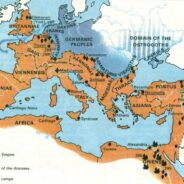
In the middle of the third century, Christianity was not an acceptable thing to place one’s trust or faith in if you were a citizen or subject of the Roman Empire. Within the bounds of the pax romana there was no room for those who insisted “blessed are the peacemakers.” Though Alexandria was fairly far away from the heart of the Roman Empire it was a city of renown and prestige–it was a jewel within the crown of the Empire resting upon seven hills. So, in Alexandria the party line of persecution of Christians held with fervor and Christians were forced to worship and meet in secret lest they be turned over to the authorities and slaughtered by the blade of the Empire. Clergy and Church leaders were of especial interest to the rulers and powers of Rome–to convince a leader of the Church to renounce their faith weakened the resolve of others Christians while executing a leader who refused to renounce their faith deprived the Church of leadership the empire assumed it needed to continue.Essentially, there was a struggle to see who would garner the ultimate allegiance of the people: Jesus the sacrificial savior or the Empire and its assurance of security through control.
 Yet, things changed when a plague began sweeping through the Roman Empire and claiming victims on all sides. It seemed that the disease cared little for whom allegiance was paid to as it killed both Christians and non-Christians with ease and speed. Alexandria was particularly hard hit by the plague with over 5,000 people dying every day in its deadly grip. Soon, people began abandoning those who showed any trace of a symptom of the disease and fleeing to the countryside so that they might escape with their lives. With the density of the urban population, the disease spread quickly. Many fled even going so far as to abandon their children, parents, and spouses in the streets because of fear of infection. Having escaped they did their best to keep a watch on the city so that the infection might die out with its victims and they might return.
 Once their persecutors had fled in the wake of the plague, the Christians of Alexandria began to come out of hiding and to take care of the sick and dying. They knew that it would likely cost them their lives yet they felt compelled to care for the abandoned and dying by the faith they refused to deny even under threat of torture and death. Soon, the non-Christians who had fled Alexandria began to hear that many of the Christians had stayed behind and had chosen not to save their own lives so that they might comfort those who were already losing theirs Since the city had been abandoned by all those who could afford to escape, there was little persecution of the Christians even though they had come out of hiding. They met in public to worship and proclaim their faith and were welcomed by those who remained because they offered hope and healing when everybody else had run for their lives. Most of those who remained died and were buried with the ones they cared for. Since their faith bade them stay and the world bade them go, they are martyrs having died on account of a faith that changed and held them.
Read more from Joshua at his personal website and the website of Grace and Main Fellowship, the non-traditional community he ministers with.
Being Brad Hibbs
A little while ago, I wrote an article about the “Brad Hibbs principle,” which basically goes as follows: Don’t overlook or take advantage of your friends. More precisely, it’s that you should not overlook nor deny the gifts of nice people who are close to you in order to appease others who chronically complain and/or make your life miserable. This is not fair to anyone and often works against your own best interest.
I learned all this from Brad, who I overlooked years ago as a coach and a friend, since he made life easier for me than some other people. Of course, I’m really sorry that I did it, and I hope to have learned my lesson, but the idea stuck with me. If you’re ever in a position to help out a civil engineer in North Carolina, please consider Brad. It would make me feel better.
Lately, I’ve been thinking about the other side of this issue. What do you do when you realize that the person or persons you have been helping out for some time overlook you and are otherwise unappreciative of your efforts? I’m not talking about responding to hurt feelings, so much as the realization that you’re making a lot of effort on behalf of someone else that might be better spent on yourself. A lot of this has come out in conversations I’ve been having, such as with a friend I know who has served on a church committee for a very long time. This committee has helped the church through some very hard times and continues to be an important part of the church’s life, but he’s getting a bit burnt out after serving for so long. Nice people like him do not easily quit, particularly when they are needed, so he’s struggling to cope with the guilt that comes with knowing it’s time to stop. Another person I know has been a pastor for some time, but is wrestling with the idea that their ministry has changed significantly since the current position began and is looking for a way to make it mean something again. Ministers can be very unappreciated, and that may be an essential part of what is driving this search. So here are a few things that I thought of, after talking with these folk:
First, it is important to identify what you’re feeling. Are you angry over something or are you, instead, realizing something? That’s an important distinction, since truly nice people try to let their anger go but they also tend to let others take advantage without thinking about it. When the day comes that you can’t take it any more, which of those two things is driving you?
Second, determine how much you’re willing to bleed. It’s painful to call it quits when you’ve devoted yourself to something, but it can be even more painful to throw away your time and energy for a long time and to no discernable purpose. At what point does the latter pain override the former? Only you can know that.
Third, do a “cost-benefit” analysis. What do you gain from the current situation? Does it justify what you are doing? More importantly, how does your continued dedication to something that doesn’t appear productive affect your relationships with those closest to you? Are you cheating them to help someone else? If, at some point, it becomes apparent that your time is a precious commodity that you are spending freely on the wrong people or causes, can you start spending it on the right ones?
Finally, dream another dream. All too often, we can get caught up in a task we voluntarily undertook or a job that we were hired to do when they have ceased to exist in that form years ago. It’s also easy to be so taken in by someone else’s needs or someone else’s dreams that we put way too little emphasis on our own. Maybe we all need permission to stop and say, as Glenn Phillips does in one of my favorite songs: “With the time I waste on the life I never had, I could have turned myself into a better man.” It might look easier to cling to another’s dream, rather than chase our own but, after awhile, it’s not very fulfilling.
So, those are some thoughts that all this conversation brought to mind. I’ve never found it easy to quit anything, so hearing others talk about it really got me thinking about what I might have put Brad through all those years ago, and what I may have been asking others to go though ever since. What about you? How do you know when it’s time to make a change, and how do you make it while preserving the decency and kindness that might have put you in such a position in the first place?
Of Janis Joplin and Christian Women (Owed to Being Unladylike)

I was three-years old the first time I heard Janis Joplin’s “Mercedes Benz” on the radio. In 1971, Dad (though not a fan of rock and roll) thought it quite funny, and we heard it several times during a family trip that year. Forty years later, Janis Joplin remains one of my favorite female singers – scratch that, make that favorite singers period – of all time.
Janis sure wrestled with her pain and her demons; a fight she soon lost in this world. But, she was incredibly gifted, too. One of her greatest gifts was that she refused to conform; she played by her own rules; and she risked being very unladylike to make the music God placed within her.
One of the most inspiring and challenging preachers I have ever heard is also a dear family friend – Rev. Karen Thomas Smith. That’s right: her name is Karen. The daughter of a Baptist preacher-man, in the mid-1980s Karen attended a Baptist college and then went on to non-Baptist divinity school to prepare for the ministry herself. Karen grew up in a denomination which was fighting internally at the time about the “proper place” of women; today, she is among the growing ranks of female clergy who dare to know that “their place” is wherever God leads them (for the record, like her dad she’s a Baptist preacher).
One of Karen’s greatest gifts (and she is very gifted in many ways) is her stubborn determination not to be confined by social expectations. Even today she risks being seen as unladylike – both in America and around the world – because of her openness to the Holy Spirit.
Pam Hogeweide is a “virtual” friend, a writing colleague, and the author of the new book, Unladylike: Resisting the Injustice and Inequality in the Church. Pam is sort of a mixture of Karen Thomas Smith and Janis Joplin. Her multi-colored tattooed arms and her style of dress suggest she’d fit right in at the Bonnaroo Music and Arts Festival; First Respectable Church of Anytown – not so much. Yet, the preacher-like conviction with which she writes reveals an intimate relationship with Christ and with our Holy Scriptures.
Unladylike is Pam’s wrestling match with a largely male-dominated Christendom in which women still have “their place” (“polite oppression” Pam calls it). With stories, humor, research, and a Spirit-led, biblical passion for justice, Pam celebrates women who dared to play by a different set of rules within the patriarchal Church, and she challenges women and men together to follow the way of Jesus which tends to buck convention and tradition.
If you’re looking for a good resource for a small-group study on the role of women in the church, or if you’re working through this issue yourself and want to read a great book on the subject, be sure to get a copy of Pam Hogeweide’s Unladylike.
If you’re looking for a Baptist preacher to fill your pulpit one Sunday, I can connect you with Karen Thomas Smith (note, though, that her schedule tends to be quite full – most of the year she’s pastoring outside of the United States).
And if you’re looking for an incredible soul-filled bluesy voice, you can’t go wrong with Janis Joplin.
But if you are looking for God’s work in the world to be limited to a private club for men, then you are in for a very big surprise. For brave, unladylike women everywhere – thanks be to God!
Follow Us!