
An Unfathomable Story
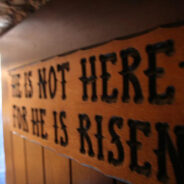
After 54 years of being a Jesus-follower, 44 of those as a pastor, I confess that the Jesus-story remains an unfathomable story.
From what can be known, it seems that he had been a good son, a loving brother, and a true friend. Yet, at a time when others his age were caring for their families, he chose another way. Long before he could have known, there was a call upon his life, and there came a day when he knew it was time to heed the call. Resolutely, he left his home and family, turned loose of what held him, and set his face toward a new way, a way of a self-giving ministry of great good—the whole of it characterized by love, even love for those who misunderstood him and those who persecuted him.
As Jesus’ ministry unfolded, not even Jesus’ contemporaries could see what lay ahead for him. Given that he was human, born of woman, I’m not sure Jesus always saw what was ahead.
His life and ministry, too short when measured by time, were silenced by the powers that opposed him. In the city that was at the center of the faith he held and preached, he was, in the span of a week, hailed a king and put to death as a criminal. Drawing his last breath, he whispered, “It is finished.”
Did it have to end there? Wasn’t there a better way? There were those around the cross who offered a tempting alternative. “Save yourself!” (Matthew 27:40)
Why didn’t Jesus save himself? What an occasion that would have been—a crucified and dying man stepping down from the cross, whole and fully alive! Could there have been a more effective way to gain a following—a complete following?
Jesus had been tempted to do something similar once before. Satan chided, “If you are the Son of God, command these stones to become loaves of bread . . . If you are the Son of God, throw yourself down [from the pinnacle of the temple], for it is written, ‘He will command the angels concerning you.’” (Matthew 4:3, 6)
The way of the spectacle had already been considered and rejected. But why? Wendell Berry’s Jayber Crow, the barber of Port William, offers as clear an answer as we will find. According to Jayber, Jesus didn’t save himself . . . “because from the moment He did, He would be the absolute tyrant of the world and we would be His slaves. Even those who hated Him and hated one another and hated their own souls would have to believe in Him then. From that moment the possibility that we might be bound to Him and He to us and us to one another by love forever would be ended. And so I thought, He must forebear to reveal His power and glory by presenting Himself as Himself, and must be present only in the ordinary miracle of the existence of His creatures. Those who wish to see Him must see Him in the poor, the hungry, the hurt, the wordless creatures, the groaning and the travailing beautiful world.” [Wendell Berry, Jayber Crow (Washington, DC: Counterpoint, 2000), p. 295]
It is an unfathomable story . . . but yet . . .
That which was finished on the cross was not Jesus’ life, though die he most certainly did. Three days dead, he arose. And the unfathomable remains such, but faith rises from the ashes of unasked and unanswered questions, and resurrection begins. He lives—in you, in me, in the poor, the hungry, the hurt, the wordless, and in all the groans and travails of our world.
Resurrection is not just His story . . . it is meant to be ours . . . look around, look into the face of another, look at the land and the life it supports. He lives and through Him, we live. Unfathomable? Yes . . . but it rings true, and I believe even though I don’t fully fathom.
Without Blemish

Your offering shall be
without blemish
without blemish
What can a man do?
What can a man do
that is with out blemish?
What can a man give?
What can I do?
What can I give?
The calves no longer bawl
Nor the goats bleat
Frantic dove wings do not beat
in fear
What can I give
What can I bring
but
myself
As a craftsman knows his tools
a potter know his product,
So You know me.
A blunted blade
A crooked awl
A cracked pot
An urn misshapen.
Your offering shall be
without blemish
I can only bring
myself
Will Malachi condemn me?
I have surely brought a sacrifice
Blind
Lame
Not quite right.
Shall I bring the offering
The offering of my heart?
Where is my prayer that is pure
Unselfish
not weighted with some
Self interest?
Even my prayer is
Marred
Imperfect
Blemished
Your offering shall be
without blemish.
How?
How?
How?
Shall I sing?
Shall I lift my voice
in a new song?
in an old song?
In praise
in gratitude
Even in depth of singing
even from my deepest place
there is
“I hope this sounds good.”
or worse
“Boy! This sounds good.”
A scab of ego
or
fear
clinging to the melody.
Shall I help others?
But
lifting the fallen
directing the lost
clothing the naked
feels good.
There is
pleasure
in service
joy
in kindness
and
A bit in self congratulation
A broken wing
hindering the flight to
true service.
Your offering shall be
without blemish.
Please
please
You know me
You know me
better than
I know myself.
The poor man could bring
a bird
When it was burned
It was burned
with its feathers
It was said to have
a pleasing odor.
Burning feathers?
Really?
A pleasing odor?
Rather
let me believe
You were
Pleased
Pleased to accept
What a poor man could bring.
I am poor
I am poor
in spirit
in virtue
In vigor
to do your will.
But accept me
Accept my brokenness
Accept my blemish
I can only bring you
what I am
what I have
Whatever that may be
It is Yours.
Judas and the Ring of Power

“…But the hearts of men are easily corrupted… And the ring of power has a will of its own.” (The Lord of the Rings)
“Then Judas Iscariot, who was one of the twelve, went to the chief priests in order to betray him to them. When they heard it, they were greatly pleased, and promised to give him money. So he began to look for an opportunity to betray him.” (Mark 14)
It is an ancient story, told in many forms and various ways. A choice is given to the hero or villain to take the ring of coercion and power or choose the path of suffering and love. It was the choice offered to Jesus in the wilderness of temptation and offered to Judas in the Garden of Gethsemane. Which would you choose? If you were offered two rings from which to choose – one would give you power over others and the other would give you the power of love in your own heart – which would you choose? Which would get you what you really seek in life – enough power or enough love? Is power the path to love or love the path to power? It is not a choice given only to the few at the crossroads of history. It is a choice that lies at the heart of life and faith for each one of us.
Judas is easy to dismiss if we simply paint him up as a greedy charlatan of a disciple. But what if we start with a Judas who began his discipleship as sincere, wide-eyed and hopeful as the rest of the disciples? What if Judas was simply as complicated and mixed in motives as the other eleven? What then? How then did things go so terribly wrong? How did he get to that horrible place of betrayal, guilt and despair? Where was that fork in the road that led him there rather than to the less condemned place of sleepiness, denial and absence which fell to the other disciples?
Perhaps Judas can point us to this: What in your life is so close to your heart that you would allow the ends to justify the means? For what noble end would you sleep with the enemy? What situation would move you to trade in the ways of trust, kindness, gentleness and love for the tools of coercion and power in order to accomplish the ends you seek? What marks the end of your patience, the limits of loving-kindness and the beginning of your willingness to call out the army? Where that line is may be where we find our Judas. What do you love more than truth itself or desire more than love itself? Where in in your life is your fear of loss greater than your trust of God’s provision? These are the points where we will turn to our own ways of power rather than trust in God’s ways and wait for God’s time. These are the places where we are in danger of following the path of Judas.
The voice of the ring and the Satan is alive and well in our day. It whispers to us:
We can by war accomplish peace.
We can by coercion accomplish cooperation.
We can by separation accomplish security.
We can by ignorance accomplish clarity.
We can by power accomplish love.
And so on it goes, down through the ages. Judas was neither the first nor the last. Walk humbly through the days of Holy Week, and be glad for the Easter to come.
The Other Side of Forgiveness

Well another Mardi Gras season has passed. Much was likely written – and more thought – by secular and religious writers alike about the celebration and excess. Likewise, Ash Wednesday was observed marking a time of prayer and fasting.
My faith roots run deep in the Baptist tradition, so my early recollections of this season are filled with misinformation and judgment that all involved had way too much fun. In fact, most adults in my early life felt Ash Wednesday should be extended well beyond a one day observance to adequately reflect the required evidence of repentance. Because I always felt some sense of guilt for wanting to experience Mardi Gras – and even Ash Wednesday – I guess it is natural I spend so much energy during this (pre)Easter time reflecting on forgiveness.
About this time of the year, I often think of a story – seemingly unrelated, but well could have been me – that goes something like this…, “Pastor, my 16-year-old son is driving me crazy. I do not know if I can handle the stress until he grows up. Do you think Jesus understands how hard it is to have a son like mine? Will He forgive him?” The minister assured the parent Jesus understood and would forgive the son. Then as the parent moved out of earshot, the pastor turns to a by-stander and says, “I wanted to tell that parent Jesus also understands what it is like for a healthy, 16-year-old to have a parent like that and would likewise forgive him/her.”
I am often reminded and freely admit I am no theological, but I believe this story addresses something often overlooked in “Christian” circles, especially during this time of the year.
See, I believe one thing that got Jesus in so much hot water with all those religious experts wasn’t so much that He forgave THEM of THEIR sins, it was that He forgave sins others committed against THEM. It is wonderful thing for me to have Jesus forgive my sins. We preach something like this all the time. “Come ye, all who are weary.” “Ask and ye shall receive.” “Come, Jesus’ arms welcome anyone.”
On some level, I fool myself into believing I have some control over and may even deserve the forgiveness and Grace I receive…seeing as I am such a good guy and all. Right, just ask my wife – not!
It is almost as if I can turn this forgiveness thing on and off, as I need it. However, for Jesus to forgive someone else’s wrongs against ME without any input from ME….and I do not even have to ask Jesus about it – that is entirely something else. After all, he or she does not deserve my forgiveness.
As Easter approaches, maybe we should remember how we define and limit God’s forgiveness. I am very comfortable with Jesus dying for all my wrongs. Not so sure though about Him dying for some of the people so different from me. Or, what about all those people who did not or do not come to Him like I did? After all, my crowd has certain things about faith nailed down pretty good – at least we think we do. Or what about all those people who have wronged me. Even worse, what about those people who have committed terrible sins? Surely, we aren’t supposed to embrace the forgiveness THEY can “so freely” receive. This is about ME.
There are a few verses that sting extra painful this time of year – Luke 5:24…and Matthew 6:14…or what about …Romans 12:14…and worst of all….James 4:12.
Maybe we’d be better off if we accept God as the only One capable of accurately judging everyone. After all, I think He earned that role in the greatest gift and sacrifice of all. I think I remember reading something about Jesus being the way, truth, and life…and no one coming to the Father except through Him. I think I’ll remember God’s great forgiveness and get back to my fasting, prayer, and lies I told about things I’d give up during Lent.
It’s really quite freeing to stop personally defining exactly how Jesus is going to judge everyone and let Him work that out. So freeing, next year I think I’ll find a way to ”wander on down to a parade” and learn from some who so wonderfully celebrate this time of year. After all, they probably know more than I do about the great forgiveness that only comes from an honest approach to the Father.
God probably forgave them while I was stuck in my judgment and pride for avoiding anyone who had any fun associated with this time of year…
Spotting God….In Fickleness

I just finished a 6-mile run on the streets of Columbus, Ohio. Buckeye fever is evident in almost every shop window, on every car bumper and on every piece of clothing. The NCAA Final Four is a bit convicting for me…
After moving from Arkansas, I attended high school in west Kentucky and adopted the Wildcats as my favorite basketball team. Later, spending three years in Louisville – like many young Baptist seminarians in the good old days – turned me into a University of Louisville fan. Recently, my oldest daughter completed a graduate degree at THE Ohio State University…soooo….I’m visiting her in Columbus and rooting for the Buckeyes today. I’m fickle! I admit it! I’ve always been this way…
Growing up in the ArkLaMiss (the tri-state delta of Arkansas, Louisiana and Mississippi), it was required I support the New Orleans Saints when watching professional football. (I was also told Archie Manning was my third cousin twice removed by an aunt-in-law…well…you get the picture.) But I became enamored with Joe Namath and quickly claimed independence from the Saints – defecting to be a New York Jets fan. As a college student, I moved to Atlanta and began following the faltering Falcons. And when it comes to college football…well….I’ve lived in Mississippi, Arkansas, Kentucky and Georgia! I’ve made my way through the SEC like a football floozy! Currently living in Georgia, barking annoys me, buzzing barely sounds menacing and I’m a Georgia State University alum. Again, I’m fickle! I admit it. I really enjoy sports, but I’m not a diehard fan of any team. And that’s okay. I don’t want to die hard. I want to live freely and die gently…
In the last couple of weeks, I’ve worshipped with a Presbyterian congregation and a Baptist congregation. Tomorrow morning I’ll be at a Saturday Mass. Sunday, I’m celebrating April Fool’s Day with my Unitarian Universalist Friends. Next week it’s Passover with ‘my people’ and then Easter with my other people. I’ll admit it. I’m fickle. I really enjoy spending time with God and God’s people. But I’m not a diehard fan of any one team. In fact, I’m not interested in dying hard. I want to live freely and die gently…in the arms of a God who loves us all…
I like the God I worship…a God who is rooting for all of us….
Spotting God….In The Crowd

We stood in line for over an hour and finally reached the top. The roof was packed with camera toting, awe-inspired, loud people. Did I say packed?
I like the quiet. I have no problem being alone and, in fact, tend to seek out sanctuaries of solace. I’ve always resonated with Elijah’s mountain moment – a place where wind and fire and earthquake could not conjure what the quiet would provide. While I love the art of preaching and often feed on the well-crafted sermons of colleagues, I am typically more drawn to meditation rather than the mental meanderings of a fellow human being. I know everyone isn’t bent this way; I am. My bend has often lured me into less than perfect situations…
Several years ago, I led a mission team to New York City’s post-9/11 environment. We spent several days working with a local congregation – building a new playground, teaching children and repairing a building. Every minute of the mission experience was carefully crafted on my meticulously timed itinerary. Copies of such were distributed to all participants. And if I may say so, I had done a fabulous job of insuring that our team would have an experience they would remember for a lifetime. Our first evening in the Big Apple was to be spent in prayer. Before laying a hand on a hammer or sharing a word with a city citizen, I wanted us to pray. What better place than the top of the Empire State Building. Our group standing there…looking out over the electrically lit city…holding hands…in the quiet…all alone…praying. After all, I’d seen the 1993 cinematic tear-jerker Sleepless in Seattle. I watched as Tom Hanks and Meg Ryan held hands and gazed lovingly at each other. And I noted…there is no one else up there! Our group can have the top of the Empire State Building all to ourselves…
We stood in line for over an hour and finally reached the top. The roof was packed with camera toting, awe inspired, loud people. Did I say packed? (A month ago I was in Las Vegas. I went to watch the Bellagio fountains. I’m such a savvy traveler now. I knew there would be a crowd and I knew no one from the Oceans 11 cast would be standing there. You live and learn.)
We joined the crowd…and we got loud…and I think we all prayed – rubbing shoulders with the world and gazing through our camera lenses at the skyline of the city. And God was there. Sometimes I like it when God gets noisy…
The Perfect Church

I once went to the perfect church. The people were warm and inviting.It was obvious that the people loved and cared for one another – but they didn’t just love and care for themselves, they cared for everyone who walked in the door. It was beautiful. And the building? It was simple, but attractive. The whole building seemed to express its purpose – paintings depicted the themes of the Bible, Sculptures and furniture stilled the mind, perfectly designed to bring church attenders into a state of calm reflection. When the service started, I noticed that all the musicians were professional-quality. The Scripture reader had a deep, resounding voice like a movie narrator. And the preacher was a master with words. Every person in the room was attentive, with the appearance of proper motivation. The service flowed seamlessly. It was absolutely perfect.
Sometime in the middle of the benediction, I awoke, sweat dripping from my forehead. I had to take a few deep breaths to recover from my nightmare.
They say you can find the perfect church, but that it is ruined the moment you walk in the door. A perfect church allows no room for humans—no room for our doubts, our fears, our distracted minds. It leaves no room for children’s innocent questions…or for their temper tantrums. The perfect church leaves no room for life.
The congregation that Jesus found himself in in Capernaum was not perfect. Capernaum was right on the Sea of Galilee and was a fishing village. This synagogue was likely made up of fishermen who pulled their boats to shore for the Sabbath. They may have been smelly…and a bit, well, rough around the edges.
So Jesus walks into the synagogue with his four newly recruited disciples – Simon, Andrew, James and John… all fishermen. All straight off the boat, the scent of saltwater and fish still on their clothes.
The Sabbath candles are lit, and Jesus begins to teach. Maybe we’ll try that next week – first visitor who walks in the door gets to preach! We’ll either have an empty room, or preaching hopefuls will be running toward the doors hoping to be first! But in a synagogue with lay-leadership and no system for ordaining rabbis, Jesus is able to read and share thoughts on the Scriptures. As we read the Scriptures now, it seems obvious that Jesus would be teaching in the Synagogue – but remember, no one knew him yet. The Book of Luke tells us that Jesus was about 30 when he started his ministry—he was about my age. Many in the room may have considered him just a boy . . . after all, he had no wife, no children—none of the regular signs of manhood.
Can’t you just picture the wives in the congregation elbowing their husbands—“who is this man? Do you know him? Is that Esther’s boy? No, I guess he’s taller.”
And then Jesus begins to speak, and perhaps to the surprise of everyone present, he’s good! He seems to have a good grasp of the Scripture, and he’s bringing new interpretations to the text that they have never heard before. And more people begin to ask “who is this man?”
And right there, in the middle of the Shabbat service, a man possessed with an evil spirit speaks up. Have you ever been to a service like that? No? I find it funny—and somewhat frightening—that the writer of Mark doesn’t seem surprised. He states it just as a matter of fact, a passing comment on the evening news: “just then, there was in their synagogue a man with an unclean spirit.” If I were the journalist on the story I’d have a lot of questions—where did he come from? Does he show up often? Are their regularly men possessed with unclean spirits present while you pray? How do you know? Do they look different? Do they always run around yelling things?
Mark assumes we know all of this and tells us nothing. We do know that all illness was seen as an “evil spirit.” In a time before medical science, disease was often thought to be punishment for sin. However, illness—even mental illness does not tend to make a person know what this possessed gentlemen knew. He cried out “What have you to do with us, Jesus of Nazareth? Have you come to destroy us? I know who you are, the Holy One of God.”
No one knew who Jesus was. No one knew, except this man with the unclean spirit. And Jesus rushes to silence him. He commands that the spirit come out—and it does. The man has some sort of seizure, and the spirit wails as it leaves the man’s body.
And then… the synagogue is quiet again. Except, of course, for the questions. “No, really, who IS this man? Did you see that? Who is he, that he has power over the spirits?”
Not your typical prayer service. People will be talking about this one for years! But what does this story say about Jesus?
The synagogue congregants pointed out his authority—and certainly that is an important piece of the story. This man knows something and has power over spirits. But I think it says more than that. Jesus pays attention to the interruptions.
I’ve heard several stories in recent months that make me cringe. A 12-year-old boy in North Carolina was escorted out of an Easter service. The child, Jackson, has cerebral palsy, and the way he voiced an “amen” after a prayer was apparently considered a distraction. When the mother sent an email offering to help the church start a ministry for special needs children, she received a response stating the church focuses on worship, not ministries. A church spokeswoman said “it is our goal . . . to offer a distraction-free environment for all our guests.”
I’ve seen story after story about children with autism being treated the same way—as distractions who need to be kept out of the sanctuary.
A man possessed with an evil spirit was certainly a distraction—but Jesus didn’t see it that way. He saw a man in need. The healing of this man is the first miracle that the writer of Mark tells us about. We don’t even learn his name. But Jesus takes notice of him and meets his need—right there in the middle of the service.
I preached my second sermon in a small Free Methodist church that has since closed. After the service a young woman named Jamie came over to talk to me. She had a military-cropped hair cut and had tattoos covering her arms. She told me that for years she had loved Jesus, but had no use for the church—until some friends had dragged her to the small congregation. She told me she had shown up that first week just waiting for everyone to mess up—waiting for someone to comment on the way she was dressed or critize her tattoos or her hair. Waiting for someone—anyone to look at her funny or fail to welcome her. And, well, no one reacted negatively at all. So she came back the next week and witnessed a drunk man stumble into the building. “Ah ha!” she thought, “I’ve got them.” But someone went back to the kitchen, made some coffee and found some bread to give to the man. That person then sat beside them and helped navigate him through the service—letting him know when it was appropriate to speak up and when it wasn’t.”
Jamie told me that she had been coming to church ever since—which had been over a year at that point.
That little church got it. The man who came in off the street wasn’t a distraction to ministry or worship—he was the reason the church gathers. As it turns out, the man who was drunk occasionally came back to the small church, too—sometimes sober. He was still battling with his demons, but the people of this church knew that being in a community of folks who were trying to love and worship the Lord was a far better place for him than the streets of St. Louis.
I think about that story often. I wonder what I would do if such a disturbance happened in the middle of worship. What would you do?
I’m pretty convinced what Jesus would do. The members of the Capernaum synagogue were asking “Who is this man?” My guess is that the gentlemen healed of his demons would respond—he’s the one who cared enough to bring me in and help me.”
Do we see people in need of help and care? Or are we so focused on our tasks that we push people out?
The perfect church? Jesus wouldn’t fit in there. Would he fit in here?
Editors note: This sermon was preached on the text, Mark 1:21-28.
Read more from Jennifer at her blog.
Harriet Tubman, Escaped Slave, Abolitionist, Conductor on the Underground Railroad
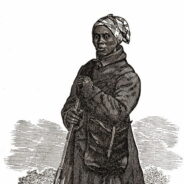
Harriet Tubman’s grandmother had been brought over from Ghana to the United States of America as a slave. She had her freedom stripped from her and her children and children’s children were condemned to a life of degradation and inhumanity. Harriet was born Araminta Ross and both of her parents were slaves. By virtue of her birth, she too was a slave. Her earliest job was that of a nursemaid for her owner’s baby. At the age of five, Harriet was tasked with taking care of the child and insuring that it did not cry. When the baby cried–as all babies do–young Harriet was beaten and whipped. She carried these scars all her life as a silent reminder of humanity’s brokenness and sinful ways. When she was only a child, her mother’s owner came to take Harriet’s brother–Moses–away and sell him to a slaveholder in Georgia. At first Harriet’s mother hid Moses so that he might not be sold and taken away. When it was found out, though, that Moses was at home the men came with their whips and clubs to take him by force. Harriet’s mother called out from her quarters, “You can surely come and take the boy–I don’t doubt that–but the first one of you through the door will get his skull split in two.” The men backed down and decided not to tempt Harriet’s mother to follow through with her threat. In this moment, Harriet learned a lesson: even those who had been labeled things and not people could resist evil. This lesson served her well for years to come.
As Harriet grew in years and wisdom she became more and more connected to the Faith she had learned at her mother’s knee. Harriet couldn’t read and neither could her mother but the Biblical stories were told with regularity when the family would gather together. These stories informed her faith and she found great comfort in the stories of deliverance and liberation.She knew that her deliverer was with her even in the midst of slavery. As she grew yet more she began experiencing visions–perhaps partially linked to a traumatic head injury–that she insisted were a way that God communicated with her (even if they were a form of epilepsy, she was certain that God was speaking through them anyway).The stories she had heard as a child and adolescent continued to brew within her and began to form the way she thought about herself and the plight of her fellow slaves. When her owner began trying to sell her she started praying that God would convert the man and lead him to understand the error of his ways. She prayed with confidence that God could change the man but soon her confidence turned to frustration and she began praying that if God would not change the man then God should remove him as an obstacle. Shortly thereafter her owner died and Harriet felt great regret fearing that she had prayed for the man’s death. Soon, Harriet escaped slavery under the cover of night (after one failed attempt) by following the north star and alluding men hired to catch escaped slaves by any means necessary. Eventually, she arrived in Pennsylvania and was free.
Escaping wasn’t enough for Harriet because she was convinced that God was calling her to more than simple liberation. Rather, she felt God’s will leading her back into slave holding territory to bring others out of slavery. She utilized the extensive Underground Railroad network that Christians abolitionists had developed and became a “conductor” along the railroad.Enveloped in the stories of the Faith that gave meaning to her life and work, she was known as “Moses” because she returned to “Egypt” to lead her people out of slavery and death. She liberated her family and extended family first but then kept returning to free yet more slaves. She was continually risking her own life and freedom because she knew that God was directing her to do so. At one point, there was a sizable bounty on her head but she continued to risk her life for others. She was hated by those who loved slavery but loved by those who sought freedom and peace. She would later describe her astonishing success by writing, “I was conductor of the Underground Railroad for eight years, and I can say what most conductors can’t say – I never ran my train off the track and I never lost a passenger.” For the rest of her life she fought against slavery and oppression of a variety of types. She campaigned for women’s suffrage and took an active role as a spy in the American Civil War. She died on March 10, 1913, after uttering her final words to those around her death bed: “I go to prepare a place for you.”
Standing Your Ground

I just read the most interesting article today and it really gave me pause.
Apparently, in Florida, the handgun lobby has become so powerful that they were able to get a law passed that gives you the right to use deadly force if you think that someone is a serious threat to you or someone else, with no obligation to try to avoid the conflict. Add to that the already existing regulations that make it easy to carry a concealed handgun in that state, and it all starts sounding like the Wild West has come back to us again!
Of course, this brings up some serious questions. For instance, since the law specifically states that “a person is justified in the use of deadly force and does not have a duty to retreat if:… He or she reasonably believes that such force is necessary to prevent imminent death or great bodily harm to himself or herself or another,” does that mean that it is legal to set up a sniper station on a highway overpass in order to pick off drunk drivers? Is it legal to stalk and kill unarmed 17-year olds who are NOT black? Since you can also use deadly force to “prevent the imminent commission of a forcible felony,” should we not have the right to shoot creepy-looking people who we might see at a place that handles large sums of cash? How about capping a few parents whose children don’t want to come home from the mall or somewhere, so they are forcing them into a car? Can’t be too careful!
Okay, I admit that that could all sound a bit offensive or over the top, but that is also the nature of laws. Once you place them on the books, people will start pushing such boundaries and/or using them to justify their own unacceptable behaviors. We know all that because that is how our society has always worked.
And that begs another question: are we so far-gone in our fear and greed that it is now acceptable to place laws on the books that can be interpreted as a license to kill? We already live in the country that executes the most people, per capita, in the world. Do we really need to make it easy to execute the incompetent and defenseless or to find ways to justify our homicidal impulses in the name of “self-defense” and “castle laws?” If that’s so easy to do, why are we wasting time talking about Jesus? Just point me to the nearest armory.
Remembering the Good, Part 2

My elementary school was a very short distance from my house: down a great bicycle hill, (well, great one way—up), around a corner to the right, past the patch of bamboo shoots and sweet-smelling honeysuckle bushes, through a church yard, across Oglethorpe Avenue, and down another hill, directly into the schoolyard. Until recently, I thought that I walked home by myself every day until Dad confessed that this was not the case—somebody, either he, or one of his cronies, (the same cronies who reported to him my various locations through high school and college), made sure I entered my front door safely.
I’m not sure what experiences other elementary schools provide for their children, but mine offered some incredible ones. In kindergarten, my class spent the night with our two teachers; we made macaroni and cheese for dinner and picked up Dunkin’ Donuts for breakfast the next morning. In third grade, our teacher brought a barrel of horse bones to school for us to study and put together in a way that resembled a horse’s skeleton. In fifth grade, we were very involved in 4-H and therefore spent a lot of time putting together our projects for the county competition. I felt, and still feel confident that my presentation, “How to Wash a Dog,” would have won if I’d had a pointer stick to use as I showed off my posters. Janet had a pointer stick, she won—I was the runner-up.
Occasionally, all of a grade’s classes, or even the whole school, would get together for an activity like the school spelling bee. In third grade, I came in third, tripped up by the pesky word “doodling.” (Spell check just took care of the possibility of a repeat offense.) The weatherman from an Atlanta news station flew in on a helicopter, landing in the school’s immense backyard, and talked to us about meteorology. Well, I guess he talked to us about meteorology; we were all a little taken by the helicopter.
We gathered items from our school rooms, bedrooms, and toy boxes, and planted them in time capsules in one of the schoolyard’s clover patches. We learned how to use Apple computers, some of the first school computers, the ones with the true floppy disk drives. We “bought” stocks and followed their gains and losses daily in the newspaper. Some organization brought a large domed tent to the school, and when we went inside and lay down on its floor, we found ourselves stargazing and learning about constellations.
I am grateful for my public school education at Oglethorpe Avenue Elementary School. I think that our mascot was the fierce unicorn. As I write, the school’s song is playing in my head. O-g-l-e-t-h-o-r-p-e. . .
The whole 4th grade sat together for one lesson about the Civil Rights Movement. I distinctly remember sitting on the floor amongst my classmates, knees pulled up to my chest, listening to a teacher speak something to the effect of, “Many of the slaves held the last names of their owners. To show that no one held ownership over him, Malcom X ‘x-ed’ out his last name, Little.” She continued, but I heard nothing after “Little” because I felt like every set of my classmates eyes were now turned around to me. That’s Stephanie’s last name, whisper, whisper. . . My brain added to their whispers, her family must be some of the bad white people. She must be one of the bad white people.
Despite my fears, I don’t recall anything that occurred afterwards or in the next few days, though I don’t believe that anyone ever showed that they were mad at me, or that they laughed at me, or anything else. I guess everyone had good differentiation skills, thank goodness. I certainly remember those few moments though, and I don’t believe they will ever leave me. Not only did I feel singled out, a feeling that no child, especially a shy child, wants to feel, but I also felt a sense of responsibility, of belonging, of a connection to the past. Those feelings were not good feelings. Did my family own slaves? Could they have owned slaves? Could they have been bad people? I don’t think that I’m a bad person. The possibilities were terrifying to me; I wanted no part of that evil.
I have been watching the TV show, Who Do You Think You Are, where celebrities research their genealogical history. As I watched the other night, the thought struck me how many of their histories included slavery. That thought immediately brought me to the elementary school memory. Again, I felt those senses of responsibility and connection. I would love to think that neither side of my family owned slaves or supported the brokerage of humans. Unfortunately, the more realistic side of my brain knows that this is not likely the case. To believe that all members of my family, extended and long past, have been righteous and moral folk is unrealistic, and maybe a little egotistical. I want to feel connected to the slave, to the thought of liberation, to the thought of being oppressed—but those are odd desires. Is the desired association there just because the oppressed are seen as the “good” side? The truth is, I am connected to the “bad” side and the “good” side, regardless of whether I want to be or not. I have both the ability and the capability to be both good and evil, free or enslaved, oppressed or oppressive. Yikes.
Similarly, I think about the mind of a slave owner, perhaps related to me, and try to imagine her in her time and culture, and I wonder what must have been going on in her brain. How could she have thought that owning someone was okay or just? It is scary to think that some of those genes are some of my genes, just as physiologically binding as the red hair on my head.
I think to the mind of the slave and try to imagine her in her time, but away from her culture, and wonder what must have been going on in her brain. How could she have lived, how could she have made it, bound to laws and cruelty for which she had no vote and no control? It is scary to imagine her because I can hardly imagine her. Not only am I too removed, but I am also too privileged. Yikes again.
Though remembering that 4th grade moment, 20+ years ago, still hurts the child inside me, I am glad that I have the memory. While I did not directly have a role in that part of history, I am responsible for recognizing oppression in this age, the oppressive hands of those around me as well as my own oppressive hands. I am responsible for the recognition of oppression and the action that aids liberation. My childhood memory and my name serve as catalysts for me to be a better human.
I hope that I leave behind more valuable artifacts than the Happy Meal toys that lie underneath a patch of clover, my contribution to our class’s time capsule. I hope that one day, as my three-times great-grandchild breathes underneath the same stars as I breath under, she will start to read about her family and feel pride and not guilt, compelled—no, bound, by a nurtured instinct to be a good human and to care for all of humanity.
Read more from Stephanie at her blog.
Follow Us!