
So That I Might Live

Editor’s note: This is the final post in a series called, “Remembering the Good.”
1 John 4:9: God’s love was revealed among us in this way:
God sent his only Son into the world so that we might live through him.
Taking pause to remember so many of my life’s wonderful blessings has made for a wonderful, but curious, Lenten season. Lately, for whatever reason, my childhood has invaded my daily life. I find myself overcome with emotion because of my memories. There has been so much good in my life. Yet sometimes, I long for those days and the feelings of home and routine and security with so much desire that I get lost in those memories and feelings.
My eyes are closed, soaking up the pictures of days past. My eyes are closed, missing the happy pictures of days present. My eyes are closed, envisioning a future that unrealistically has me as a child and as a parent.
What am I doing wrong?
In remembering the blessings, I acknowledge that my life is full of reason to give thanks. I am reminded of who I am and of the people in my life that love me unconditionally. However, in remembering, I think that the shadowy side of nostalgia, the one that casts every part of a memory in a bright light, in fact does cast a shadow on the present, leaving the good in the dark. How can today ever live up to yesterday? Certainly, I don’t want to go back and remember every bad and tragic thing in my past to achieve balance for myself.
How can I remember well?
There has always been this belief in the back of my mind that in order to move on from past hurts and traumas, an individual must try and accomplish the task of letting go without forgetting. That way, lessons from tragedies and mistakes can be carried forward without taking along the emotional bondages that were established. It’s a hard separation. The task requires that someone objectify a personal memory, something that is naturally subjective–difficult, indeed!
I think that I have to apply my belief to the other side of the coin. I have to find some way to be grateful for the good, for I don’t want to forget to be grateful, while holding the sentiment at bay. There’s just nothing so bad in my present that I need to idealize the past. Sure, there are days and moments of days when I need an escape or a hand to lead me out of a hole. There are some behaviors to improve, some money to be saved, and some work to be done, but those are just good life goals to keep around because they help the motion of life move forward. Still, there is a wealth of good that is fresh, fragrant, and current. Open up, eyes.
I believe in a God who gave us life so that we might enjoy, even love, our life on earth. I think God wants us to smell the flowers and hear the birds and see the ocean and say, “Oh yes, this earth is good.” I believe that the phrase from 1 John 4:9, “so that we might live,” refers to not only our eternal souls but also to our present selves, as we are here on earth.
I believe that God worked very hard to create me, a unique being, a unique child, and that graciously, I have been able to share in the creation of another unique being and child. When I sit and hold her in my lap, admiring the locks of curls, tinted with beautiful browns and blondes, I imagine that God is pleased with my admiration and is admiring along with me, each strand on her head and mine. Open up, eyes, realize what you are seeing.
With fond memories of my Old Testament and American Literature professors in mind, I believe that God allows us to wander in the wilderness, no matter the thickness of brush or dimness of light. The wilderness is Sacred Space. Open up, eyes, see the path before you; even though it might be a circle, God is alongside you, through each curve and each straightway.
Imagine calming anxious nerves based on the recognition that God is with us in the past, God is with us in the present, and God is with us in the future. The present is always timely. God is!, God is!, God is! What a good place to be! Is this “Om”?
I dropped out of Philosophy 101 in college because I didn’t want to memorize anything and I didn’t want to consider anything too deeply. Even though I have a little better grasp on philosophical thought now, I would still probably drop out of the class, 10+ years later. Let me throw on my own brakes…
I know this ramble is muddy, as unclear as my Philosophy and Theology professors’ lectures–muddy, muddy, muddy (head shaking).
I know these things:
It is okay to remember; it is okay to forget; it is okay to repress.
It is okay wander; It is okay to let go; it is okay to re-form.
It is okay to be grateful; it is okay to be satisfied; it is okay to recover.
It is okay to have hindsight; it is okay to have foresight; it is okay to just see.
It is okay to live in the open, bright valleys; it is okay to have a stay in the closed, shadowy forests.
The water should be much clearer.
——-
The return and the conclusion:
I am writing in the present intentionally.
This Lenten season is important for me. It is a convergence of time and emotions. I am a creation, a child, a friend, a chaplain, a wife, a mother. I am tangled. I am wandering, but my eyes are open.
I hear the rain.
To read more from Stephanie Little Coyne and the other posts in her series, “Remembering the Good” visit her blog.
Abihu and Nadab

Aaron’s sons are dead. Filled with an excess of love and excitement, they approached.
Burned. Burned and dead. Dragged away by their cousins. Placed outside of the camp. Separate? Holy? Dragged by their smoldering tunics, outside of the camp.
Incense. Strange incense they brought. For this they died. For an excess of passion.
How like children they were. Filled with the excitement of bringing their mother some flowers. How could they know? How could they understand that picking roses from mommy’s prize bush would lead to punishment?
Unbearable grief. Aaron is silent in his pain. Weeping without tears, crying without sound.
Never again to see his sons. They are dead. Killed by the flame that had brought joy and amazement moments before.
Aaron will mourn. “How can I feast?” he must ask in his heart. “How can I live?”
Defiant, he burns the offering. Self destructive? In his grief, is he seeking another burning? One that will bring brief pain and then an end to pain?
Aaron’s sons are dead. Filled with an excess of love and excitement, they approached.
Burned. Burned and dead. Dragged away by their cousins. Placed outside of the camp. Separate? Holy? Gone.
“Let’s Get to Work”

And so as we came to the end of the [Baptist] Conference on Sexuality and Covenant today, we get to the big question….well, one of the big questions. What is the church supposed to do with all this? Saturday morning’s plenary session was titled “From Fear to Hope: How Congregations Lead the Way.” Three presenters talked about the ways in which the church can address some of the conversations we’ve been having this weekend regarding sexuality and covenant.
Lindsay Comstock spoke of how the church can be prophetic on the subject of human trafficking, and how that issue is related to our concerns about sexuality. We have the ability to do significant work in that area, but the fears surrounding all our conversations about sex and sexuality hinder our ability to truly take that step.
Wendell Griffin highlighted the way in which his own church has approached issues of sexuality and covenant head on, encouraging churches not to be “afraid to grow.”
And LeDayne Polaski came to the same issue from the perspective of conflict transformation, highlighting the ways in which conflicts such as these can be like the burning bush, immensely powerful but not consuming or destroying. The conversations these issues provoke have the potential to be highly divisive; but if approached in the right way, they have the potential to be highly transformative for a congregation, far beyond the specific issue of the conflict itself.
And then we had one more small group session, a worship service, and departed. But departed to what, is the question. The organizers of the conference were careful to highlight the way in which they hoped we would take this conference back to our congregations, encouraging us to place everything in its appropriate context. I was initially a bit bothered by the apparent need for a disclaimer attached to the conversation we have had, but in a way, I see his point. For those of us who have been involved in the three days of this conference, the conversation has been a slow, methodical, thought out progression through some very difficult topics. Taking what has been said out of that context could be problematic; but quite frankly, there is a high likelihood that this will happen over the coming days and weeks. So those of us who were here have the responsibility to fully and fairly represent everything we’ve seen and heard.
But more importantly, we have the responsibility to do something about it, and that’s what I think Saturday’s plenary was driving at. The conversation does not end here; in fact, it has barely started. How our churches lead the way, and how we as participants in this conference lead the way, is incredibly important. Because the conversation must not end here. We must build on what we have learned, and continue inviting more people into the conversation. We must not be “afraid to grow,” as Wendell Griffin said. We must embrace the burning bush that is this potential for a transformed conflict, as LeDayne Polaski encouraged us. And as Lindsay Comstock stated so well, “Hope and justice is hard work. So I say let’s get to work.”
We were sent off with this message in the benediction: “So do we go from this place to welcome all who cross our paths, all who join us, all who are already with us. For God has called us all to be one family in Christ.”
As a member of a welcoming and affirming congregation, over the past three days, I have been frustrated. I have been joyful. I have been everything in between. But as I leave this place, I am hopeful. I am hopeful that when we say we want to continue this conversation, we mean it. So my message to every single person who has been here, Cooperative Baptist Fellowship-affiliated or not, is this: please mean it. Be the voices that keep us moving forward towards a better understanding of what we mean when we talk about sexuality and covenant. Because this conversation absolutely, positively, must continue.
Lauren McDuffie is a student in the Master of Divinity program at Vanderbilt Divinity School.
Seeking the Questions
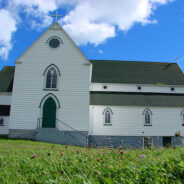
So if Thursday was about laying the groundwork for the conversation, Friday was about getting into the actual conversation. And let me tell you, that has been long, hard work. It was a full day, and a long day.
Friday continued Thursday’s model of plenary sessions followed by brief breaks and meetings with the Covenant Communities, the small groups in which we are debriefing this experience. If I have a critique of the organizational aspect, it is that we’re cramming an awful lot of deep spiritual and theological work into a relatively brief amount of time. We heard 8 presenters today, which is a lot to take in and process. But, by the same token, the presentations all fit very well into the continuum of the day. Today’s plenary sessions were:
Ancient & Contemporary Voices: What Do Christians Think God Thinks About Sex?
In a lot of ways, this felt to me like a review session for my Formation of Christian Traditions class last semester, and I mean that to be a good thing. For us to figure out where we’re going, we have got to remember where we’ve been. And that includes ancient history of what embodiment meant to Augustine, Tertullian, Paul, and Jesus, brilliantly discussed by Melissa Browning, as well as what is generally defined in the church today as the “traditional” perspective on marriage, presented by Coleman Fannin. All of the history, as well as recognition of where many of the people in the room are coming from, plays into a better understanding on our part of what we’re addressing and where we’re going with it.
Covenant 101: What Are the Ties that Bind?
Covenant 201: What Are the Boundaries of Covenant?
Our conversations about covenant have been fascinating to me, because it seems like we’re not even that sure what we mean by covenant. Coming into the conference I wasn’t entirely sure what I thought the organizers of this meeting meant by the word “covenant” either. At the end of the second day, I think we’re going to come out of this conference with more questions than answers. And I think that’s okay, because at least now we’re asking the right questions, and one of those questions is, “What do we mean when we talk about a covenant relationship?” In order to have the more specific discussions about the contexts and boundaries of covenant, about if boundaries can even exist in covenant, we first need to have figured out what those “ties that bind” are that make up the covenant itself. It’s not necessarily an answer that can be found at an institutional level either. Hopefully this conference is helping ministers and lay people develop tools for addressing these questions in their own congregations.
There’s definitely not enough time or room to talk about every single speaker we heard today, but I need to give a shout out to Cody Sanders, who I’ve never actually met in person, but was profoundly impressed by. He presented during the evening plenary about the boundaries of covenant. The presenters on this topic discussed a few groups of people for whom, for a variety of reasons, a legal or full covenantal relationship is not available, possible, or preferable. Cody was quite open in telling his story of coming out and working in the church. What I truly appreciated was the way in which Cody addressed the involvement of LGBT individuals in local congregations. There are certainly those who find themselves needing to take some time away from church, but many, many people within this population are in the pew every Sunday. Cody made it clear that these are not a people out there, they are among the people in here. I think it’s something that everyone who is engaging in this conversation, at the conference or in general, needs to acknowledge. When we have these conversations, we’re not talking about abstract ideas, but the real life of a significant number of people in the pews every Sunday. For the conversations we’re starting this weekend to continue effectively, we simply must understand that we are talking not about people, but with people.
Discernment and Community

“The people can be trusted to interpret scripture aright in the context of a believing community by the guidance of the Spirit.” Bill Leonard, a professor of Baptist Studies and Church History at Wake Forest School of Divinity, made this statement at the Tennessee Cooperative Baptist Fellowship meeting last week, and it’s been running through my mind all afternoon as we’ve kicked off the [Baptist] Conference on Sexuality and Covenant.
Today’s sessions were titled “While We Were Avoiding the Subject: What’s Going on in the World (and the Church)?” and “Faithful Listening in Challenging Times: How Do We Discern God’s Voice?” After each session, we met in small groups called Covenant Communities to debrief the messages we’d heard. The theme I have sensed throughout this whole day is the need to lay a groundwork for this conversation. In the first plenary, Jenell Paris gave an overview of the issues that we will be exploring in more detail over the next two days, and in the second Guy Sayles and Sharyn Dowd both did excellent work in setting up a hermeneutical basis for the work we’re trying to do.
Which brings me back to what Bill Leonard said. My small group had some fantastic discussion this evening about how we interpret scripture and develop a theology around scripture, and how we do that on our own and in our communities. That’s a tenuous line for Baptists. Soul freedom and bible freedom seem quite individual, but the truth of the matter is it’s a tough thing to take on alone. Which is why Baptists have also placed such a great emphasis on community, and why the community that is gathered here in Decatur this weekend is so important. There are a lot of tough questions to be addressed. And no one is saying we need answers to those questions right now, immediately. But what many of us have been clamoring for until we sounded like a broken record was a real conversation, and that is what this conference has the potential to be. Today was about setting up the tools for us to do quality interpretive work as a community over the next two days, and my prayer is that we take that discernment process to heart, listening, as Sharyn Dowd phrased it, to sort out the “voice of God from all the voices competing for our attention.”
April 9 – Dietrich Bonhoeffer, Martyr, Pastor, Enemy of the State
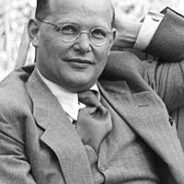
Dietrich Bonhoeffer must have known that he was living on borrowed time as he sat in his cell and wrote letters to his family. Yes, he seemed to be lucky in that he was being held in a military prison to await trial instead of being held in a concentration camp to await certain death. But, Dietrich knew well that martyrdom awaited him at the end of the story. He had been arrested by the Gestapo because of his involvement with the German military intelligence organization Abwehr and the bitter feud between the two agencies. Even though Dietrich knew he had been plotting together with others to assassinate Adolf Hitler, the Gestapo had failed to demonstrate that in their raids upon Abwehr offices. Instead, they had arrested him only on charges of evading conscription, resistance to Nazi decree, and speaking in public although previously forbidden to do so. But, Dietrich had to know that eventually they would find proof of his involvement in plots to assassinate Hitler and that, when they did, their retribution would be swift and brutal. So Dietrich, pastor in the Confessing Church of Germany and enemy of the State, waited in his cell and tried to encourage his brothers and sisters in the faith with the letters he was still allowed to send.
His involvement in the resistance movement to the Nazis must have been a surprise to him upon reflection. He had received an excellent education in theology and philosophy and his doctoral thesis was described by none other than eminent theologian Karl Barth as a “theological miracle.”He could have had an academic career of considerable influence and relative safety had he wanted it. But, he had become gloriously entangled in the struggles and causes of the faithful Church in Germany as Hitler rose to power in the 1930s. So, instead of becoming a pastor or professor of safety and regard, he became a vocal opponent of Nazism in his homeland. Though he had to do it alone at first, Dietrich was more than willing to cry out against the injustices that Hitler and the Nazis were perpetrating against our Jewish brothers and sisters as well as the disenfranchised and undesirables.While other ministers were advocating measured ministry to the downtrodden injured by Nazi fanaticism, Dietrich was being cut off the radio and forbidden to speak in public for uttering lines such as “[We must not simply] bandage the victims under the wheel, but jam the spoke in the wheel itself.”
For a little while he escaped to the United States of America but his heart stayed in Germany. He spent time with Reinhold Niebuhr and developed a particular fondness for African American spirituals. Even though he worked tirelessly to resist Hitler’s advances in Germany from afar he soon realized that he was not called to escape Germany’s struggles but, instead, to be in the midst of them. Before departing, he wrote a letter to Niebuhr that included the following passage:
“I have come to the conclusion that I made a mistake in coming to America. I must live through this difficult period in our national history with the people of Germany. I will have no right to participate in the reconstruction of Christian life in Germany after the war if I do not share the trials of this time with my people… Christians in Germany will have to face the terrible alternative of either willing the defeat of their nation in order that Christian civilization may survive or willing the victory of their nation and thereby destroying civilization. I know which of these alternatives I must choose but I cannot make that choice from security.”
So, Dietrich returned and joined with the Abwehr to plot the death of Hitler and, hopefully, the consequent destruction of the Nazi German war machine. Though he was an avowed pacifist, Dietrich felt that there was no other choice but to seek the death of Hitler because of the great evil he was perpetrating. It seems that, although he struggled with the decision, Dietrich had decided to act in a way he felt to be wrong because of the horrible consequences of not doing so. He wrote, “when a man takes guilt upon himself in responsibility, he imputes his guilt to himself and no one else. He answers for it…Before other men he is justified by dire necessity; before himself he is acquitted by his conscience, but before God he hopes only for grace.” In these words, his struggle with the assassination plot is evident–this was no easy decision.
Eventually, Dietrich’s sedition was discovered and he was transferred from the military prison through a series of other prisons before arriving in concentration camps first at Buchenwald and second at Flossenbürg. When the diaries of the head of Abwehr were discovered, on April 4, 1954, and the plot to assassinate Hitler was revealed, Hitler ordered the immediate execution of all those involved in the plot. This included Dietrich Bonhoeffer. An impromptu court-martial was held at Flossenbürg and Dietrich was condemned to die on April 8.At dawn on April 9, he was marched naked to the gallows where he stopped to pray for himself and for his enemies. His captors had decided to engineer his hanging so as not to break his neck but rather to slowly strangle him to death. Dietrich died with a prayer upon his lips and his compete trust placed in the grace and mercy of God. Three weeks later, the Soviet army liberated Berlin and Hitler committed suicide. One week after that, Germany capitulated.
Read more from Joshua Hearn at his personal website and the website of Grace and Main Fellowship, the non-traditional community he ministers with.
Spotting God…In The Quickstep

I like to dance. I’ll probably never be invited to appear on Dancing with the Stars or even participate in community musical theater. But I like to dance. I’ve never had formal training or been particularly coordinated in my informal attempts. But as a high school student I made a point to appear at all gyrational gatherings. In college, I dated under the disco lights of Packets and the Limelight in Atlanta. I like to dance.
I had the opportunity to dance this past Saturday. I was ending a long run up Northside Drive in Macon, Georgia. A shadow seemed to move across the sidewalk in front of me. An overhanging limb or a darting bird seemed to be casting its sun-darkened image on the pale concrete of the sidewalk. At least that’s what I thought. Stepping inches from the spastic splotch, I recognized the elephae obsoleta obsoleta – a black rat snake! He moved around my feet and I spastically moved around him. We danced…
Several years ago, I was sitting on the examining table of the emergency room at the George E. Weems Memorial Hospital in Apalachicola, Florida. “You have a kidney stone,” the doctor finally reported.
“A kidney stone!” I exclaimed, while continuing to writhe in pain. “How will I know when it’s gone?”
“Well,” the doctor said, “It will move out of your kidney, hurt like hades moving down your ureter, and when it hits your bladder you’ll perform the ‘great kidney stone dance’ until you expel it. It will be gone moments after the dance”
The doctor was right…I danced…
The best dances have nothing to with snakes or stones (Unless maybe it’s Whitesnake or the Rolling Stones), but rather, are the result of love. Having someone wrap their arms around you with a little Norah Jones or Gladys Knight or El DeBarge or Al Green or Marvin Gaye playing in the background. Swaying in a rhythm that lets you know you are held and loved and known.
Sometimes I dance in pain. Sometimes I dance in fear. I think love is the greatest dance. In a life filled with fears and pains, I love it when God cuts in….
Living In Unity

A sermon preached at St. Charles Avenue Baptist Church, New Orleans, Louisiana.
I grew up in Athens, Georgia, in a church similar to this one in many ways. Many of the sights and sounds and smells are familiar to me. The choir robes were a different shade of green, but green nonetheless. During our service in Athens, we heard the noises of downtown in the background, much like the streetcar’s hum and other outside noises we hear from inside this sanctuary, sounds I only consider to be natural parts of worship; they are just further accompaniment, joining in with the pipe organ and choir.
The warmness of this congregation is also familiar and appreciated—your smiles and open arms bring to my mind sentimental memories of home each Wednesday and Sunday. Thank you for so genuinely welcoming my family into this house of worship and thank you for inviting me into this pulpit. I am very, very grateful to and for each one of you.
——-
In my first preaching class in seminary, one of the two sermons we gave to the class was filmed so that we could see and hear ourselves and receive feedback as we watched the replay with our professor. For most of my sermon, my head was cocked to the left. So, if you see me do that too much, kindly just make a gesture to let me know that my head is staying too long in its comfortable position.
My second preaching professor, Dr. Claypool, was both a wonderful Baptist and Episcopalian minister. And so, with him in mind, I offer to you, “The Lord be with you… Let us pray.”
Almighty God, we come before you, together in shared worship of you, and we ask that your Spirit join us as you speak to our hearts, through song, through Scripture, through teaching and reflection. In Your Name we pray, Amen.
——-
I remember sitting with an elderly Jewish woman as she lay dying in the hospice inpatient unit. Her family was coming, but they had not yet arrived. The funeral home’s instructions were for me to, upon her death, open the window in her room, light a candle, and place it on the windowsill. The symbolism was described to me as this: the open window represented an easier passage for the soul to find its resting place. The candle’s flame represented life’s beauty and its fragility. At life’s end, the soul, like the flame, faded away.
——-
On this, the second Sunday of Easter, we live knowing that the light of Jesus has returned to earth. The passage we just read from the Gospel of John sets the scene for us: After making his initial appearances to Mary and the other women, Jesus walks into a locked room where the disciples are huddled together, fearing the unrest that is still around. Jesus offers to them: “Peace be with you.” He shows them his hands and his side. The disciples rejoice, and rightly so, the promise has been fulfilled! Jesus again offers, “Peace be with you” and then breathes onto them, baptizing them with this new beginning. “Receive the Holy Spirit,” he says, “if you forgive the sins of any, then they are forgiven.”
Then Thomas enters the story.
I’ve always felt that Thomas gets a bad rap. We call him “Doubting Thomas,” as if we were schoolchildren on the playground—“Ooh…look at Thomas…see what he did?…he’s in trouble!” Poke, poke, nudge, nudge, giggle, giggle. Poor Thomas. Even the scripture has a nickname for him, “Didymus” or translated from the Greek, “the Twin.”
Thomas says, “I wasn’t there when you saw him. I didn’t see. I didn’t touch. I need to see, I need to touch.
A few days later, Thomas, now with the disciples in the same room as before, gets the chance. Jesus beckons to him, “Here, Thomas, see and touch my hands, see and touch my side.”
——-
I want to pause and leave you with that image and look at two of the other Scripture passages we heard today.
From Psalm 133: “How very good and pleasant it is when kindred live together in unity!”
From Acts 4:32-35: “Now the whole group of those who believed were of one heart and soul, and no one claimed private ownership of any possessions, but everything they owned was held in common. With great power the apostles gave their testimony to the resurrection of the Lord Jesus, and great grace was upon them all. There was not a needy person among them, for as many as owned lands or houses sold them and brought the proceeds of what was sold. They laid it at the apostles’ feet, and it was distributed to each as any had need.”
What do we hear and what pictures do we see in these verses? In Psalms, we hear that kindred—family—are living together in unity, and it is good.
And in Acts, “the ones who believed were of one heart and soul.” It’s a little unclear to me who “the ones who believed” are; the scribes don’t seem to like identifying their pronouns. Earlier in chapter 4, in verse 4, we find that Peter and John have a number of believers around them—about 5000. This number is significant to me—a large group of people are getting along—they are holding everything in common; no one is needy. Actually, any number, be it 5 or 5000 is impressive. My family is small and we don’t always get along.
As an aside, I don’t think this means that everyone had everything they wanted. They didn’t all have I-Pads and convertibles—they had what they needed. More importantly, and I’m presuming a little here, they were all able to voice what they needed so that they could receive it.
We also see in this passage from Acts that the apostles are giving their testimony of Christ’s resurrection with “great power” and that “great grace was upon them all.” Again, it’s unclear to me what this power is—it could mean that they gave their testimony with an emphatic tone or it could be that they were empowered by the Holy Spirit—according to verse 31, they were filled with the Holy Spirit. Regardless, there is something behind this testimony, something in it, an energy, a bubbling, like lava out of a volcano, like the excitement of a child whose mother has just come to pick her up—it is an emulsion of emotion, trembling and joy and enthusiasm—Jesus has returned from the dead! Jesus has atoned for our sins! For my sins! For your sins!
I believe that this group of people, apostles and new believers included, who are able to live as a unified body, are significant because they all are able to live that way together. But perhaps more significant is that this picture of unity is the testimony of Christ’s resurrection, or a testament to Christ’s resurrection. They share their material goods and they share the message of Jesus. Do we believe that such a picture would illustrate the testimony of Christ’s resurrection today? Wouldn’t we work more fervently to realize harmony amongst believers if we did have that belief?
Let’s look back at the verses we read earlier in the service from 1st John. “We declare to you what was from the beginning, what we have heard, what we have seen with our eyes, what we have looked at and touched with our hands—the word of life is revealed and we have seen it and testify to it. We tell you so that you may be in fellowship with us—our fellowship will be together, with God and with Jesus. We are writing these things so that our joy may be complete.”
What do we hear and see in these verses? We have again this notion of sharing. This community desires to share the word of life. But these verses take us a step further. The inference is that the joy of the message of the Risen Christ is not complete unless it is shared.
This community of believers, presumably the Johannine community, is several decades removed from the resurrection. They are not in the locked room with the disciples and Jesus; they have not seen his hands or his side. Yet, they know, and are declaring that the path of light is underneath the footsteps of Jesus. Fellowship is on that path, grace is on that path.
The excitement is still there, isn’t it? Can you hear it in their words? They “declare” it or “proclaim” it, 4 times in 5 verses.
There is a story of an anthropologist in Africa who was amongst the children of one tribe. He told the children that there was a basket of fruit underneath a tree and that the first child who reached the tree got the whole basket for himself. The children formed a line, held each other’s hands, and ran together to the tree, claiming the basket for the entire group.
The man asked them, “Why didn’t one of you want to reach the tree first and have the fruit all to yourself?” The children replied, “Ubuntu!,” which means, “I am because we are.” “How can one of us be happy if the rest are sad?” The story gives a picture at the end of the children sitting in a circle together, their feet touching, smiling, laughing, and enjoying the fruit together.
To me, this story perfectly illustrates and connects the three passages from Psalms, Acts, and 1st John. Children just naturally communicate the heart of excitement to me. They can’t help it. I’m glad that they don’t have an emotion on the plane between extreme excitement and extreme disappointment. I can see the children in this illustration running together, or maybe skipping together as one unit, bubbling over in anticipation of the sweet, juicy fruit that is to be shared between them.
Our basket of fruit, the message of Jesus and the grace that God has granted to us through Jesus, is waiting to be seen, to be held, to be touched, and to be tasted. If we were to keep it to ourselves, the joy that we would derive would not be complete. It is in the sharing that we find the complete picture of joy and of nourishment.
——-
Now, back to the passage with Thomas. Jesus paints a lovely picture of sharing for his disciples. He offers peace in the midst of a troubled time—“Peace be with you.” He shows himself—the wounds on his hands and his side. He offers peace again—“Peace be with you.” He then breathes out—giving the disciples the message and power of the Holy Spirit for them to carry and proclaim to others.
He does no different for Thomas. We are often led to believe that Thomas is a misfit and somehow asking more of Jesus than anyone else. But Jesus does the same things for Thomas, giving him what he specifically needs—Jesus offers him peace and then shows him his hands and his side.
I sympathize with Thomas because I understand him. I’m pretty sure that I would have asked the same things of Jesus. After all, Jesus was there, then was on the cross, then was in the tomb. That was what my eyes would have seen. I would need to reach out and touch in order to believe something different. I think that’s human nature. Have you been out and about with a 1 ½ year-old lately? My baby girl has to touch everything, and I mean everything! Her hands will not stay beside her, or in a shopping cart, or in her high chair at the dinner table. Life is a little messy for us right now.
Jesus understands the messiness of life. He understands that God’s grace is illogical to us. Why would a Holy Savior be sacrificed for us? For me? I hear this disbelief in Thomas’ words.
Furthermore, if I truly believed that Christ died for my sins and rose again, in a truly miraculous fashion, would I not constantly be testifying with joy about this joy?
But no, I do not. I need constant reminders from Jesus of his wounds. Yes, I get Thomas—he is a twin—he’s my twin.
One choral concert I attended in college included a piece from Jacob Handl. In Latin, the title is “Regnum Mundi Et Omnem Ornatum.” Translated, and with more of the text added, it means, “I have held in contempt worldly power and all temporary joys because of the love of Jesus Christ, my Lord, whom I have seen, whom I have loved, in whom I have believed and found solace.”
I copied the text onto a card and have kept it in my wallet ever since as a reminder. While working with these scriptures this week, I remembered the card and pulled it out. I like to read it and re-remember—I have seen Jesus because I have seen his work in me and in others around me. I love him and believe in him because he loves me and believes in me. He has offered me peace at many points in my life and I am greatly revived each time with solace. I believe that Jesus has shown me his hands and his side before and I believe that time and time again, he will show them to me, lovingly granting me unending grace.
May I be brave like Thomas and ask for what I need. May I acknowledge and validate others around me who have doubts, making sure that I am not a hindrance as they seek to see Jesus’ wounds.
——-
One of my favorite patients is a lady who is very sweet but very frail and very weak. I sit with her sometimes and we talk about whatever she can talk about. She doesn’t really know what year it is, doesn’t know who of her family is alive, and isn’t really sure of who I am though she smiles at me a lot, a gift for which I am grateful.
During one of our visits, she asked me to come over and help her stand up from the couch. I obliged and went over to her, held out my hands and let her grab them. Slowly, gently, she stood and then with one hand grabbed my side. With a telling grin she asked, “Do you want to dance?” “Sure,” I replied, “I will dance with you.” I placed my free hand on her side.
“Do you know any songs,” she asked?” Racking my brain, pleasantly caught off-guard from the request, I came up with a song that I thought would be familiar to her and one that was fresh on my mind—I sing it to my child often. “You are my sunshine, my only sunshine. . . .” We swayed, back and forth, and she chimed in with a word every now and then.
The moments of dancing and singing were peace-filled, weaknesses were bared and needs were shared. It is in encounters like this one that I feel most connected to Jesus and to his grace and to his promise of resurrection.
——-
How shall we share the gracious message of Jesus?
While our candle is still lit, flickering, but beautiful, may we share our joy as children share their joy, as Thomas and the other disciples shared their joy.
Like Jesus, may we offer peace in troubled times. May we share and show our wounds. May we offer peace, even again.
May we breathe and speak and sing with the power of the Holy Spirit, having been blessed again and again with God’s grace, willing to share the basket of fruits, willing to dance, eager to experience joy that is completed.
Amen.
—
Read more from Stephanie Little Coyne at her blog.
Me and My Shadow

This is not an easy blog for me to write because it’s coming from a place in me that is really confused and daunted by struggles that feel much bigger than I am and require a much wiser soul. I’m not sure wisdom comes without the struggles for which we find ourselves ill-prepared though. So, I take comfort in Richard Rohr’s statement: “you learn how to recover from falling by falling!” – hence, the title of his book, Falling Upward: A Spirituality for the Two Halves of Life. The book and a daily meditation by Rohr was a timely recommendation from a friend, who perhaps sensed that I’m struggling with my own shadow. What I mean is that I’m starting to painfully see beyond my own persona or carefully constructed images of myself. While built from very real qualities in myself those images have often served to hide or overcompensate for other real qualities in me that I deemed unacceptable and thus pushed into the nether regions of my psyche – where they have only come out in unconscious ways, inflicting injuries but allowing me to pretend I’m not responsible for those injuries.
Such unconscious living is why I believe personal and spiritual growth ultimately requires us to face our own shadow. Maybe this reveals a thread of truth in the sin-dominant theology of my younger years, but it is very different from that experience in that now “salvation is sin turned on its head and used in our favor.” In fact, Rohr unconventionally goes on to say: “I do not think you should get rid of your sin until you have learned what it has to teach you. Otherwise, it will only return in new forms.” How often have we seen that play out in our personal lives, our churches, and our societies? Let me say right now, this process is taking a whole lot of inner work, and Rohr says, “Before the truth “sets you free,” it tends to make you miserable.” I can vouch for the miserable part, and I hold fast to the promise that the truth will set me free.
I believe that freedom and spiritual wholeness will come only when I learn how to simultaneously hold these contradictions and paradoxes within myself lovingly in my hands and heart, recognizing the dark and the light are part of the same whole. In a sense, it’s daring to reconcile and embrace all that is within me. I’m reminded of a dream I had some months ago where a successful artist gave me some paintings she’d made for me – as I looked at them, I was disappointed to see that each one had a hole in the canvas or some other “blemish.” But then I found myself wondering whether the holes in the canvas were intentional and meant to add to the beauty and meaning of each piece. I woke with the challenge to view the holes in myself as possibly adding to my value rather than detracting from it.
Of course, such a process doesn’t stop with me, for such wholeness must also recognize and accept the same paradoxical nature and holes in the canvas in other people and even institutions, like the Church. If I wasn’t uncomfortable and confused enough already, now I really am. Because now I’m faced with what to do with the pain inflicted upon me by others. I’m not questioning forgiveness. I’m questioning how to live in relation to those people and institutions that continue to hurt us.
For instance, I’m fortunate that I have never been suicidal as a result of the Church and professing Christians’ hurtful responses to my being gay. I’m very fortunate that I’ve not experienced the extreme rejection that other LGBTQ persons have experienced in their church relations. I’m also fortunate to know many people who have dared to speak out on behalf of us – working diligently for inclusion in the life of the United Methodist Church and other denominations. Yet, at the same time, I have experienced the truth in Martin Luther King Jr.’s words: “In the end, we will remember not the words of our enemies, but the silence of our friends.” I have become painfully aware of how official denominational policies have tied would-be healing hands by threatening the livelihood of clergy who would dare to live by a higher Law than that of the church. Those same denominational policies give prejudiced people a platform from which to judge and exclude, thereby perpetuating fear and hate toward LGBTQ persons. Personally, I have felt angry, hurt, and misunderstood by those who deem me unfit to be around their children, who question my right to publically share my testimony with my partner, and who criticize my calling to openly advocate for sacred conversations regarding LGBTQ persons.
Up until now, whenever I’m asked why I’ve stayed in the Church despite its treatment of LGBTQ persons, I have expressed my desire to see the journey of transformation through, to live out a commitment to this beautiful yet broken family because, well, we’re all broken. Such commitment resonates with the journey toward wholeness and reconciliation I spoke of earlier.
But there’s also something new stirring within me – a growing awareness that true reconciliation requires both parties to search their souls and be moved by the other. And so, I realize what happens at the upcoming General Conference of the United Methodist Church may be pivotal in my future commitment to this institution. I’m just not sure I have it in me to keep investing in an institution that refuses to acknowledge its own shadow and do its own soulwork to be in right relationship with me and a whole group of people eager to love and be loved. This stirring is not easy for me to admit or look at, while on one hand it is commensurate with the very healthy notion of walking away from those relationships that have become more damaging than life-giving for us, it also smacks of conditional love and ultimatums. Yet again, let me share an insight from Rohr: “It is interesting to me that very clear passages describing both God’s conditional love and also God’s unconditional love are found in the same Scriptures…the only real biblical promise is that unconditional love will have the last word!” Perhaps only the Soul knows how much we can take and what our lesson to learn is, for some it might be to give more with no promise of return and for some it might be to pull out and give elsewhere.
Read more from Renee Sappington at her blog.
O Jesus, Where Art Thou

Easter Sunday.
Had it occurred in Depression-Era Mississippi, rather than 1st Century Roman-occupied Jerusalem (and it very well could have), when the women arrived at the tomb they would have beheld a man dressed in a long, white robe, whittlin’ away on a stick, who very likely would have said something like this: “You lookin’ for Jesus, of Natchez. But he ain’t here. He up’n r-u-n-n – o-f-t !” (That’s a paraphrase of the account in the Gospel of Mark).
All four of the Gospel writers tell the Easter story (as we now refer to it) differently. If we try to put the four accounts together like puzzle pieces to make one complete picture, we can get confused and frustrated – the pieces just don’t fit together.
It did begin so early in the morning it was still dark. The stone had been moved, rolled away leaving the tomb open.
One Gospel says there was an earthquake.
Were there two figures dressed in white at the tomb, or just one?
How many women went to the tomb? Which women were at the tomb?
Was Peter there? Any of the other disciples?
Did Jesus appear at the tomb? To whom did Jesus first appear? What did He say?
Read just one Gospel and you’ll get solid answers to some of these questions. Read each of the four Gospels and you’ll likely give up trying to make sense of it all. And that’s probably because, like life itself, these events simply do not make sense.
Frederick Buechner writes, “When it comes to just what happened, there can be no certainty. That something unimaginable happened, there can be no doubt. The symbol of Easter is the empty tomb.”
Mississippi Baptist preacher Will D. Campbell wrote a novel some years back titled The Glad River. The protagonist, a fictional small-town Mississippi man, goes by the name “Doops.”
Doops was born and raised in the local small-town Baptist church, but refused to get baptized and never joined any church. That’s not because he didn’t believe in Jesus, but because in fact he DID believe.
One Easter Sunday, Doops gets drunk and walks into the local Baptist church in which he was raised – right in the middle of the preacher delivering the Easter sermon. Doops interrupts the preacher and disrupts the sermon, yelling out “He is NOT here! He is RISEN!”
Then Doops runs out and goes to the other churches in town – Methodist, Presbyterian, Holiness, and so on – yelling out in each of them, “HE AIN’T HERE! HE DONE GOT UP AND RUN OFF!”
Doops sounds like one of the Old Testament prophets the way he runs in and out of churches implying that the pretty buildings and orderly worship services and confident preachers in their new Easter suits are themselves the very tombs today that cannot hold the Body of Christ …
The story of the Empty Tomb reminds us today that the Body of Christ is NOT confined by buildings, nor by doctrines and teachings.
The story of the Empty Tomb reminds us today that even on those occasional Sundays when we go to a church service needing to see Jesus but we do not find Him, that if we listen, we may hear those words spoken to the women at the tomb, “Don’t be ‘fraid. Jesus ain’t here. He up’n r-u-n-n – o-f-t …”
And, that is NOT necessarily a condemnation of the church as Doops intended it to be. It may just be the hope we need – that the Christ who lives is on the move; that the Christ who lives is alive in the world around us; that while we celebrate the resurrection inside our churches, the Body of Christ is alive and well and walking outside our walls.
O Jesus, where art thou?
A band called The Lost Dogs tells us to simply try looking where Jesus told us himself he would be: “That’s Jesus in the homeless faces; with the junkies in their livin’ hell; that’s Jesus with the drunks and in the lonely places – the rest home and prison cells. That’s where Jesus is, where we ought to be; here’s where Jesus works, inside you and me; with the folks with AIDS, and the suffering kids … that’s where Jesus lives.”
Christians around the world attended churches this past Sunday to celebrate the resurrection. And that’s good.
Now may we follow our risen Lord out of our protected, locked enclosures and back out into the world where it’s dangerous and dirty, where the lonely and suffering and hurting folks are … for that is where Jesus is.
CLICK HERE TO WATCH THE LOST DOGS SING “THAT’S WHERE JESUS IS.”
Learn more about Bert Montgomery at his website.
Follow Us!