
Interview: Joey “Ojo” Taylor

In the summer of 1984 a friend gave me a tape with Undercover’s self-titled debut on side one, and their second album, God Rules, on the other. I was hooked immediately.
As I finished high school and entered college, my personal faith began to deepen, and to make room for questions, doubts, and grace in the world. Interestingly, the guys in Undercover were maturing and also leaving behind the simplicity of their early lyrics. Today, I listen to those early Undercover albums with fondness and joy, and though I no longer believe in their simplistic and legalist-easy-answers lyrics, I am thankful that those albums came along in my life when they did. Neither Ojo nor I are the same as we were almost thirty years ago (thankfully!). While I still consider myself a Christian, Ojo, on the other hand, is an agnostic.
Today, Ojo is a professor at James Madison University. He teaches classes like History of Rock, Songwriting, Artist Management, Legal Aspects of the Music Industry, and Music Marketing. A few months ago Ojo agreed to an email interview: I’d email him him questions and he’d reply. Here are the highlights of our email exchanges in which Ojo addresses musical influences, Undercover, and his own spiritual journey.
Priesthood of ALL Believers
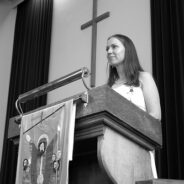
In case you somehow missed it, I’m compiling a book. That book, currently referred to as The Priesthood of ALL Believers, is a collection of call stories from Baptist women ministers (if you happen to be a Baptist woman minister, it isn’t too late to share your story. See this post for details). The Baptist denomination is still in a place of decision-making where female clergy are concerned. Not too many years ago, the Southern Baptist Convention — the largest of the Baptist groups — stopped supporting the ordination of women. Many other Baptist groups, such as American Baptist Churches and the Cooperative Baptist Fellowship, do practice the ordination of women. However, Pam Durso was recently quoted in an EthicsDaily article saying that only 145 women currently serve as pastors or co-pastors in Baptist churches. Because of this, Baptist women often do not receive a lot of support as they are discerning a call to ministry. The first time I heard a woman preach was the summer of my senior year in college.
This book is a chance to let Baptist women tell their stories. It is an attempt to raise awareness of the unique challenges that Baptist women ministers face, but it is also an opportunity to celebrate the way that God works in calling us all.
The Priesthood of ALL Believers has an interested publisher (my first choice!), but will require funds from me to begin the process. You can be part of making this book a reality by pre-ordering it from my kickstarter page before June 20. I would be honored to have you as a partner in sharing these amazing stories.
Read more from Jennifer Harris Dault at her blog.
Uncovering and Covering

My Grandpa Max of blessed memory had a cutting, sarcastic wit.
When my Dad proudly showed him the elevated running track in the renovated field house at the University of Iowa, Grandpa Max sniffed and said, “What are they running from?”
I gave a few of you all tonight – those who bring younger kids to Temple on Friday nights – a heads up that tonight’s sermon would be intense, and covering a pretty adult topic. So I begin with this children’s book Moses: When Harriet Tubman Led Her People To Freedom, by Carole Boston Weatherford. We don’t have time to read the whole thing but it’s one of my favorites because of the drama, the artwork, and the fact that God is a main character.
In 2005, while living in Jerusalem as a rabbinical student, I found out about a different kind of fugitive slave women. I found out about Human trafficking for forced prostitution, or sex trafficking. Sex Trafficking is the recruitment, harboring, transportation, provision, or obtaining of a person for the purposes of a commercial sex act, in which the commercial sex act is induced by force, fraud, or coercion, or in which the person induced to perform such an act has not attained 18 years of age. Sex trafficking is modern-day slavery where people profit from the control and exploitation of others.
At that time, significant numbers of women from eastern Europe and the former Soviet Union were being kidnapped and dragged on a harrowing journey through Egypt to Israel to be sold on the auction block into sexual slavery. Israel was listed on the U.S. Department of State’s annual Trafficking in Persons Report as a country that did not comply with minimum standards to prevent such crimes. Given the centrality of the liberation from slavery in our Torah – Not to mention the hope we place in the State of Israel to be a newly re-kindled beacon light to the nations of the world of hope, freedom, justice, and Jewish vitality — I could not believe what I was reading. I found such sex slavery to be a nauseating betrayal of the values of the State of Israel and of the teachings of Judaism. All rabbis-in-training at the Hebrew Union College give formal sermons in their fourth and fifth years. So my fourth year sermon was about sex trafficking in Israel. I felt as if Rev. Martin Luther King, Jr. and the Prophet Ezekiel were quietly congratulating me on speaking truth to power.
This week’s Torah portion is Acharei Mot/K’doshim, which takes up four chapters of the book of Leviticus, chapters 16-20. Tonight, we read chapter 18, verses 17-20 and 26. We learn that an extensive list of sexual relationships – those associated with the Canaanite nations and their cultic practices – are out of bounds.
Judaism is a sex-positive religion. We have no tradition that sexuality is an original sin. In fact, the first commandment in the Torah is p’ru u’r’vu: be fruitful and multiply. Judaism values healthy sexual relationships, especially, but not only, for new life.
But Judaism is also a religion of modesty, of boundaries, of setting and keeping limits, of holiness in the sense of k’dushah, which means setting something apart for a special purpose.
Over and over, Leviticus 18 declares eirvah lo t’galeh – you shall not “uncover the nakedness” of people related by kinship or marriage. Uncovering someone else’s nakedness is a euphemism for sex. Torah speaks clearly but modestly, and leaves no doubt that sexual transgressions are depraved, abhorrent.
Notice Lev. 18:21 the verse prohibiting offerings to Molech. The Canaanites would offer children to Molech by passing them through fire. Just by the placement of this verse next to those about uncovering nakedness, the Torah implies that one who treats a child immodestly engages in human sacrifice of children.
The prophet Ezekiel displays a thorough knowledge of these priestly laws as he includes a wide variety of these sexual transgressions that cross the boundaries of modesty and decency with other kinds of gross sins. Notice how he includes ritual violations like profaning the Sabbath, ethical violations like slander (which he compares to shedding blood) and even moral violations like taking bribes to commit murder. Ezekiel implies that those who commit indecent sexual acts are capable of anything.
You can probably guess how I reacted when I learned this week that the FBI has identified St. Louis as one of about 13 cities in the United States that are centers of domestic sex trafficking.
I will say that human trafficking of girls under the age of 18 is the real abhorrence of our time. The depraved sexual activity that is truly worthy of our concern and attention – especially as Jewish St. Louisans – is sex trafficking.
There are about 300,000 child prostitutes in the United States today. They are not foreign but American girls who are tricked by phony promises of glamorous job opportunities, or kidnapped, or who are offered up to a modern Molech by their own parents who sell them into slavery for money.
Each one of these girls can earn her pimp $150 -$200,000 per year.
The average age of a girl entering “the life” –as it’s known – is 13. 13!
The average victim might be forced to have sex as many as 20 times – 20 times! — a day.
So it doesn’t come as quite such a surprise to learn that her average life expectancy once she’s in “the life” is 7 years.
Girls in the control of traffickers and pimps are held in captivity by force. Sometimes traffickers deliberately addict girls to heroin so that escape means the immediate onset of withdrawal symptoms – as if the threat of severe violence or even death were not enough to keep the victims in line. We might guess that girls would be taken to the seamy strip clubs across the river in East St. Louis. But we’d be wrong. (Even though nearly all the girls working in strip clubs are underage or started out that way.)
Underage girls forced to work as prostitutes are found in the western suburbs of St. Louis as often as the city. They are advertised boldly online. The classified ad website www.backpage.com was recently the subject of a scathing expose by New York Times columnist and activist Nicholas Kristof. Trafficked girls frequently meet their clients in hotels. Not seedy fleabags and flophouses but the kinds of hotels that host business travelers, conventions and events. The kinds of places we all stay when we’re away from home.
All this was brought to my attention this week with an e-mail from the Covering House in my inbox. The Covering House seeks to be a place of refuge and restoration for girls from age 6 to 18 who have experienced sexual exploitation or trafficking in St. Louis. With appropriate raising of funds, The Covering House aims to be open in 2012. When it does, it will join just three programs offering residential therapy for girls rescued from the sex trade in our country. Right now, for these child victims fortunate enough to be rescued, fewer than 100 beds are available in the entire United States.
The Covering House is holding a quilting blitz on Saturday, May 19 from noon to 7:00 pm. They are looking for 18 teams of four volunteers each to make 18 quilts for the girls at the Covering House.
The organization’s logo is a log cabin quilt, once used as a secret symbol of safe refuge on the Underground Railroad such as Harriet Tubman might have seen. Now, as different kind of fugitive slave seeks safety, dignity, and freedom the log cabin quilt is also a sign of safe haven.
Our Temple has a bit of a quilting hobby. We’ve just dedicated our 50th anniversary quilt. The quilt frame we own is waiting quietly for a new project. Some of our members are already planning to be among those taking part in the quilting blitz. Maybe some of you who are here tonight will join in it as well.
Besides, our values of community and civic engagement seem implicated here. We aspire to be a Temple that takes leadership in our community on the vital issues of our time. Now here’s an opportunity for leadership on an issue of life and death, an issue that affects every St. Louisan, every Missourian.
On Saturday, September 1, The Covering House will hold the Race for Refuge in Tower Grove Park. Maybe we can field a TE team to take part in the 10K, 5K or 5K walk events. I’ve been feeling like I need more exercise lately anyway.
But the Torah says we should run, not walk, to do a mitzvah. So if September is too long to wait– Tread on Trafficking has already begun. From May 1st through June 30th, Treaders ask sponsors to support them for the number of miles or hours they spend running, swimming, cycling or working out with all the money raised going directly to Love146.org, an international organization working to end child sex slavery and exploitation. Maybe it’s not too late to field a TE team. Who couldn’t use a few more hours working up a sweat?
Our Torah forbids uncovering the nakedness of our kin and adjures us not to offer children up to Molech. Sex trafficking of girls is precisely such uncovering. It is the real abhorrence of our age, a disgrace to the abolitionist struggle in the 19th century that culminated with the Civil War. It is also an affront to the sacred Jewish narrative of the liberation from slavery. It is happening right here, right now. The God we believe in frees captives, opens the eyes of the blind, humbles the arrogant, lifts up the lowly, clothes the naked. Our God is just and merciful, protecting the powerless and the weak from those who would oppress and dominate them – and just a little later on in this week’s portion, Our God commands us to do the same.
I just spoke up about uncovering.
I intend to lace up my running shoes and do something about covering. This May and June, and September, I’m going to break a sweat to raise money and
awareness.
No, Grandpa Max, there’s nobody chasing me. But there might be somebody chasing these new Harriet Tubmans, these modern fugitive slaves.
You wanna run?
Editors note: A sermon preached at Temple Emanuel in St. Louis, MO.
Spotting God…In Liquid Commodities

I PUMPED…eight gallons of gasoline into the tank of my 2008 Harvest Moon Convertible Volkswagen Beetle. I glanced at the convenience store marquee and noted that my petro was costing me $3.25 a gallon. (Well…it was actually $3.249 per gallon. Why do they do that?) I only glanced at the well-lit information because I really don’t care. I’m not a ‘gas price watcher.’ I don’t check the ‘miles per gallon’ in my automobile. I have friends who religiously follow and fret and figure and grumble about gasoline related issues. They know all about OPEC (Organization of Petroleum Exporting Countries) and guarded reserves and dollars per barrel and price fixing. Me? I just fill up and drive…
I SHOPPED…for printer ink yesterday. Now there’s something that puzzles me. Next to printer ink, gasoline looks like a deal! I can purchase a whole gallon of gas for the low, low price of $3.25 per gallon. This gasoline has to be drawn from the belly of the earth, pumped through miles of pipe, shipped by rail and rig, stored in environmentally stable storage facilities, pumped through state of the art machinery that will take a credit card AND is conveniently covered by an awning! But ink?!? Ink? You just squeeze it from a plant or seed (or even chemically synthesize it in a lab), ship it via any postal carrier and store it in a little plastic box. It doesn’t even come with an awning! And what does printer ink cost? It’s about $38.00 for a tablespoon! Okay…two tablespoons…
I LIFTED…the tiny cup of juice from the silver tray as a fellow parishioner served me. I listened as the minister lifted his cup and said, “The blood of Christ; the cup of salvation.” And all of sudden, gasoline and ink seemed
extremely cheap…
John Gatta, The Transfiguration of Christ and Creation. Wipf & Stock, 2011.

A Book Review
John Gatta, The Transfiguration of Christ and Creation. Wipf & Stock, 2011.
John Gatta, Dean of the College, University of the South, is one of the featured speakers at the upcoming Transfiguration Retreat at the University of the South in Sewanee, TN May 4-6, 2012. His recent book, The Transfiguration of Christ and Creation will serve as a major source of content for this retreat, co-sponsored by the Center for Religion and the Environment and the Province IV Environmental Ministry Network. I would like to share some things about this book that apply keenly to environmental ministry and will fuel the conversations at the retreat.
The problem addressed in the book (and which so concerns environmental ministry in churches) is this:
Clearly, there is a pressing need to identify new biblical points of reference for a contemporary spirituality and theology of creation. The Transfiguration offers just such a model. (p. xix)
This is the case Dr. Gatta makes for the role such biblical stories as the Transfiguration could play. A key, I think, lies in how the transfiguration could enhance environmental ministry:
The transfiguration points symbolically toward a doxological. . .rather than a resource-management model of apprehending our relationship to the natural world. (p. xx)
Here lies a door to a deep and important conversation sorely needed in the church. Despite decades of hard work, stacks of data and mounting evidence, the church remains barely moved by the injustices and spiritual disconnects that the environmental crisis brings to our altars. For most churches, environmental issues remain a single line-item on a long list of social issues that a few members advocate for in their corner of ministry. At most they are given a small budget line and a Sunday service each year to make their case.
To those working in environmental ministry, this feels like a real disconnect between the magnitude of the issue and the paucity of the response. To many church leaders, on the other hand, there is little connection between the environmental movement as they have experienced it and the life of the church. To them, environmental issues belong to politicians and environmental groups.
What needs to happen to help connect the environmental crisis and the life of the church? A real key is put forth in Gatta’s book, where he submits that integrating the transfiguration into the theological and liturgical life of the church would serve to:
Expand the ecological vision beyond the stewardship focus that has thus claimed almost exclusive attention among mainline churches . . . and enable her to respond in more integrally liturgical, contemplative and doxological terms, befitting her authentic charism as the church. For unless the church develops these latter gifts, she risks becoming, in her environmental witness, little more than a technically incompetent adjunct of the Sierra Club. (p. 73)
I think this strikes at the heart of the matter. Many leaders in environmental ministry learned their craft from the Sierra Club and similar groups, and naturally bring those ways and means to the churches in hopes of rallying the faithful to behavior change and social action. But at the same time, clergy and other church leaders do not recognize the activity of the environmental movement as something “befitting the authentic charism [giftedness] of the church.” And so the two sides talk past one another and the disconnect remains.
What is needed are authentic liturgical, contemplative and doxological connections between the day’s environmental realities and the life of the church. To fire the bones of the church, the realm of ecological wellbeing must be expanded beyond committee actions, practical behaviors and life adjustments to include worship, spirituality and transformation. Core Christian doctrines, such as the Trinity, need to be revisited and reclaimed for their power to mediate such transformation:
Participation in the interactive mystery of divine life points toward a model of earth ethics more profound than the “stewardship” ideal now favored in religious circles, which suffers the liability of suggesting a commodity-based rather than a communitarian outlook. (p. 117)
These connections and movements are what Dr. Gatta’s book seek to make, and unpacking the Transfiguration is a central text for this work. To truly capture its imagination and soul , however, the church will need to incorporate the Transfiguration into its hymnody, liturgical calendar, art and language. In these ways, love for God’s creation can move from the fringes to the center of church life.
His book is not simply a bible study, since he is generous in looking beyond scripture to the arts, literature and history for insight and inspiration as well. But this is the range of conversation that is necessary to capture the fullness of our faith. And bringing the fullness of our faith to the present environmental crisis is what must be done.
The Rev. Jerry Cappel is the Environmental Network Coordinator for Province IV of the Episcopal Church. Learn more about Jerry at his website and blog.
Pachomius, Monastic, Hermit, Founder of Communities

Pachomius was raised in a non-Christian family and like many of his contemporaries and peers he was taught to view the Christians as subversive radicals in need of suppression and, at times, extermination. He had been taught that strange mixture of hatred and fear that can only be the product of a social program designed to vilify a largely unknown, “problem-making” group. As was the habit of Rome, there was a conscription movement sweeping through Egypt near the date Pachomius turned twenty years old. Being an ideal candidate for forced service in the Roman legions, Pachomius was picked up and carried to a nearby prison where he could be held in preparation for his forced servitude to the empire. He did not want to fight or make war but it had been determined by the powers-that-be that he would be willing to shed his blood as a down-payment on imperial dreams and aspirations. Being held in a prison against his will–not as a prisoner but as a conscripted soldier–led Pachomius to a painful kind of desperation until one day he was visited by Christians bearing food and blankets. They gave these costly gifts away to the soon-to-be-soldiers and said they did so because their Lord loved all people and taught his followers to do the same. Pachomius was struck by this simple act of charity and pity and vowed to investigate the Christian way of life when he finished his forced servitude.
Luckily for Pachomius, he had a very uneventful time of service in the Roman military. He was released after only two years and in obedience to his earlier vow–and the now demanding memory–he sought out some of the hated Christians to learn of their way. In only a matter of time he was converted to the Christian Faith which promised that the way of life led through the way of death and that resurrection was in the power of their Lord. He learned the way of radical love and reckless charity that had first gathered his attention and now understood more fully why they had reached out to him in the first place. After his baptism he spent a significant amount of time learning his new found faith and devotion. After nearly three years in study of and service to his Lord he sought out an ascetic and monk and hermit named Palaemon. This study prepared him to become a Christian leader and teacher and he took to Palaemon’s teachings and rigors with eagerness. He learned the life of a hermit and monk from Palaemon for seven years before one fateful night when he heard a voice.The voice–which Pachomius knew to be the voice of God–told him to build a community for hermits. This was a ludicrous idea at the time because the very substance of the eremitical idea was to forsake community for solitude. But Pachomius was not one to argue with a divine command or his own calling. So, he set out to build a community for hermits.
Pachomius was the first monastic to call upon other Christians and monastics to live in community with each other and share all of their possessions. Though it must have been slow at first, Pachomius’ community grew quickly and was soon filled with monastics who were devoting their lives one to another and joining together as one Body to serve their one Lord.Pachomius wrote a guide for how a monastic should best live the life of prayer and service within the community. This became known as the rule of the monastery and it maintained the social cohesion of the people gathered together. The monastics began calling Pachomius “abba” (father) and this became more of a title than a moniker after some time.This is where we get the word abbot for the spiritual overseer of a Christian community. Soon the monasteries were expanding throughout Egypt. As each one filled up, they would send out a small group of missionary monks to travel and establish another monastery with another abbot or abbess. When Pachomius died in the year 348, there were nearly 3,000 monasteries throughout Egypt.Over the next generation it continued to spread and left Egypt until it numbered nearly 7,000 monasteries.
Read more from Joshua Hearne at his personal website and the website of Grace and Main Fellowship, the non-traditional community he ministers with.
Back To What I (Don’t) Know

This Sunday morning, instead of going through our “get us to the church on time” routine, my baby girl and I are sitting on the couch, snuggled together, peas in a pod of pillows and blankets. She is snoozing away, sleeping off what I have diagnosed as nausea, an over-supply of snot, and generalized yucky-ness. She wakes up every now and then, usually from an inconsiderate noise, and tries to blink herself back into this world. After a few eyelid flutters and squints that try to set the world back on its axis, she gives up on seeing straight and drifts off again, back into a much more stable universe.
How quickly they get sick, I think to myself. Last night, just 12 hours ago, she was enjoying her set of back-to-back-to-back timeouts way too much. Just 12 short hours ago, she was looking at me with those coaxing eyes that say, “I know you want to be mad mama, but you really want to smile with me. Turn up the corners, mama.” Oh, child.
Now, she sits next to me, breathing steadily through necessary slumber. How sick is she? I’m staring at her, wondering, What is my gut saying to me? People always say, listen to your gut. Well, she’s sleeping a lot and that’s rare, she hates sleep. She’s nauseated, but that could be from anything from snot to the slight overdose of gas medicine to any number of things she ate yesterday, food or otherwise. She’s warm, but she’s been warmer. What would Mom and Dad do?
Has someone marketed that bracelet–WWMADD?
Well, this certainly doesn’t seem to be an emergency or urgent. For now, I think I’ll let her sleep this off. Now, what about medicine? Should I give her anything?…
She has no idea that a bevy of decisions are being made on her account. She’s just wondering when I’ll stop moving–sit still, Mama!
I kiss her flushed forehead. I remember that at the height of crying after one of her head’s encounters with some object, I kissed her and said something like, “It’s okay, baby, mama’s here. A mama’s kiss has special powers, don’t you know?”
I know that a kiss cannot cure. I know that a kiss conveys that which medicine cannot:
I am here. I love you.
——-
There is a couple that I visit who have been married long enough to have their picture on a Smucker’s strawberry jelly jar and shown on TV. Before the husband leaves to run errands, he will walk over to the couch where his wife is sitting, lean over and kiss her, and then kiss her again for emphasis. Everytime.
I will be back. I love you.
——-
I remember driving my grandmother and my cousins to the funeral home for our great-grandmother’s service. We were running a little late and my cousins came to the consensus that my foot was the heaviest and therefore I should be the one to drive. I think it was the last time we were all in the same car together, before life furthered the distance between us all.
At the funeral home, I remember seeing my grandmother lean over and kiss her mother’s forehead.
We will see each other again. I love you.
Read more from Stephanie Little Coyne at her blog.
The Church and the New Civil Rights Movement (Ode to Dick Brogan)

Richard “Dick” Brogan was a personal friend, and he was one of my heroes.
Dick was a white Mississippi Baptist minister who worked tirelessly to build relationships between whites and blacks during segregation and even up until he passed way last year. Not so long ago, Dick was followed, harassed, threatened, and derided as a “nigger-lover” because he not only dared speak against segregation, but he dared to act as if in Christ there really was no Jew nor Greek and no black nor white.
Shortly before he died, Dick, a veteran of the Civil Rights movement, said that Gay Rights is today’s Gospel movement. I believe he was right.
Just consider the role of black churches in leading the Civil Rights movement, and the role of white churches resisting it (isn’t anyone disturbed that we still have to have “black churches” and “white churches”?).
Though Martin Luther King Jr. and other black ministers found liberation and hope in the Bible, some white preachers remained silent while many others openly preached segregation and racial inequality as biblically sound.
“Red birds do not fly with blue birds,” white Christians smugly joked, emphasizing “it’s just the natural order of things.”
With a clear conscience, white church deacons and Sunday School teachers witnessed (and some participated in) lynchings, cross burnings, bombings, and mob violence against marchers and sit-in participants. Stories abound in Mississippi of deacons at white churches armed with guns protecting the dignity of worship for the white folks within. They were, after all, defending “the way God intended things to be.” After all, black people were tolerated just fine as long as “they stayed in their place.”
A Baptist Broadman Commentary from 1970 reminds us that “The people of God are called to renewal in each successive era of their existence.”
In the 1950s and 1960s Baptist preachers such as Martin Luther King Jr. and Dick Brogan followed the leadership of the Holy Spirit and called the people of God to renewal in a new era of their existence. Through them, God was transforming the religious life of His people, often meeting the greatest resistance through the “guardians” of the Truth and the Faith.
Jesus pleaded with the religious establishment of his day, according to the Broadman Commentary, to “open the life of Israel to the power of the work of the Holy Spirit …”
The larger religious community’s response to Jesus was his crucifixion.
And so King, Brogan and others made the same plea. The response to them were death threats, violence, exile, and for King, assassination.
We are in the midst of another renewal; we are in the midst of another set of leaders pleading with the guardians of the Christian establishment to open the life of the Church to the power of the Holy Spirit already at work; and some of the same words are being exchanged and variations of the same expressions of hatred are emerging in response.
There are a growing number of “gay churches” and welcoming and affirming groups pleading with the larger Christian community to recognize the movement of the Holy Spirit among the Gay & Lesbian community. And, many of the long-standing institutionalized “straight churches” are actively resisting the work of God among those whom the “religious guardians” insist are not worthy. (One day, our grandchildren may sigh and ask why there have to be “gay churches” and “straight churches”).
“They want their children to go to school with our children! They want to live in the neighborhood we live in! They want the same rights we have!”
“God created Adam and Eve, not Adam and Steve,” straight Christians smugly joke, “it’s just the natural order of things.”
And with clear consciences, good church-goers will openly bully, harass, and tease their gay neighbors – trying to get the gays back in the closet (“to keep them in their place”).
Despite what almost every single church sign says, openly LGBT people are NOT welcomed in most churches across the South and across America. There may not be deacons armed with guns to keep them out and to protect the dignity of the worship service for the righteous folks within, but Sunday School lessons, book studies, and sermons bully them to either stay in the closet or stay out of the church.
When bullying leads to suicide, the church at large – at best – sits in silence. At worst, it leads the attack. Too many Baptist pastors are pressured to stay quiet on the issue, while other Baptist pastors continue to verbally terrorize LGBT people sitting quietly in their pews, living quietly in their families, and working quietly in their communities.
I am sometimes asked why I continue to write and speak about being a gay-friendly Baptist minister. Then a fellow Baptist pastor answers for me by making national news acting like a 1950s Southern governor justifying racial segregation (most recently, it’s a brother in North Carolina preaching what some have labeled a “beat-the-gay-away” sermon – instructing parents how to deal with boys and girls who may not be masculine enough or feminine enough, respectfully).
And like Dick Brogan, deep in my heart, I do believe, that blacks and whites and gays and straights will walk hand-in-hand some day …
Learn more about Bert Montgomery at his website.
Catherine of Siena, Mystic, Monastic, Betrothed to Christ

The boy was talking very fast and trying his hardest to impress his six-year-old sister Catherine. He knew it was his job and duty to not only take care of her but to entertain her as they walked back from the home of their older and married sister. Catherine was the youngest of twenty-five children since her twin had died shortly after birth and was a treasure to the family. So, he joked with her and told her stories so that the journey home might be a little easier on her. When he turned to see why she wasn’t responding to his best jokes and funniest voices, he noticed that she was no longer walking beside him. Like a good brother, he was instantly terrified that he had lost his youngest sister. He began to look around frantically while yelling at himself for his negligence and carelessness. He was gripped by that horrible combination of certainty that she mustbe nearby and confidence that an awful mistake has been made that will exact a terrible cost. When he didn’t see her in the immediate area he began to sprint back on the path they had been traveling. He finally found her standing in the middle of the road and staring up into the sky with tears streaming down her face.
He knew that those tears–probably tears of fear at being lost, he suspected–would purchase his punishment with their father and so he began to think of a way to dry them up along with any story Catherine might be tempted to tell before they got home again. He called her name sweetly but she didn’t adjust her gaze away from the blank spot on which it was focused. He became frightened and called out to her louder and more harshly yet she still mouthed silent words with her eyes focused on some invisible subject. When he grasped her hand, she suddenly gasped and seemed ripped back into the world she shared with her family and the rest of humanity. Six-year-old Catherine began speaking of seeing the throne of Heaven with Jesus seated upon it. Around him were Peter, Paul, and John and they joined together with others in worship. The little girl who was nicknamed “Joy” by her family had been overwhelmed by the joy that radiated from the communion and unity of that glorious scene. Even telling it to her brother had an infectious nature and when they got home her family found this to be a miraculous vision of things unseen. This little girl would commit then and there to a life of devotion to the one who had inspired such joy and peace by his mere presence. She would go on to become a leader in the Dominican monastic movement among the devoted laity. Her appointment was not without controversy but it is undeniable that she was called to and suited for this position of service.
When she grew older she was pushed toward marriage by her family. They had raised her in the Faith that they professed alongside her but it seems that Catherine’s childhood vision had faded in theirminds over the years while it still burned white hot in her own. When they began to speak of marriage and betrothal, she took a shocking action and cut her long, beautiful, golden-brown hair to a strikingly short length. She was punished for this act and forced to do menial tasks around the home and denied the solitude and silence she craved so eagerly.Yet, it was through this punishment that she learned to find solitude within herself–deserts that could not be denied to her and always held the promise of the presence of God. Eventually, she had another vision wherein she was brought up to heaven by Jesus himself. Once there, she was betrothed to Jesus. He slipped a ring upon her finger to seal her as his and she was taken back to the world she knew and shared with her family. From that day onward she said she could always see the band upon her finger even as others claimed that nothing was there.
Catherine answered a calling to devote herself to her Lord and Savior Jesus Christ. In doing so she became an advocate of reformation within the Church that called clergy and leaders to hold themselves to a high standard even as they called others to join with them in this standard of excellence and service. She would write numerous letters and treatises on the mystical life of communion with Jesus and the way of love that she knew as the way of her Faith. She cared for the sick and the plague-stricken with her own hands and walked with many weeping and mourning families as they escorted their loved ones to the grave. The little girl who had been inspired by a vision of joy and communion spent her life on others in a way that brought this joy and communion a step closer in her own world
Read more from Joshua Hearne at his personal website and the website of Grace and Main Fellowship, the non-traditional community he ministers with.
I am afraid
If I am honest, I have to admit that I am afraid.
I graduate from seminary in a month. I will walk across a stage (platform, I should say – graduation is in a church sanctuary), read a litany, and be blessed by my “soul mother” (as Terry Rosell would say—from alma mater) as one who is “biblically knowledgeable, theologically articulate, spiritually healthy, humanly sensitive and professionally competent” (from Central’s mission statement).
I am afraid that even with a degree from a wonderful seminary I will find that churches do not want me. I am afraid that my resume will not even be looked at. I am afraid that the churches I actually get to interview with will return and say “I’m sorry, but the congregation just isn’t ready for a woman yet.”
Not ready for me yet.
I don’t feel like someone a congregation needs to “get ready” for. I feel like a woman who has received the training and who has served in enough intern and interim roles to develop into a good minister. I just need the chance to serve and grow.
But I am afraid that I will join the ranks of the countless gifted women who have been forced to find an alternate means of fulfilling their call. Ministries that are not “less than,” but are “other than” the perfect fit.
I have watched friends jump denominations, and I, too, have wondered if I need to make a switch. I interned last summer in the United Church of Christ and will intern this summer with a Mennonite congregation. I have dear friends in Disciples of Christ congregations. But I long to remain Baptist.
I want the denomination who raised me, who trained me, who loved me to make room for me to serve. I want to help pave the way for future generations of Baptist women, the way other brave women stood to pave the way for me. I don’t want the next generation to come to the end of seminary in tears because there seems to be no place for them. I’m just not sure I know how to pave the way.
Already I am looking at back-up plans. While my resume is in the hands of church search committees, it is also going into the hands of non-profit organizations. And I have considered the possibility of returning to journalism.
When I was asked during my first create class what made my heart sing, I had no idea the answer might turn out to be something I wouldn’t be able to do. My heart is in the church. I pray that I will get to hear it sing.
Read more from Jennifer Harris Dault at her blog.
Follow Us!