
Living Toward the Future
The narrative of last week’s portion, which included the binding of Isaac, ends with Abraham returning home with his servants, Note, returning home with his servants and not with Isaac. This week’s portion’s narrative begins with the death of Sarah. There is a midrash that Sarah, seeing her husband returning but not seeing her beloved son, feared the worst, namely that Abraham has sacrificed Isaac and her only child was dead. In great grief, Sarah dies of a broken heart.
In the Talmud, the sages sought to teach that the punishment of a child should be carried out immediately or a parent should hold his peace and say nothing by telling the following story: A child from Bene-Berak broke a flask. His father threatened to box his ears. In terror of his father, the child went off and threw himself into a well. (Minor tactate, Mourning, Chapter 2, paragraph 5)
Here we have Sarah, the founding mother of our people, so wrapped in fear of what might be, she dies. The poor child, in fear of a punishment that might never come, takes his own life.
A more recent story, The Necklace by Guy De Maupassant: A woman loses a necklace she had borrowed from a friend and goes deeply in debt to buy a replacement only to find out that the necklace had been made of faux diamonds. Believing something false and fearing to tell the truth to her friend, the woman in the story mars, not only her own life, but that of her husband as well.
We often act on our fears or, rather, fail to act because of our fears. Fear of failure, fear of looking foolish, fear of being hurt or hurting another, fear of being revealed as being less than perfect. The news is that often our fears are greatly disproportionate to the danger and, indeed, we frequently see dangers that are mere illusion.
We make assumptions and act on them without trying to see if they are true, lest we embarrass ourselves. We assume the worst of people in how they may think of us when, in reality, their opinion might be quite good. Perhaps we worry about others’ opinions of us when we should not, but rather we should act in the way we feel is right.
My colleague, the Portlander Rebbe, made an interesting observation to me once. We tell ourselves stories. We turn our interpretations of past events into templates for future events. Perhaps you once had an uncomfortable job interview where, because of the circumstance or the people interviewing you, you became increasingly nervous. Your nervousness led to mistakes, your mistakes led to greater nervousness.
Now, several years later, you have an opportunity to apply for a job. But the story you tell yourself, “I get nervous at job interviews and make a fool of myself,” keeps you from even trying. You have now turned, not just one past experience, but your interpretation of one past experience, into an albatross that weighs you down and keeps you from moving forward.
Part of prayer is self examination. Part of self examination should be to ask yourself, what stories about myself am I telling to myself. Are they true? Are they useful? Do they need reinterpretation?
We must recognize that our past does not bind us to its pattern. We must seek to do our own interpretation of our lives as we would interpret a text in bold new ways to find new and useful, empowering meanings. We can change ourselves, open up our possibilities, by finding new meanings in our own stories.
Each of the people discussed earlier chose a narrative of events, an interpretation of what was happening, that grew out of fear and despair. Each of us has the option as the expositors of our own lives to choose to interpret the events around us and of our past through the lens of hope and possibility.
Grasp the future, learn from and understand your past to grow out of it, not to be trapped by it. You are the hero of your own story, not a stock character in a melodrama or a supporting player. You write the novel of your life. Make it a glorious tale full of light and love. The hero of an epic novel overcomes adversity through how she responds to it. You can choose your adventure. Make the best of the pages of your years, live out of hope and strength, not timidness and fear. Be the hero of your life.
Fireside Theology: Confessions of a Chronic Planner
Over the weekend, I traveled to visit with friends who live in another town. Some basic planning on my part had gone into the gathering. I’d asked one friend if we could get together at his home, ordered a couple of pizzas, and called a few people to stop by. We sat around the fire and caught up with each other. Everyone seemed to enjoy themselves, and I was pleased that these “plans” had worked out so well.
Then one guy, who is learning to play the banjo, received a text message. He had a guitar-playing friend and a mandolin-playing friend who were wanting to “jam.” He issued an invitation, and before long a trio of instruments had joined our humble fireside gathering. Conversation turned to melody as we sang spirituals, hymns, and campfire favorites. The planned had evolved into the unplanned, and the fellowship of friends became a celebration of song.
I confess that I am a chronic planner. I love order. I love to organize. I like to have a schedule. The degree in mathematics hanging on my office wall constantly reminds me that I also love cut-and-dry outcomes. The pastoral life has challenged me with the ways that the flux of life (and death) can quickly change what’s on my calendar. I’m still training myself in the basic lesson that we can only plan so much–and that we rarely know outcomes.
We planners should have the following verse of Scripture painted on our bathroom mirrors: “The human mind plans the way, but the Lord directs the steps” (Proverbs 16:9, New Revised Standard Version). There’s nothing wrong with making plans. We need plans in order to have goals, purposes, visions, and much more. But somewhere along the way, our planning has to give way to God’s direction. When we do so, those impromptu fireside concerts emerge. Our faith should not be in our own plans but in the One who has even bigger plans in mind for us.
As we sang and clapped to “Will The Circle Be Unbroken?” on Friday evening, I gave thanks that no matter how far I live from friends and family, God’s Spirit binds us in such an unbroken circle. I gave thanks that the saints who have gone before us are part of that eternal circle. I gave thanks that the circle is held together by God’s direction. I gave thanks for the planned and the unplanned.
We did not record our “concert” on Friday evening, but you can click here to see a video featuring “Will The Circle Be Unbroken?” It is sure to make you smile with its circle of outstanding musicians and hopeful lyrics. As you watch, may you experience the love of God’s unbroken circle.
all good things to each of you,
Pastor Darian
Read more from Darian Duckworth at her blog.
Demetrius of Thessaloniki, Martyr, Child of Privilege
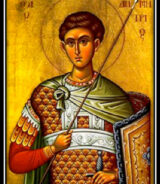
To say that there were very high expectations for Demetrius might be a grand understatement. Demetrius had succeeded by most of the Imperial rubrics of success. He was a soldier of distinction. He had risen to leadership within the legions. He had the ear of influential and important members of Roman society. Overall, he had a comfortable and secure life. All of this was largely because he was the son of a Roman senator.Though the Senate was not as powerful as it once had been it was still a force to be reckoned with under the leadership of Diocletian. The strength of the emperors and leaders had weakened the influence of the Senate for sure but it had not stripped this illustrious body of its power and influence within Roman society.
Because of his status as a child of privilege, Demetrius was held to exceedingly high standards and expectations both at home and in the larger society. Even Roman peasants–who were not the subject of any expectation–knew that Demetrius should be doing more, knowing more, and saying more. In so many ways, his status condemned him to living in the gap between success and failure never truly knowing if he could ever do enough to please his father, his family, or his society.
All of this is part of the reason it came as such a shock when Demetrius was accused by the Emperor’s men of being a Christian. In Diocletian’s Rome, this was an unforgivable offense. Assuredly, Demetrius’ father was surprised. It seems that Demetrius had given up seeking after success as the Empire described it. Instead, he was following after Jesus whom had been executed only a few hundred years previous.Even more surprising to everybody with their high imperial expectations was that Demetrius refused to deny his faith even when threatened with the loss of everything or promised great rewards to recant his faith. It seemed that Demetrius wasn’t even working from the same system of thought.They ran him through with spears because he wouldn’t live up to their standards and expectations and insisted on following an executed God.
Read more from Joshua Hearne at his personal website and the website of Grace and Main Fellowship, the non-traditional community he ministers with.
The Right Kind of Fear
Now that the truth is out about belly buttons and preachers, it seems appropriate to write from that same spirit of honesty. As always, the views expressed here are my own and not that of my parishes. Thank you for “listening” with me, whether we agree or disagree.
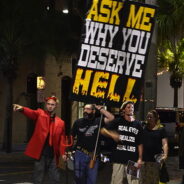
For as long as I can remember, on the way to my grandparents’ house lived an “Old Testament Prophet.” Throughout the front yard were large signs with quips from the books between Genesis and Malachi about fire, hell, wickedness, and an all-caps command to “REPENT!” Occasionally, the prophet would venture into the New Testament and add something Jesus said about violence or carrying a sword. In the hundreds of trips we made on that highway, I do not recall ever seeing the prophet. For all we knew, the owner of these calls to penitence could have been a prophetess. Mom and Dad liked to slow down to see which verse he/she had taken out of context and posted along the rural highway. But I wanted to speed by. The yard described a God who scared, and the Jesus I knew was one who calmed my fears. (more…)
Children and Funerals
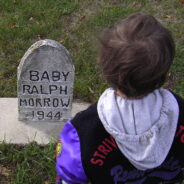
I first saw the little boy about thirty minutes before the funeral was scheduled to begin. I guessed him to be six or seven years old. He was standing at the edge of the chapel, looking toward the open casket. As I watched, he slowly approached the casket where his mother stood looking at the body of her father.
“I thought you were with your dad,” the mother said.
“I was, but I wanted to see Grandpa.” His mother, tears in her eyes, put her arm around her son and together they looked at the man who each had known all their lives.
“He looks nice,” the boy said.
“He does,” the mother replied. “He always did. He liked looking nice.” She then whispered something to her son which I couldn’t hear. He walked away.
A few minutes later, I saw him approach again. His mother had moved away for the moment. A man the boy didn’t know was at the casket. They looked at each other, and then the boy said, “He looks like he’s sleeping, but he’s dead. It’s not really him anymore. He’s gone to heaven.” Having explained this, the boy rejoined his dad. (more…)
Equipped For the Darkness
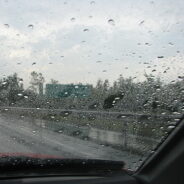
Like many people, I do not like driving in three conditions: rain, fog, or darkness. Early this morning, I faced all three as I set out before sunrise to drive home from Natchez, where I had co-officated at a funeral. Before I’d even pulled out of my friend’s driveway, I knew this would not be an easy journey. Misty rain called for windshield wipers. Then I realized I needed the defroster on. Street lamps were few, so I searched for the “bright” setting of my headlights. The back windshield then needed defrosting, and I had to roll down the windows to see out. All of this happened before even pulling onto the street! I eased through the neighborhood, punching buttons and turning knobs while trying to keep both eyes on the winding road. As I turned on to the highway, I rejoiced with the dawning of street lamps and a clear windshield. Then came the fog–and a switch to “fog lights” from “bright lights.” (more…)
Simon the Zealot, Apostle, Martyr
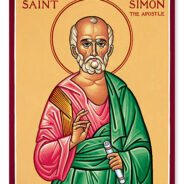
He had known it was going to happen. He had told Jesus repeatedly that he was hitting too close to home with the powerful and influential people. It seemed that Jesus didn’t care if he upset the people with enough power to do something about it. In one way, Simon admired that kind of fearless provocation of the powerful and yet, he also knew what happened to people who irritated and provoked Rome. He had scars and old wounds to remind him. He had memories of friends and compatriots who had spilled their blood in resistance to Rome and Rome’s allies. Now, Jesus hung from a cross. It was humiliating! Simon couldn’t understand how this was appropriate for somebody who proclaimed the dawning of a new Kingdom.
For Simon, it had always been clear that Rome was the enemy–that Rome was the problem. As a member of the Zealots, Simon was very familiar with a philosophy of resistance at every turn to repel the occupying Roman forces. If Rome wanted to stay in Israel, the Zealots meant to make them pay for it with their blood and eventual fear. Known as “dagger men,” the Zealots manipulated their small numbers to their advantage and began targeting the powerful for assassination. Willing to sacrifice themselves to shed enemy blood, they knew well that powerful people died as easily as any other when their throat was slit. (more…)
Yoga Theology: “Preachers Have Belly Buttons, Too”
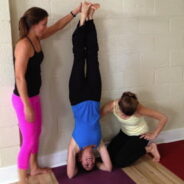
Disclaimer: This post contains candid thoughts of a preacher-lady, clergyperson, minister, or however else you choose to describe me. Also, I wrote this after spending a lot of time standing on my head. Though I sometimes use the plural pronoun, “we,” the thoughts shared here are my own.
This weekend, Scotta Brady from Butterfly Yoga in Jackson, MS, visited the delta to lead a workshop. As I wrote in my last reflection on “yoga theology,” it’s no secret that I have an aversion to inversions, and the final session focused on “upside-down poses.” With instruction from Scotta and the encouragement of my fellows students, I found my way safely to headstand. While upside down, my shirt crept away from my waistline, a common casualty of inversions. The following conversation then took place. (more…)
Saul
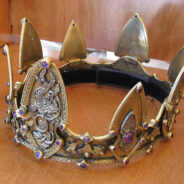
I did not want to be king.
I hid in the midst of the baggage,
I knew the lot would fall on me;
Samuel had said so.
I did not want to be king.
But, when it was unavoidable,
I vowed,
I would be a good king.
And so I was.
I led our people in war,
I conquered our enemies,
I brought some measure of security to my people.
But,
I did not remember Amalek,
I did not blot out the name of Amalek,
I long,
now,
to forget Amalek. (more…)
Dream of A Friend
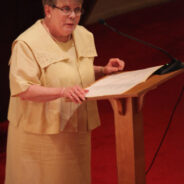
Last night I dreamed that I was sitting in a hospital room beside my friend Barbara. She was small and frail, but full of the love, determination, and mischievous humor that characterized her in health. I held her hand and watched as she triumphed over her illness by leaving us for something better. And I knew even then: this already happened.
It was two weeks ago when I sat in a room with Barbara, visiting with her family. She died minutes after Thursday, Sept. 27 (my birthday) became Friday, Sept. 28.
The dreaming image of me knew that I was in a place where the walls between this world and the next were well-worn, a celtic thin place. And I didn’t want to leave. (more…)
Follow Us!