
A Time to Cuss, A Time to Refrain From BS-ing

Last Friday, much of our attention turned to Sandy Hook Elementary School. The killing spree of a troubled 20-year-old man left many dead, injured, traumatized, grieving, and questioning. The media has been abuzz with this tragedy. The victims’ names and stories are in the headlines. Conversations about mental health and gun control are forefront. I spent a couple of hours yesterday afternoon reading a small fraction of articles shared on Facebook: Sunday sermon excerpts from the pastors in Newtown, witnesses’ accounts of the events that day, spiritual and not-so-spiritual commentaries, and the various status updates that people posted. Some friends offered appropriate prayers. Others reflected on how they didn’t want to take a single day with their children for granted. Teachers and students went to school with a touch of trepidation.
What I noticed more than anything else was a vast change in language on my Facebook News Feed. There was a lot of cussing going on. Four-letter words were all over blogs and status updates. This was not surprising. Of course we want to curse the darkness. Of course we want to lash out at a violence that is so contrary to the love of God. Anger, fear, grief, and shock cause us to say things that we wouldn’t say under normal circumstances. The beautiful thing about our Incarnate God is that God understands all of these emotions. With us, God despises the darkness that tries to steal and kill the beauty of his creation.
Sometimes, we just need to cuss, to let the anger and emotion be what they are.
But there’s also a time to refrain from the “BS-ing”–to move from cursing into blessing. How can we move from anger at what has happened to action that will prevent such tragedies in the future?
Curse the darkness by living as the light.
Instead of lambasting the mental health care system, find opportunities to raise awareness and funds for it.
Instead of getting angry at God, notice that he who is capable of great rage chooses instead to wipe gently the tears from our cheeks.
Instead of blaming guns and government, conduct research on our opinions and how we can lobby positively for change.
Instead of continually labeling opinions and actions, “BS,” in a cycle of resentment and anger, choose to speak words of blessing about God and one another.
In the gospel lesson for this upcoming Sunday, Elizabeth responds to Mary’s entrance with words of blessing: “Blessed are you among women, and blessed is the fruit of your womb…. blessed is she who believed that there will be a fulfillment of what the Lord promised” (Luke 1:39-45, NRSV). She blesses the God at work within Mary. She affirms Mary’s obedience. She praises Mary’s faith and the One who is faithful to her.
How do we bless when we feel so far from blessing? We must choose to bless God’s presence in our lives. We must choose to put our hope in his promises. We must choose to change our language from the way we feel to the way God feels about us. We must choose.
May the Light that pierced eternal darkness warm our hearts and soften our lips. May we praise our Creator even when we don’t understand the actions of creation. As he beckons us to the stable, inviting us to “come,” may we respond in the same invitation: “Come, Lord Jesus. Come.”
Emmanuel to each of you,
Pastor Darian
Read more from Darian Duckworth at her blog.
The Fiscal Cliff and a Promise

The fiscal cliff lies just ahead. While the people of the nation rush toward it, their government leaders draw lines in the sand and play double-dog-dare-you games with each other. Those who play the games have secure jobs, secure pensions, and a nice financial cushion—just in case the voters should choose not to reelect them at some point in the future. They play their games with those of us in the trenches always gladly throwing in the “ante” to keep the pot going.
What are we to do? Some“prophets” tell us that the cost of going over the fiscal cliff will be a return to recession with more job losses and less income for all of us—well, for all of us without special interest groups who will keep our treasuries filled. Others tell us that going over the cliff will actually turn out to be a good thing. (Is this not close to calling good evil and evil good? Jesus seemed to have something to say about that. Oh, well, what does Jesus know?)
What are we to do? Well, I am not one to go over the fiscal cliff, or any other cliff, silently. I will be screaming all the way there, over, and to the bottom. The President and members of Congress need to own the task of governing for the good of all. Those who don’t will not have my support or my vote.
I shall do more. I shall remember that it was not a president or a congress who said, “Fear not; for, behold, I bring you good tidings of great joy, which shall be to all people. For unto you is born this day in the city of David a savior, who is Christ the Lord” (Luke 2:10-11 KJV). It was a messenger from God.
I long for an equitable tax code, for justice for all, and for an end to the greed and envy which eventually leads to war and death. But my hopelies in the Christ whose love led him to take upon himself the sins of the world—mine, yours, the president’s, and those of congress.
While living to make our world a better place and while striving to hold elected officials accountable to govern for the good of all, I hold to the Christ celebrated in Advent—the One who is our HOPE . . . LOVE . . . JOY . . . PEACE. Because the Christ is all this and more, I will cling also to the promise made though Isaiah (2:2-4, ESV) long, long ago:
It shall come to pass in the latter days
that the mountain of the house of the Lord
shall be established as the highest of the mountains,
and shall be lifted up above the hills;
and all the nations shall flow to it,
and many peoples shall come, and say:
“Come, let us go up to the mountain of the Lord,
to the house of the God of Jacob,
that he may teach us his ways
and that we may walk in his paths.”
For out of Zion shall go the law,
and the word of the Lord from Jerusalem.
He shall judge between the nations,
and shall decide disputes for many peoples;
and they shall beat their swords into plowshares,
and their spears into pruning hooks;
nation shall not lift up sword against nation,
neither shall they learn war anymore.
Advent Prayer for Joy

This prayer was offered during worship on December 16, 2012 at Highland Hills Baptist Church in Macon, Georgia. Faithlab requested permission to share it here.
Holy One,
We gather in the name of the One whom you promised to send. We gather to find some good news today. We gather to find understanding. We gather to seek some light in the darkness.
On a day when we want to celebrate joy, we find it hard to be joyful when others are suffering, and grief is deep. We find it hard to be joyful when peace seems elusive. We find it hard to be joyful when our hearts are broken.
But we know that joy doesn’t always mean laughter and happiness, for true joy is your presence with us. True joy is knowing that you hold us, that you will abide with us, that you will bring healing.
Come, Lord Jesus. We are expecting you here. Move among us in such a way that makes it clear that you are near…that you are light in our darkness…that you are our joy.
In the name of the Christ child we pray, Amen.
Ruth DuCharme is minister to children at Highland Hills Baptist Church in Macon, Georgia. Contact Ruth.
Human Compassion
Some scholars asked why, when we take eggs from a nest, must we send away the mother bird? (Deut. 22:6-7) Some answered (e.g. Maimonides Guide 3, 48) that even though the mother bird cannot reason, she can feel. She has all of the tenderness of a human mother for her young. Thus, to spare her pain, we send her off so she does not see us taking her eggs.
Surely we have seen this with the animals in our own lives and what have seen in the work of naturalists displayed on our TV screens. We have witnessed the solicitude of a mother dog for her pups, the gentleness of a cat as she moves her kittens to a safer place, and the protectiveness of mother bears is a proverb. We have seen pictures of great, maned lions being swatted and chewed upon by their cubs. Parental love and patience, at least in some measure, sits within the hearts of our fellow creatures.
How then are we B’tzellem Ellohim, created in the image of G-D? It can’t be our capacity to love alone.
Is it in our reason? There are those in whom the years has dimmed the strength of their minds, yet would we consider them less than human? A child of a few weeks is thought to be created in the divine image and those with mental handicaps as holy as you or me.
Today, we read of Jacob, Jacob who is waiting for his estranged brother Esau, whose blessing he stole. He sent gifts and messengers. Now he learns that Esau is approaching with some four hundred men, certainly armed and trained in war. The text says of Jacob, “he was greatly frightened and was distressed.” (Gen. 32:8)
Rabbi Judah bar Ilai said: Are not fear and distress the same thing? The meaning, however, is that he was afraid he might be killed and he was distressed that he might kill. For he thought, “If he defeats me, will he not kill me? While if I win over him, will I not kill him? (Genesis Rabbah, Chapter 76, section 2)
Thus we see Jacob know that he might be killed if it came to a fight and being afraid. So it is with any animal fighting to save itself. The dumb creature may not be able to imagine its own death or have any conceptual ability, but it knows fear, fear for itself.
Here is the crux of the matter, Rabbi Judah teaches also that Jacob feared he would kill Esau. This is not a fear for himself, for his mortality, or that he might be hurt. Jacob fears hurting another. Besides being a bit of evidence in the moral development of Jacob as he aged, it is a clear marker of difference between animals and humans.
A bear protecting its cubs feels no regret or sorrow for striking down a threat. But Jacob felt compassion towards Esau. The Hebrew word that is translated as distress has the sense of narrowing in, being compressed. That is, Jacob knew he would defend himself if need be, but, by that necessity, he felt a claustrophobic contraction of his choice and freedom, a sick fear of hurting his brother.
Humans feel compassion. Humans feel regret when they take an action that will hurt another, even when they feel they have no choice. If one does not have compassion and does not feel regret, we say that he or she lacks humanity. That is, it is this empathy and compassion that distinguishes us from other creatures.
Rabbi Joshua Abraham Heschel speaks of divine pathos, the sorrow, sympathy, and compassion G-D feels for human suffering. It is, in the terms of Rabbi Harold Schulweis, when we actualize this divine predicate of feeling compassion and feeling empathy and regret, that we bring out the Holy in ourselves. It is in actualizing divine pathos that we are most human, most humane. It is, indeed, when we are most holy, most b’tzellem Elohiem. It is in our compassion that we are created in the likeness of G-D.
Finding Peace in the Wilderness

A Sermon Presented to St. Charles Avenue Baptist Church
In late October, right before Halloween, I took Annie, my two-year old, to a home improvement store to look for pumpkins. There were just a few outside, so we wandered inside in search for a few more from which to pick our perfect pumpkin. As soon as we walked in, Annie let out a shriek—“Santa!” I inwardly, well, maybe outwardly groaned, “Santa, already? We’re looking for pumpkins and Santa is already stocked on the shelves?”
I continued an internal dialogue of statements about the merchandising of Christmas and how we miss the spirit of Christmas because of our focus on material goods. You probably know the dialogue of which I’m speaking; you’ve probably had the same conversation.
It’s hard to get into the Christmas spirit when you’ve got pumpkins, ghosts, and witches on the brain. It’s hard to think about chestnuts roasting on an open fire when you haven’t even tasted Thanksgiving turkey yet.
As we strolled through the aisles at the store, she kept identifying, in loud excitement, all of the Santas and Frosty-s and reindeer that enthusiastically smiled down at her from their places on the shelves. It became harder and harder to keep a smile from appearing on my face. The glee that was bubbling inside her was causing her little body to bounce up and down in the shopping cart.
We turned down another aisle of larger-than-life inflatables. There were so many that one might wonder if the Thanksgiving Day Parade were coming to a neighborhood close to home. As we turned the corner, Annie reached high with her pointer finger and squealed: “Santa! Elmo! Baby Jesus!” My eyes looked up. Sure enough, between a Santa who wore swimming trunks and held a surf board, and Elmo, who was donning a red and green Christmas scarf, was a nativity scene, well-lit, of Mary, Joseph, and baby Jesus.
It was an odd moment for me. I was happy that Annie recognized baby Jesus, along with Santa and Elmo. But too, I felt a pang of disappointment that baby Jesus was considered to be of the same caliber of lawn art as any other tacky seasonal representation.
—————
This morning, we’ve read several verses from Scripture that talk about preparing. The verses from Malachi and the first chapter of Luke talk about the Son of God preparing creation for the Lord, but in Luke’s third chapter, John the Baptist tells creation to prepare for the coming of the Son of God. It is in this season of preparation that our faith takes on a little bit of a different feel—it is tuned from “faith of things that are” to “faith of things to come.”
Let’s read a few of the verses again, from Luke chapter 3, beginning in verse 2:
…the word of God came to John, son of Zechariah, in the wilderness. He went into all the region around the Jordan, proclaiming a baptism of repentance for the forgiveness of sins, as it is written in the book of the words of the prophet Isaiah, “The voice of the one crying out in the wilderness: ‘Prepare the way of the Lord, make his paths straight. Every valley shall be filled, and every mountain and hill shall be made low, and the crooked shall be made straight, and the rough ways made smooth; and all flesh shall see the salvation of God.’”
When I’ve read these verses in Luke in the past, I’ve always pictured a scene where a forest sits next to an open valley—there is a clear line defining the two from each other—and John is sitting in the woods amidst the trees, calling out to people in the open valley, telling them to make their paths straight.
But now that I’m older and wiser, I’m not so sure that there is an open valley. The verse, directly from Isaiah, gives some insight: “A voice cries out: In the wilderness, prepare the way of the Lord.” The image is now this: we are all in the wilderness together, with John, just like the Hebrew people and Moses after their escape from Egypt. We are in the midst of a wilderness where there are no paths and no sight of open valleys.
The verses tell us to prepare for the Messiah. On this Sunday, however, we are not told how to prepare. We are told to make paths straight for the Lord, but we are not told how to make those paths straight.
This week, we are in the wilderness, without directions on how to get out or directions on how to prepare. We are alone, with only our faith as sustenance.
We hear the leaves on the trees rustling in the wind and feel a cool breeze on our faces. We hear soft songs from birds, both near and far away. We smell the earth—the compost of dirt and water. We see the shadows of all of the creation, and glimpses of light where the sun has broken through.
Is our faith enough? Are we sure that the Messiah will come?
Perhaps we fill up the space in the trees, where the sunlight shines through, with beautiful ribbons, extraordinary candles, and less-brilliant inflatable lawn art because we are not sure that peace will happen. They become signs of comfort for us, tangible representations that give some assurance that we are not alone.
By placing familiar, pretty objects around us, we give the impression that we are at least preparing, but for what are we preparing? Do we believe that we will be given direction, a way out of the wilderness? Do we believe that we are truly alone? Have we lost all sense of hope and all faith in God, that we leave no space for peace, should it appear? If we do not give peace a space—if we do not give peace a chance—then we cannot be disappointed if it doesn’t come.
And if we create a false sense of peace, just in order to feel better about the wilderness around us, will we ever get the chance to truly be led into a bright, open valley? If we try and out-shine the living creation that already is, will we miss the Messiah, the living creation that is to come?
But that is not our faith, is it? We have not lost our faith, have we? We remember that our God, Jehovah Jireh, “God who will provide,” has given us manna before, don’t we? Our decorations are symbols that we are honoring the occasion, right?
This week, we are still in the wilderness, we are without direction, but we must remember that we have faith of things to come. We must see the beauty that the wilderness can offer–wandering isn’t always a bad thing to do. We must listen to the voice, calling to us from behind the trees, and we must allow ourselves to get excited and to listen for more direction. Joy can be found. Love is already here. Peace has come before and peace will come again.
Jesus has come before, in between sheep and goats, in between Wise Men and shepherds, swaddled, in a manger. Surely, Jesus will bring us peace again, even if it is in the space between surfer Santa and Elmo, or between wealth and hardship, or between anger and sadness. Prepare the space; prepare for peace.
Read more from Stephanie Little Coyne at her blog.
Marching to Hope’s Drumbeat
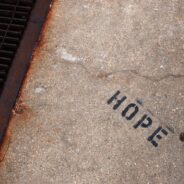
Presented to University Baptist Church, Starkville, MS (December 2, 2012)
Scripture Text: Luke 21:25-36 (click to read NLT)
As any marching band member will tell you, the heart of a marching band is its percussion section: the snare drums, the bass drums, the quads, the bells, the cymbals.
The percussion section provides the pulse. The percussion section keeps the blood flowing through the whole band. Without a percussion section, a marching band doesn’t move together as one; rather it collapses into simply a mass of people aimlessly strolling about in their own little worlds.
But a solid percussion section, keeping a steady and faithful rhythm, providing repetitive inflections and emphases, can snap weary marchers right back into position, infuse them with determination, and drive the whole unit onward as one unified body.
Our Gospel text today – the first Sunday in the season of Advent – is from Luke. And, like in recent weeks, it is a passage often referred to as “apocalyptic.”
And, as we mentioned in recent weeks, the purpose of “apocalyptic” literature in Scripture is not to preach doom and gloom, but rather to instill hope and encourage perseverance among those living in terrible times. Apocalyptic passages were intended to help people who were experiencing suffering to overcome a sense of dread-filled tunnel-vision be able to see instead a grand, big picture in which God’s will WILL permeate the world.
Luke’s Gospel itself was written in the context of tribulation. Luke was written after the destruction of the Jewish Temple and amidst Roman persecution. The original hearers of Luke’s Gospel, then, were terrified by the event unfolding around them, by what they saw coming down upon the earth. And, as people in every age tend to do in times of trouble, some individuals responded by surrendering to mind-numbing hedonism (might as well eat, drink and be merry for tomorrow …); some individuals sought to ease their pain and escape reality by surrendering to chemically-induced altered realities; and some surrendered to paralyzing anxiety and despair.
Luke writes in these circumstances, and is says – Hope! Believe! This is NOT all there is! Your salvation is NEAR! The Kingdom of God is just around the corner! Be strong! Be courageous! And, you will soon be standing in the very presence of the Son of Man!
Episcopal priest Sarah Dylan Breur suggests we should read sermons from the late Baptist preacher Rev. Martin Luther King, Jr., as examples of what passages like this one from Luke 21 mean for us living in the world today. She points to King’s sermons – in the context of their tumultuous times of the 1950s and 60s, especially in the American South – as sermons that focus on “what kind of climax God intends and is bringing about for human history.” King’s sermons remind us of “ ‘the big picture’ of what God is up to in the world” so that those who are poor and those who are suffering at the margins can “know that their struggle is far from over” even though “the powers that be say it is.”
Often we’ll hear Scriptures (like this one from Luke) used to tell us that this world is destined for destruction; however, regardless of how many preachers and “experts” tell us these things, the Bible corrects us. In her Advent sermon on this very text, Rev. Breur reminds us:
God made the world for a different purpose, and God is faithful in bringing God’s purposes about. Apocalyptic texts take a serious, Technicolor look at everything going on in the world — all the suffering and fear, all the fireworks the powers-that-be have to offer — and envision what Creation’s true end is, what God made this world for, the redemption for which the world groans and that God lovingly poured and is pouring out God’s Self to bring about.
One of the most joy-filled and hope-filled people I know is my friend, William. William is so upbeat and happy that he even plays piano and sings tenor in a Southern Gospel group – now that’s upbeat and happy!
I first met William about ten years ago. My whole family fell in love with William – his joy truly is contagious. Today, in addition to his leading a Southern Gospel group, he is also an ordained deacon in his local Baptist church.
Little did we know at the time of William’s backstory.
William, like me I learned, started, then dropped out of, Southern Baptist Theological Seminary. Unlike me, William did so as his young marriage was collapsing. William went another route in terms of a career, and was very successful at it – and all the while one of the most active members of his local church, particularly serving the senior citizens – hosting their fellowship gatherings, teaching their Sunday School classes, visiting with them, praying with them, serving them, and just all around loving them.
Some years passed, then William became sick – very, very sick – and faded out of his church. During the 1980s there emerged a fierce and deadly disease … and William was diagnosed with AIDS.
William was dying. Deteriorating slowly, yet at the same time, rapidly. Word spread among the senior adults at his Baptist church that William was very ill, terminally ill, and laying near death in a hospital.
With his world collapsing around him, having to “come out” to his family and close friends and causing them shame, pain and countless other devastating emotions; literally dying alone in a hospital; William’s seniors came to visit. Admitting that they did not understand, confessing they weren’t sure what to they, they admitted that they above everything else loved him. They would care for him, serve him, love him, and pour their lives out into his as he had done for them over the years.
William agreed to be a medical “guinea pig” – he agreed to take untested medications so that doctors and scientists could seek to find medicines to treat and maybe even one day cure HIV/AIDS. With some radical new drugs and drug cocktails, William began to regain his strength.
By the time my family and I met William – about five years after he was near-death in a hospital bed – we had no idea of this back-story. He was a tall, very thin man, for sure, but always present, always serving, always bursting forth with Christ’s love for everyone he encountered.
William’s happiness was not some shallow, annoying, empty optimism. William had stared into and walked through the ugliest and most painful events life could throw at him, and found Hope in the midst of the most hopeless of circumstances.
William could have accepted what others were telling him: that judgement and pain and sorrow were his and that was the end of his story. It would have been easy – his world was filled with consuming darkness and rejection.
But William was a person of deep faith – the kind of faith I long to have. William looked right into the pit of total despair and heard the voice of God saying to him, “For God so loved William, that He gave His only begotten Son.” William saw the “big picture” that apocalyptic literature presents to us.
As Sarah Dylan Breuer describes this Lukan passage: “It underscore(s) just how much God (is) redeeming, how immeasurable the height and breadth and depth of that redeeming love was and is.”
William heard the drumbeat of hope, and kept marching onward in faith that God has a different purpose, a different plan, a different outcome in mind than what most of us can see.
Let’s return to today’s Advent reading (downloaded from Global Ministries of the United Methodist Church) which we shared together at the beginning of the service:
As we dance into the arena of life we dance around the drum which is the heartbeat of our lives. The drum brings us strength, humility, and gratitude. It guides us through our journey in life. God, our Creator, is the drummer!
God sustains us from long ago to the present. God shows us the right path to follow. God leads us by His truth and give us hope. God pours out His unfailing love and forgiveness on us, His children.
May we continue to dance to the beat of God’s drum. May we become so tuned in to God in our lives that others can hear the cadence of Hope through us.
As others may perceive the world collapsing all around them, may we stay focused on the steady rhythmic beat of God’s Love, God’s Mercy, God’s Forgiveness, God’s Grace …
stay focused on the steady, rhythmic beat of Christ our Lord…
stay focused on the steady rhythmic beat of Christ’s purposes, of Christ’s redemption, of Christ’s freedom;
As others may perceive the world collapsing all around them, may others hear Hope’s Drumbeat driving us onward, pulling us together, keeping us in formation, and keeping our focus on Christ Our Lord, born into this world, which God so loves!
Is your heart dulled by the worries of this life?
Listen for Hope’s drumbeat …
and pray the prayer of Advent …
Come, Lord Jesus, Come!
A Cat Named Elliott & A Dog Named Isaac

“Human beings and animals share the same fate. One dies just like the other — both have the same life-breath … All go to the same place: all are from the dust; all return to the dust …. So I perceived that there was nothing better for human beings but to enjoy what they do because that’s what they’re allotted in life. Who, really, is able to see what will happen in the future?” ~ Ecclesiastes 3:19-20, 22 (Common English Bible)
When my friend, Meredith, told me that she had adopted a cat, I was not thrilled. I had grown up in a pet-less household, afraid of dogs and leery of cats. An unfortunate encounter with a bulldog at age two had left me with a scratch on the eye and a fear that all four-legged creatures were out to hurt me. Though I outgrew the extremeness of that trepidation, animals still made me uneasy.
Fortunately, I did develop an affection for dogs over the years. But I wasn’t sure what to think of cats. Years ago, I was leading worship at a nursing home that had a community cat and dog. The cat, Snowball, apparently disliked my preaching. She hissed at me, then came running after me during the service. Someone had to chase her down as Snowball literally ran me out of the building.
On the heels of the “Snowball Fight,” I made plans to visit Meredith — and Elliott. I told her about the encounter, and she assured me that Elliott was different. In fact, she told me, he was more like a dog than a cat in personality. I was still skeptical, but I did trust my friend.
Elliott and I spent lots of time together while Meredith had to work, and my leeriness of cats subsided. She was right: he was much more like a dog. We played with a ball, snuggled on the couch, and wandered around together. He seemed happy to be with me. By the time I left, I was as sad to leave Elliott as Meredith.
A few months ago, I received a text that I knew was coming but still dreaded: Elliott had been put to sleep after months of illness. Meredith cried. I cried. Everyone cried. This was the first time that I’d personally felt the effects of losing a pet, and it was, simply put, tough. Around the same time, I had begun making plans to adopt a dog of my own. Though I had planned to wait a few months to find my pup, along came Isaac. A white lab mix who followed a friend home on her morning walk, Isaac had me hooked the first time I met him. But on the heels of Elliott’s death, my usually optimistic attitude turned to sadness. All I could think about was the fact that, like Elliott, Isaac will not be around forever.
The writer of Ecclesiastes faced this same struggle to understand life’s fleetingness for all of us. It’s no surprise that he looked to God’s four-legged creatures in this search for meaning. We all face the same fate as mortals. But as Christians, we face our endings with hope: hope of a resurrection and reunion. As Advent is upon us, we recall that even the darkness of death, be it of a pet or a loved one, cannot separate us from the eternal light of the Christ child. Such hope should cast out our fears and call us to enjoy the light of today and the joy that comes with it.
Now, as I prepare for Isaac to move in, and as the happy memories of Elliott’s life overshadow the sadness of his passing, I give thanks for God’s creatures, especially our pets. In their lives, and in their deaths, are lessons for us on how to live: enjoying each breath, each day, and each moment with hope of more that are to come.
all good things to each of you,
Pastor Darian
Read more from Darian Duckworth at her blog.
A Little Passion Just Before Advent
Presented to University Baptist Church, Starkville, MS on Nov. 25, 2012
SCRIPTURE TEXT: John 18:33-37
Thanksgiving has come and gone and the Christmas shopping rush is in full swing. It’s the time for asking hard questions:
-
Why do good people trample upon each other to buy more stuff just hours after expressing thanks for already having enough?
-
And, why does the Lectionary give us a Gospel text about Jesus before Pilate just prior to the crucifixion just one week before the start of Advent and the anticipation of Christ’s birth?
I know that second question has been keeping you up all night, as it has me. It IS a tough one …
For those of us who grew up Baptist in the South – Advent is still a relatively new thing, despite the fact that it’s been a fairly established Christian tradition since as early as the Fourth Century. Advent traditionally involves a four-week period leading up to Jesus’ birth in which we focus on preparing our hearts and lives in anticipation of Christ coming. Typically the four weeks build one-upon-the-other with themes of hope, peace, joy and love … as expectation for these things to become manifest in human experience grows week after week. (more…)
SHA The-AH-logy: Flowers in the “Wah-Wah”

I’m spending this week with my niece who is almost two years old. To fulfill my calling as an auntie, I adhere to the belief that she is the smartest, sweetest, most perfect child ever. Her parents assure me otherwise, but I am standing my ground! We often refer to her as SHA, which are her initials. My interactions with her have given me a new branch of theology full of “ah!” moments, insights about God that the innocence of children best bring to light.
Having not seen her in a while, I wanted to “connect” with SHA and asked my sister what some of her favorite things were. I did not expect the following response: “SHA loves rocks, birds, and flowers.” I had been hoping for something less scientific, maybe eating ice cream or playing with dolls. Of those three, horticulture seemed more feasible than crash courses in ornithology or geology. A flower-savvy friend had sent me a number of photos of unusual flora and their names. On the way to dinner after my arrival, I sat next to SHA in the back seat and showed her pictures of the flowers. She’s at the age of wanting to repeat everything adults say, which made the illustrated botany lesson even more fun:
Me: This is a parrot tulip.
SHA: pa-too-ip
Me: (thinking to myself, “wow, she’s smart”) Here’s a pin cushion protea.
SHA: Ooooo…. proteeeeaaaaahhh
Me: (to self: that’s impressive) Here’s a hard one: Craspedia.
SHA: Cruh-pita
Me: Child, you are a genius.
Then I showed her a photo of a unique arrangement: a bouquet of flowers floating in a swimming pool. With no prompting from me, SHA pointed, smiled, and said, “Flowers in the wah-wah.”
Flowers in the water. Yes. Forget about technical terms. My niece had cut to the chase and stated the obvious.
As we grow in our relationships with God and study the Word, we need to expand our knowledge and vocabulary. We need to find the “craspedia” and “protea” details of the Bible. We need to learn different schools of theology and broaden the ways we talk about God. Spiritual growth calls for such intellectual growth, too.
At the same time, we should not become so caught up in the power of the human mind that we neglect the “flowers in the wah-wah”: the basic spiritual truth that God loves us unconditionally, the reassurance that we are saved by his grace, the gift of salvation made obvious in Jesus Christ. To grow spiritually and intellectually requires a balancing of the head and the heart.
The prophet Isaiah once said that “a little child shall lead us” (Isaiah 11:6). As a pastor, the most effective “theologians” who have led me over the years were, and still are, children. They remind us of the obvious. They also challenge us in our growth as we challenge them in theirs. Let us pay attention to the SHAs so that our theology will abound with “aha!” moments–from craspedia to flowers in the wah-wah.
all good things to each of you,
Pastor (and Auntie) Darian
Read more from Darian Duckworth at her blog.
Introducing ‘The Modern Magnificat’

The Modern Magnifat is now available for purchase in ebook and print form. I’d love to hear from you as you read it! In honor of the book being released, I’m posting the book introduction:
What does it mean to be called by God? How do you know when you’ve heard God’s voice? How do you discern where God is leading?Whom does God call? Might God be calling me?
Calling is surrounded by questions. Am I hearing this right? Am I crazy? God wants me to do what? When Moses was called, his first response was, “Who am I?” Isaiah quickly replied, “Here am I; send me!”But when God shared with Isaiah what that call meant, he questioned, “How long, O Lord?” Sarah laughed. Mary asked, “How can this be?”
Calling is confusing and curious. It often takes us by surprise, inviting us to join God’s work in a way we had never considered or dreamed.
For many women, the call to ministry is particularly challenging. Those of us raised in the Baptist tradition were often taught that God simply doesn’t call women—but only men—to the ministry. And yet, the Spirit continues blowing where she will, dancing around both women and men, inviting all to join in service. What is a woman to do when she hears that call? How is she to remain faithful to what she was taught, while remaining faithful to the voice of God?
This book is an attempt to chronicle the journey of calling. In its pages, you will find the stories of twenty-three Baptist women who heard God’s call. These women are from a variety of backgrounds, spanning Baptist life. You will find Southern Baptists, Cooperative Baptists, American Baptists, Missionary Baptists, Alliance of Baptists, and others. There are women who are committed to being life-long Baptists. There are women who find their identity in the Baptist church, but have found places of service among the Disciples of Christ, United Methodists, and Mennonites. There are women who are not sure if they will be able to remain Baptist.
Why Baptist women? Baptists are still at a deciding point concerning women in ministry. Most other denominations have either fully embraced women or have blanket rules prohibiting women from the pastorate. I believe Baptist women are in a unique situation, serving in a denomination that will ordain them, but may or may not hire them.
While this book was being compiled, Baptist Women in Ministry (BWIM) released a news report stating that there are now 150 women pastoring or co-pastoring in Alliance, Baptist General Association of Virginia, Baptist General Convention of Texas, and Cooperative Baptist Fellowship churches—the largest number in the history of these groups. The number of women pastoring or co-pastoring in American Baptist Churches is 485. According to the American Baptist Churches’ website, the denomination partners with 5,500 congregations. By these numbers, just over eight percent of American Baptist Churches have women pastors.
While there are women who are still being ordained and called by Southern Baptist Churches, the Southern Baptist Convention officially states that the role of pastor is reserved for men. Because of this, there are no real statistics for women serving in Southern Baptist life.
I am honored to be able to share these stories with you. Among the pages are women who have helped shape me: friends, BWIM colleagues, and my ministry mentor. Others are new friends I met through this project. Joy Yee, who graciously wrote the foreword for this book, is the first woman I heard preach. I was a college student at the time. Many others provided help and encouragement along the way. My dear friend, Rev. Kate Hanch, served as a sounding board for this book. Countless friends and family members helped spread the word in my search for stories.
I hope these stories help offer insight into the experience of calling. The words offered here will not make the experience any less mysterious, nor should they. God speaks to us all in individual and personal ways. But reading and hearing examples of how God speaks and calls is beneficial to all—men and women, ministers and laity. As ministers, I believe it is important to hear one another’s stories. It is a reminder that we are not alone, that there are others who share in the wider story.
For a denomination torn over women in ministry, I believe it is important to hear the voices of those who are seeking a place of service. Hearing call stories offers a face—or at least a name—to what is often labeled an issue. When we do not know particular women who are called to ministry, it is easy to make assumptions about what type of woman wants to be a pastor. When we do not hear the stories of how churches and individuals can hurt women, we are content in telling pastoral candidates that they are the best person for the position, but our churches are just not ready for a female pastor.
I have attempted to present these stories in the words of those who wrote them. Wherever possible, I edited only for grammar and clarity. I know you will be blessed as you read their words. The stories you will find in this book are sometimes painful, but they are also teeming with hope and strength. I pray that as you read, you will not only grieve, but rejoice in the many ways God is still working in and through Baptist women.
Read more from Jennifer Harris Dault at her blog.
Follow Us!