
Jesus Is Not an Easy Friend

Click photo for photo credit“What a friend we have in Jesus.” I love that old hymn; but there are days . . . .
There are days I’m just not sure what to do with Jesus. Unlike those folks of old who were so bothered by him they were willing to kill him to silence him, I wouldn’t go that far. I don’t even want to go that far. Most days I like him and some days I even want to be like him.
While I tend to reject the idea of the total depravity of man (and women, but those that espouse this doctrine don’t tend to use inclusive language, though many would be quick to blame women for their depravity) . . . . Pardon me, I digressed. While I tend to reject the idea of the total depravity of man, I do understand my sinful nature. I need a Savior. I understand the sentiments expressed by a church member this week in an email sent to me: “I know that I have reached this point in my life with all my hopes riding on His sacrifice on the Cross and His love for all of us as my only true hope for salvation.” So why would I want to get rid of Jesus?
Actually, there’s in no way do I want to get rid of Jesus. I just want to tame him a bit. His radicalism may have been okay for his day . . . maybe even necessary, but today is a different time. Radicalism can get you branded as a weirdo, a right- or left-wing politician, and a fanatic. Radicalism like his can cause otherwise sane people to do weird and risky things. Consider my neighbor and friend Wendell Berry.
Wendell tends to take the biblical ideas of justice and care of creation to the extreme. While he’s motivated many of us to be less wasteful, some of us to grow at least some of our own food, and a few of us to actually care about place enough to stay in place, he sometimes gets carried away. As I write this, seventy-six year-old Wendell and a few friends are camping out in the reception area of Governor Beshear’s office at the Kentucky State Capitol. Wendell and friends are upset about the effects of strip mining in Eastern Kentucky and about Kentucky adopting looser rules than the federal government. They had thought they would be arrested on Friday and come home shortly afterwards; but the Governor apparently hated to see nicely dressed folks go to jail. He gave them a pass to spend the weekend. If Wendell were less radical, he could have merely written another stinging essay about the evils, cleared his conscience, and been home this weekend to attend church with Tanya. If truth be known, this may all be Jesus’ fault. Wendell, contrary to what many of those folks who tend to discount women think, is a Jesus-follower. I suspect that while I sit comfortably in my study, Jesus has joined Wendell and his friends at the Capitol.
Jesus, you see, isn’t satisfied with our keeping the letter of the law. He wants us to go deeper and for our actions to be motivated by something older and more powerful than the law. Thus he equates calling a person a fool with murder, saying that both put us in danger of judgment (Matthew 5:21-26). Surely, he is joking. Goodness just because I think you’re a fool doesn’t mean I’d kill you. Of course, it might mean I’d dismiss you as unworthy of love, and I might not mourn were you to die of some cause other than my own hand. Jesus apparently believes my name-calling could go one step further, that having dismissed you as a fool, I might just eliminate you.
Crazy isn’t it? What are we going to do about Jesus? Reject him? Tame him (which is just the “civil, Christian way of rejecting him)? Or will we follow him? If the latter, you might want to get into shape. This isn’t going to be a walk in the park. Doubt that? Read Matthew 5-7 and meditate on those chapters for a few days.
What a friend we have in Jesus . . . he keeps pounding away at us and throwing grace at us. What are we to do?
Event Blog: ChurchWorks 2011

Greetings from ChurchWorks 2011! FaithLab will be blogging from the event starting today (Monday, Feb 21) through Wednesday, February 23.
The event, sponsored by the Cooperative Baptist Fellowship, draws young ministers and staff ministers together for fellowship and continuing education. This year, ChurchWorks is at FBC Decatur, Georgia.
To follow the ChurchWorks blog, just click on this link.
“Double A Gon’ Make It, Though”
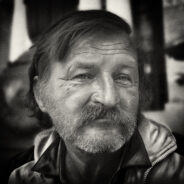
Click photo for photo creditLast Friday night, a few of my friends and I were gathering to prepare for yet another exciting evening at Vanderbilt. No, we weren’t meeting up at someone’s apartment to pregame before going to a bar, but seeing as I’m a college senior, I can see where you got that idea. We were meeting to talk and pray before going to dinner. We wanted to gather and pray because weren’t just going to Wendy’s or Chipotle. Our plan was to head over to West End Avenue, the major road running alongside Vanderbilt’s campus, and instead of walking past the homeless men we always see standing by street lamps and sitting on benches, we would stop and talk to someone, then ask them to join us for dinner. Rather than simply giving someone money, or even food, we wanted to offer the gift of companionship and conversation, and even the opportunity to sit in a warm building for a while.
When the idea was first suggested, I immediately liked it. A lot. Working with the homeless community in Nashville is something I’ve been passionate about for as long as I’ve lived here. First semester freshman year, as I was beginning to experiment with what my future ministry career might look like, I found myself attending meetings of various groups which were trying to find new and innovative solutions to the endemic problems of homelessness in this city. Many of these organizations never quite got off the ground; it’s one thing to open a soup kitchen or a homeless shelter, but determining exactly how to permanently solve these issues is a whole different situation. More recently, I’ve become passionate about Room in the Inn, a service that houses homeless individuals at local churches, and have been part of efforts to get The Contributor, our local street newspaper, more exposure on campus. I have always been taught that showing the love of God far outside one’s comfort zone is one of the most important ways to live out the Christian faith. After all, Jesus taught that “as you did it to one of the least of these my brothers and sisters, you did it for me” (Matt. 25:40), and he certainly must have chosen to begin his ministry with the words “The Spirit of the Lord is upon me, because he has anointed me to proclaim good news to the poor” (Luke 4:18a) for a reason. For me, ministry to the homeless is a way I have sought to live out the love of God, and not just through donating money or making soup, but through actually connecting with these fellow children of God.
And that’s what I was so excited about when we gathered Friday night, the idea of feeding someone not just physically but spiritually. When I sit down to eat with guests at Room in the Inn, I’m always fascinated by how much I can learn from the guests, and I hoped to have a similar experience as we set out that night. What actually happened was somewhat different from what we had initially planned. Three of us started walking towards the McDonald’s by Centennial Park. We found a man who referred to himself as Double A sitting on the wall of the park. We talked for a few minutes, then told him we were heading to dinner and asked if he’d like join. He refused, saying that he didn’t want to accept charity and that the workers in the McDonald’s wouldn’t let him in anyway, but we spent more than an hour just talking about his life and his experiences. He told us about his camp and where he usually slept in the park, about his family and the experiences that had led him to where he was today, some of them very painful to listen to. And instead of our commenting on how cold it must be sleeping outside, he playfully scolded us for not having on enough layers to guard against the below-freezing temperatures!
When we left, I was a little disappointed that we hadn’t gotten to take him to dinner, and not because this meant that my stomach was also beginning to grumble. On the face of things, it looked as though what we had set out to do, we had not done. Double A was still hungry, out in the cold. I’ve had plenty of experience with homeless people too proud to accept help, but that doesn’t make it any easier to leave someone without a roof over their head for another evening. But the truth of the matter is, one meal wasn’t going to put a roof over Double A’s head. I think what we realized that night about this new ministry idea, or at least new for us, is that the most important part is investing time in someone’s life. Because even though we didn’t feed Double A’s stomach, we had the opportunity to feed Double A’s heart and mind, planting the seed that God loves him, and that he is worth enough for three college students to stop and spend an hour with him. It was repeatedly evident that this was something Double A needed to hear that night; every time we asked him if he’d like to go in and eat, he insisted that he was just happy that we had stopped to talk to him. And most importantly, we learned just as much from talking to Double A as he did from us. Because when you set out to help someone else, the person who receives the most help is usually yourself.
Teenagers as Media Creators

Let’s face it, if you want to know how to solve a computer problem, learn how to use a feature on a smartphone, or how to approach using your church’s Facebook page, you’ll often get the best answers from teenagers. And why not? They were born into a world where these digital goodies already existed, while adults have had to learn and adapt to them.
I often encourage churches to use digital tools to do more storytelling. Our faith is often best shared through stories, and our websites and church events benefit from using photos, music and video to tell these stories.
Yet, many ministers and adults just don’t feel comfortable shooting or assembling a video, or gathering photos into a meaningful presentation, or using a smartphone to capture audio or video. And too often, that’s why we stick to just “telling” people stories. And while that’s better than nothing, visual storytelling is so much more powerful. Would you rather hear a lecture about the culture of Ireland, or see a video of it? Or, when returning from a mission trip, is it more powerful to have people stand at a microphone at talk about it, or to record their stories and place them on images and videos of the trip? One is easier, one is more powerful.
You have a competent production crew sitting in your church, and most of them are under 18.
Teens today make videos for school projects, videos to place on YouTube or Facebook, videos just for fun. They know how to use the tools at their disposal, whether they are video cameras, still cameras, or the recording features on their smartphones. They have the skills, and they have the time.
At our church here in Macon, we have built a tradition of using images and videos to tell stories. For the first several years, various adults (including me) did the heavy lifting. We had videos to kick off and offer updates on building programs, videos celebrating mission trips, videos that celebrate VBS week, videos that supported retreat content, and, of course, the annaul Family Christmas Party video.
Over the last three years, the bulk of the production work has shifted to our teenagers. Adults and youth often shoot photos and video together, but in the end, the teens do the production work of putting it all together. There’s always an adult or two that help offer guidance and suggestions, but the truth is that this oversight is needed less and less. And the videos keep getting better.
Maybe our youth are unique in having these skills (they are certainly gifted!), but I don’t think so. I’ll bet that there are budding photographers and videographers in your youth group too. With a little encouragement and guidance, they can show real gifts and leadership by helping tell the stories of your congregation.
They’ll Know We are Christians By Our T-Shirts

Click photo for photo creditIs it just me or does today’s Gospel passage (Matthew 5:13-20) read a bit differently than it did before this week’s weather? I don’t know about you, but a week ago I was taking inventory of my cabinets, making a list of canned goods, candles and batteries. I wanted to make sure that my husband and I had something to eat and a source of light and heat in case we were snowed in and lost electricity. I had a mental checklist of all of the candles and flashlights in the house and tried to calculate what was “enough” – what was required for adequate preparation. I didn’t personally stock up on salt, but I’m certainly glad those responsible for keeping the roads clear did.
And yet, a few days after the storm has passed, it is easy to forget our reliance on such basic things. I never needed my candles. And what good is the salt once the roads are clear? It merely creates a mess when we track it into our homes and places of business. In a world of neon color and low-sodium diets, what is the point of being salt and light?
I think Isaiah and Jesus spoke words about light and salt to worlds that are not much different from our own. At this point in the book of Isaiah (Isaiah 58:1-9), the prophet is speaking to a people recently returned from exile. The understanding is that Jerusalem had fallen because the Israelites were being punished by God. They may have worshipped God – but they also bowed down at the altars of many other so-called gods. And even now that they’ve been restored, the Temple still lies in ruins, a sign that all was not well with or for these people of God.
And we remember that Jesus was born into Roman occupation. The Israelites were looking for a Messiah who would send the Roman Emperor packing. Even in the story of Jesus’ birth, we are reminded of the occupation – “And it came to pass in those days, that there went out a decree from Caesar Augustus that all the world should be taxed.” The Ceasar – the Emperor — was in charge and making demands on the Israelites. No longer the promised land, is it?
Here in the United States, we don’t know much about occupation or exile. But I imagine we all know what it feels like when life seems out of control – whether it is the death of a loved one, waiting on a diagnosis, the loss of a job, being stuck at home – or maybe worse, away from home – in the middle of a blizzard. We watch Egypt in a time of political unrest over President Mubarek. If you understand what it is like to be in crisis or to have life spiral out of control, you understand the mindset of the people who first heard these messages. In times of crisis, we begin to struggle with identity – who are we? How do we go on now? What will define us in and through this situation?
The Israelites in Isaiah’s day were apparently pretending that everything was fine. “Day after day they seek me and delight to know my ways, as if they were a nation that practiced righteousness and did not forsake the ordinance of their God.” They were fakes. They were the folks acknowledging that they saw the Emperor’s beautiful new garments when they were only gazing upon his royal undies. “We’ll just pretend we never left and that the Temple is still here. If we all smile nicely, no one will ever know that we don’t have it all together.” In case you haven’t yet figured it out, I’ll let you in on a little secret – NO ONE has it all together… not even Pastor Keith. (Sorry, pastor!)
I don’t know about you, but I find hope in knowing that none of us has all of our ducks in a row. (Perhaps the proper phrase here at Holmeswood is “geese in a row?”) And beyond that, it is precisely the sort of people with ducks all over the place that Jesus calls the salt of the earth and the light of the world.
The people of Jesus’ day were trying to figure out what it meant to be God’s people and follow the covenant when under occupation. There were differing ideas about how to go about it. The Sadducees decided that cooperation with the Empire was best and embraced their new culture. Zealots were ready to take up weapons and fight the Romans. Many of the Pharisees realized that they were greatly outnumbered by the Romans and didn’t stand a chance in battle. They thought the best method was to separate themselves from the world and practice Torah quietly. I think the Pharisees are often given a bad reputation because Jesus seems to come into conflict with them a lot, but I think the church today often relates better to them than any other group – and for good reason. We often, perhaps mistakenly, label them as legalistic, but the Pharisees were simply interested in following God. They believed the way to be close to God was through the Torah – through the Scriptures. As Baptists, we are often called “People of the Book.” We’re Bible people. The average Pharisee was probably more like one of us than we realize.
And aren’t we trying to figure out who and what we are? What does it mean to be Holmeswood Baptist Church? How do we be a “different kind of Baptist?” What does it look like to be a missional church? Isn’t it easier just to cloister ourselves off and go about studying the Bible and worshipping God?
About 10 years ago, singer/songwriter Justin McRoberts designed a T-shirt that simply stated “And they will know that we are Christians by our T-shirts.” I’m not sure if he had the shirt in mind, but in 2004, Derek Webb wrote a song called “T-shirts” that follows the same lines. In it, he states: “they’ll know us by the t-shirts that we wear; they’ll know us by the way we point and stare at anyone whose sin looks worse than ours, who cannot hide the scars of this curse that we all bare; they’ll know us by our picket lines and signs; they’ll know us by the pride we hide behind; like anyone on earth is living right; and isn’t that why Jesus died — not to make us think we’re right.”
Thinking we have the right answers is not the fast that God chooses. It is so easy to come to church, do a few spiritual things and convince ourselves that we are somehow superior beings. That somehow we are deserving of God’s blessing. If other people would just see how good we are, they’d want in. No! As soon as we draw the lines of in and out, deserving and undeserving, we have missed it. Jesus would tell us that we will never enter the kingdom of heaven; Isaiah would say we are fasting to admire ourselves, as if we were a group that practiced righteousness.
Instead, Isaiah tells us that God chooses the fast that looses the bonds on injustice, undoes the thongs of the yoke, lets the oppressed go free. God chooses sharing our bread with the hungry, bringing the homeless poor into our houses, clothing the naked…
To be salt and light in our world, we must shine light on the injustices in our world. We must see those that are hidden from the eyes of society. We must ignore labels and erase dividing lines and embrace those who believe themselves to be unembraceable. Then, and only then, will our light break forth like the dawn.
And if we are to be known as the light of the world, we have to risk the light – Our Matthew passage tells us to put the light on the lampstand – not under a bushel. But when we do that, it becomes unprotected from the elements – we can no longer guard the light from the wind and rain – or snow. If we choose to be salt and light, we choose to be the salt and light for all. Not just ourselves and people like us.
One of my favorite images from the news this week is that of Egyptian Christians making themselves a human barricade to protect a group of praying Muslims from the protests that were raging around them. I saw a copy of the picture on a blog in my google reader “staff picks.” I point that out, because the staff picks rarely include anything that stands out as particularly Christian or religious. And yet a picture of Christians protecting Muslims – along with a long line of comments mostly from a Christian point-of-view – made the cut. Might this be a bit of salt and light?
Holmeswood does a great job of engaging the community. I read your monthly newsletter and talk to your ministers. Your list of missional ministries is impressive. I encourage you to let your interactions through those ministries be an opportunity to see the humanity of others – and of yourself. Be the salt of the earth and light of the world to each other. Marcia Riggs, professor of Christian ethics at Columbia Theological Seminary writes “Disciples who do not engage in such practices that humanize life on earth will be like salt that has lost its taste.” Are you salty?
They will know that we are Christians by our T-shirts? As Derek Webb says, “love, love, love is what we should be known for; love, love, love; it’s the how and it’s the why we live and breathe and we die.” Amen.
Preached at Holmeswood Baptist Church (Kansas City) Sunday morning
Isaiah 58:1-9, Matthew 5:13-20
Read more from Jennifer at her blog.
Did You See . . . ?

Click photo for photo creditI’ve been thinking a lot about hypocrites. Goodness knows they are easy enough to spot. They’re everywhere! If truth be told, I’ve got one or two in my church. Don’t even get me started about the ones who attend the other churches in town!
Hypocrites must have been part of creation from the very beginning. You find them throughout history and even in the pages of the Bible. In fact, some of the more animated moments in Jesus’ ministry are those in which he spies out the hypocrites and calls them out and down!
The 23rd chapter of Matthew is a great passage to hear read from the sidelines. You can hear the anger in Jesus’ voice and almost see the smoke rising from his ears. Woe to you who slam shut the doors of the kingdom . . . who make converts and turn them into children of hell . . . who keep the little rules like tithing while neglecting the weightier ones . . . who spit-shine the outside of the cup while leaving garbage inside it! He calls them “blind fools,” “hypocrites,” and “serpents . . . [a] brood of vipers.”
Like many others, when I read this chapter, I’m pumping my fist in the air and shouting, “You get’em Jesus!” Somewhere along in the shouting my throat gets tight and then closes. Suddenly, it is too clear to whom Jesus speaks. He speaks to me . . . and people like me, people whose business is religion and church. He speaks to people who preach the inclusive nature of the kingdom and who quietly (and not so quietly) work to hide the door from those who are not like us. He speaks to those who speak of love as our aim but who rush to condemn others.
Yes, I’ve been thinking a lot about hypocrites and I don’t like what I’m thinking . . . that just maybe Jesus’ definition is not my definition . . . that the hypocrites I see may not be the hypocrite Jesus would have me see.
I find it so easy to see what is wrong in the lives of others with whom I share community. Jesus, bless his persistent heart, keeps trying to fit me with corrective lenses that I may see as he sees. Try as I might, I can’t live long in Matthew 23. I can’t live long there because the Spirit keeps reminding me of something else that Jesus said . . . said to folks like me who can so easily see the hypocrisy of others. “Why do you see the speck that is in your neighbor’s eye, but do not notice the log in your own eye?” (Matthew 7:3 NRSV)
Pardon me! There’s something in my eye . . . .
Nig*@# Please! (Part Two: Talking the “N-word” with Oteil Burbridge)
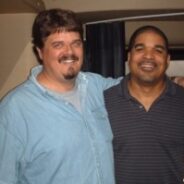
Bert Montgomery & Oteil BurbridgeThis is the second in a two-part series dealing with the “N-word” and White guilt. Oteil Burbridge is an internationally renowned bass-guitar funkmeister who plays just about anywhere with just about anybody when he’s not busy touring as the bassist with the Allman Brothers Band.
Bert: Hey, Oteil – interested in talking about the “N-word”… you and me? A honk’ and a Negro?
Oteil: Nigga, please! It’s one of my biggest causes! “Nigger” is simultaneously one of my favorite, and least favorite, words. Blazing Saddles is my favorite movie, so I’m always harping on this. I love how Mel Brooks dealt with it. That movie couldn’t be made today.
B: This rewriting of Huck Finn bothers me – Why are we afraid to allow it to be said in its historical context? I believe in letting the word exist lest we forget the intention behind it (sort of like everyone in the Harry Potter stories refusing to say the name “Voldemort”).
O: This situation is EXACTLY like “He-Who-Must-Not-Be-Named.” I think until Blacks give up using the word then no one else should have to.
B: Does it offend you to hear White people say “nigger”? I’ll be honest – I feel very uncomfortable saying it to you right now.
O: One of my White friends is as big of a Blazing Saddles/Richard Pryor/Dave Chappelle fan as I am. We realized how silly this word’s power was when he and his friends were afraid to quote parts of Pryor’s routines for fear of offending me. I was stupefied because I realized what an awkward position we let a mere word put us in. It also taught me that the tongue is in fact mightier than the sword. If a White (or Black) person doesn’t mean it in a hurtful way I don’t take it that way. If my White friend is merely quoting our favorite part of a Richard Pryor routine, then why would it offend me?
B: Yeah, but eventually, Pryor made a public renunciation of “nigger” and quit using it. It was after a trip he took to Africa.
O: I remember when that happened to Richard. It was pretty profound for him, I think, because he had never been in a country where Black people ran everything. In his mind Black people were always the underdog. But he is wrong when he says that the word “nigger” only means one thing. He forgets that Nigeria and the Niger River have something to do with it, too. While Richard may later have repudiated that word, he also popularized its use in the context of stand up comedy. I think that scared him later – and with good reason. Most of the other Black comics use it because it gives them a sense of rebellion. Dave Chappelle is the only one I’ve seen so far that actually uses our preoccupation with, and feelings toward, the word more than the word itself. Richard made a career out of more than just that word though. His characters were what really captured people. But characters like Mudbone said “nigger” a lot. Richard was being funny and used street language. That’s how everyone talked in the ghetto (or, in the country like with Mudbone), and he just reflected that. I’m really glad Richard co-wrote Blazing Saddles with Mel Brooks before he “converted.”
B: Do you use the “N-word”?
O: For my specific White friend and me it actually is now the highest compliment that we could pay somebody. In our world only niggas …
B: “Nig-gáhs”?
O: Make sure you pronounce it “nigga,” please. It makes all the difference! The -er on the end really can get you killed!
B: Thanks for the head’s up …
O: Anyway, in our world only niggas can accomplish certain things (whether they be White or Black). Dick Cheney could never funk like James Brown and Sly Stone, or make you cry like Mahalia or Aretha, or make you laugh with characters like Richard Pryor or Dave Chappelle. This also implies (in our reversed world) that Jesus is the HNIC and Satan is Whitey.
B: Ummm … HNIC?
O: Head Nigga In Charge.
B: Ahhh …
O: Conversely, “Whitey” is a state of mind and not limited to race. Any oppressor is “Whitey.” When we say “kill Whitey” we don’t mean a specific race. Mobutu is Whitey, too.
B: I’m still stunned by your description of Jesus as the HNIC …
O: I love Tony Campolo’s story about the pastor who preached that Jesus was a nigger because he purposely came to earth to be a slave, to be despised, to be wronged, etc. … Jesus said that “the last would be first.” So, who would have been first to inherit the Kingdom of God throughout most of this country’s history?
B: Wow – that’s powerful! The Gospel according to Oteil …
O: I want to clarify that when I say that “‘nigger’ is simultaneously my favorite and least favorite word” I am referring to what is essentially two different words, reflected by their different spellings. And, I want to clarify that the reason it would even be my favorite word at all is because it it focuses like a laser on so much that we need to get past in this country. Racism is the defining issue of my parents’ life and many others’ as well. It’s hard for younger non-Black people to understand how much of an impact it has had. While I think we need to get past it and realize that ALL people are “fallen” and will divide and segregate over any tribal difference (race, religion, ideology, nation, language…), we also can’t pretend racism never happened/happens in this specific way against Blacks in this country. To take this word’s power away it will require us to not be in denial of it through banning use of the word. Some Blacks will not give up using it anytime soon anyway. I probably won’t either. Making White people who are true fans of Richard Pryor or Dave Chappelle feel guilty about repeating some of their funniest lines is also ridiculous. Of course a lot of Blacks’ attitudes towards each other concerning color and hair are pretty ridiculous and surprising. I say we ALL cut the crap and just call a spade a spade. Sorry, I just couldn’t resist…
B: Care to explain that?
O: Have you seen the movie Good Hair by Chris Rock? Its a friggin’ mind blower. Many in the Black community are just as self-hating, prejudiced and homophobic as anyone else. A Black friend told me that a lady at a bar once told him that he was very nice and that she really liked him a lot, but that she could never really be with him because he wasn’t quite dark enough. Strange criteria.
B: Thanks for your time, Oteil. Got any last words?
O: Yeah – Kill Whitey! And, FREE DR. LAURA!
CLICK HERE to go to “Nig*@# Please (Part One – Confessing My White Guilt to My Black Pastor)” featuring Dr. Wanda Stallings.
© 2011, Bert Montgomery for the Faith Lab
Nig*@# Please!

Wanda Stallings & Bert Montgomery(Part One: Confessing my White Guilt to my Black Pastor) I’m a white kid from the suburbs of New Orleans. I was born in 1968, just a few weeks before Martin Luther King, Jr., was assassinated. In the very early 1970s when I started school, I was attending integrated schools. I’ve always had black friends. Being born and raised in the deep south which was adjusting to the end of segregation, I’ve always been sensitive to the very real harm of racism.
News that someone has published a non-offensive re-write of Mark Twain’s Huckleberry Finn upset me, though. It somehow added to my sense of “white guilt.” So, I contacted a couple of my black friends to help me out.
Dr. Wanda Stallings is an African-American minister who, like me, pastors a congregation here in Starkville, Mississippi. She had a hard time getting me to say the “N-word” …
Coming Soon: Part Two in which Oteil Burbridge presents Jesus as a nig*@# …
© 2011, Bert Montgomery for FaithLab
Hey, I Can Toss Out Random Phrases All Day Long!

Then they said that this was going somewhere unusual. He had no idea why it was there. I know, but why would we ever use that color for something like this? It generally only happens when she bends them this way. “We’ve got lumps of it round back.”
“And then I said…” Did you ever notice how random conversations can seem sometimes? If you are not there for the beginning of the conversation, or you don’t otherwise have a good context within which to work, some of the things you might hear people say will sound more than a little crazy. For some of us, that can be a good thing. I know that crazy phrases in titles, for instance, help me become more creative when I want to write, so I routinely welcome random thoughts. It works for prospective rock band names, too, as when Toad the Wet Sprocket took their name from a random phrase in a Monty Python skit. And, of course, there’s that great line I just quoted from Life of Brian. Something about that line makes me want to quote it frequently, right alongside “I’ve got a vewy good fwiend in Wome…”
But there we were in the bottom. At times, random phrases can be a problem. To people who do not share our faith perspective, for instance, much of what we say can seem totally random. Just yesterday, on Facebook, I was asked to discuss Baptist practices of baptism and how they compared to “biblical” baptism. And I thought, “why?” What difference do such conversations really make? What sense do such conversations make? I love reading the writings of Rabbi Kerber, and would love to hear more of what he has to say, but he does not write in Hebrew, and he also remains aware that not everyone shares his context. That is what makes his work speak so well. He does not use random phrases that leave us all behind, but seeks to include us.
We now live in an era where any of us can communicate with thousands of people, all over the world, in just a few seconds. Our faith, whatever it is, can be shared with millions, but that’s just not going to happen if we insist on everyone’s coming to understand things in our context first. I think that we need to understand that, without shared experiences and contexts, most of what we have to say to each other are just random phrases. Most of our conversations are just exchanges of random thoughts. To really reach and relate to people, we need to get beyond that. After that, we wore orange ones.
Upgrade Your Church Website: Tell Stories

Photo by FaithLab
Think about it… your church is much more than a collection of ministry announcements, committee meetings and special events. A lot more. In fact, if you polled your membership to discover what makes their experience together so valuable, they would start telling stories.
They would tell stories about how the community welcomes them and has made them “family.” There would be stories about when they were sick or in the hospital, and the church provided food, prayer and support. And there would be the stories from being part of ministries: of helping build homes for the poor, of providing food to the hungry, of caring for the elderly and the lonely. More stories would come from missions experiences, of traveling to help in the wake of a disaster, of helping persons in another culture, of making a difference through doing good things.
And then there are the everyday stories. Stories about attending a movie with friends that developed into a discussion about faith, belief, fear, doubt or hope. Stories about accidentally seeing God’s presence in someone else. Stories that highlight need or challenges.
Here’s a more concrete example. In my church, one of our unique ministries is to families with special needs children. We have developed approaches to training helpers who partner with these children to help them connect and engage with children’s activities. Special programs happen, and there are supporting efforts to provide some rest and “away time” for parents of special needs children… allowing the parents to enjoy participating in music, learning and missions programs, or to just have an evening out together. There are dozens of concrete stories that emerge from this ministry each year.
What does this have to do with your church website? Most church websites focus on the “structure and events” of a church… what/where/when things are happening. And while this information is very helpful, consider how rich your website would be if it began telling stories.
Your church can tell stories on your website in a couple of ways. First, just add a blog to your site and keep it updated. It is best if the blog is integrated into your site (not based on an external service). To keep the blog active, ministers or selected laypersons can regularly invite members to tell stories. If youth just went on a mission trip, ask one or more youth to write up (or do an audio recording) of a meaningful story from the experience. If a retreat is held for an adult group, enlist someone to write about the experience. The more specific the story, the better.
Over time, your church blog will begin to show a much deeper face of your church, and will build up a library of faith stories that remind the congregation, community and guests of the power of faith.
Second, redesign your church homepage so the most recent 2-3 articles are highlighted on the the front page. When members or guests visit your site, they will benefit from the shared stories, while also having access to the schedule and other info about church life.
When telling stories, feel free to also use photos, video clips and audio recordings…. anything that helps better tell the story. Check out the many ways we tell stories here on FaithLab, and imagine doing similar posts for your church website.
After all, the Bible is a collection of faith stories gathered and retold over thousands of years. Adding our faith stories to the mix is a wonderful way to share our faith and make a difference in lives.
The FaithLab can help your church with your website development and design. Have questions about this series? Leave a comment or contact us.
Follow Us!