
Bell’s Hell! It’s About Community!
“Honey, I figured it out!”
“Well, it’s about time,” my wife replied. “You’ve been addicted to these discussions long enough.” said my loving wife.
I’ve recently been captivated with the tension in the Christian Community over Rob Bell’s newest book, Love Wins. My addiction, per my wife, to the recent tense, hurtful, and “loving” dialogue stirred my soul so much it actually affected my productivity. Even last night, our minister and I texted about it until I learned he was driving, so I thought this was enough – I was obsessively putting others at risk.
Then, it hit me: I do not believe this disconnect is over the theology of heaven and hell.
Let me state upfront: I’m no theologian. The closest anyone has ever come to calling me a theologian was in class when a student interrupted my lecture and asked, “Mr. Sansing, are you a preacher?” Though flattered, I replied that I had been accused of many things in my life, but being a preacher was not one of them.
My family and I were part of a congregational birth in 2005. We say “birth” because we do not want anyone confused and think the congregation originated from a “church split.” The old congregation met in a small building and, being “land-locked,“ a new group was “birthed” to accommodate numerical growth.
I promise, all this relates to my epiphany…
See, I love our former church. They welcomed my daughter back to celebrate her marriage in their building. They welcomed my family and me some 15 years ago when we were financially bankrupt and unsure of our financial, legal, or spiritual survival.
Likewise, I love our new congregation. We are evolving as a non-traditional, multicultural, welcoming, and affirming community of faith. Perfect? No. Loving? Yes. Growing? For sure. Do we love the Good News? You bet!
But more than I love our whole congregation, I love the small group that comes into our home. When one of us hurts, laughs, or cries, we all hurt, laugh or cry. We know more about each other than we want the larger community to know.
We experience something I believe the early church experienced. I would lay down my life for one of these brothers or sisters. Some nights we have little Bible study; we just share refreshments, laughter, tears, and prayer.
So, how do these ramblings relate to the recent tension in our broad Christian community regarding Rob Bell?
I believe it is about the type of community people have experienced.
Because of my experiences, I am cautious about saying, “Well, the Bible couldn’t be clearer about this or that.”
I believe with all my soul the Bible is God’s Message; Jesus is God’s Son, and the only way to God is through Him. However, I have seen good, mostly rational people almost come to blows over what the Bible “clearly” says. When asked why we no longer plant Holy Kisses, some agree we cannot take everything literal – we have to know the context. Only problem? They usually get to define the context.
Recently, good, honest, God-fearing folk have spiritually beaten up each other. Risking what I try to avoid, the Bible seems clear to me about real love (John 15:13), judgment (Matthew 25: 31-46), and the great commandments (Matthew 22: 34-40).
Remember, I’m no theologian. However, I have experienced a type of Christian Community that is rare. For I was alone, broken spiritually, broken financially, and even afraid for my life. Then, a stranger came by my bed and said, “I am from the Christian Community. We are going to care for you until you can care for yourself.”
When that type of community is experienced, your focus can’t help but change.
That experience compels me to draw others into the community. I can but simply love, and I leave the judging to God.
Is Bell right or wrong? I do not know, but I do know there is nothing better in me than you that would cause God to draw me to Him instead of you.
Does love win? I am not sure it does in the sense I have read and/or heard about lately, but I know if I am to err in any way it better be to love “too much.”
One last thing, all this time I used worrying about the discourse over what Rob Bell says (or doesn’t say), I should have been spent praying for Japan. I am not nearly as afraid of Bell being right or wrong as I am about the consequences of misplaced priorities toward those alone, naked, hungry, thirsty, and/or in prison.
Hell’s bells! It’s about community, people!
William Sansing is a guest contributor who lives in Starkville, Mississippi, and works and teaches at both the local university and community college.
Praying in Our Gethsemane
This message was delivered as part of “24 Hours that Changed the World,” a series of worship services observing Lent sponsored by the Office of Religious Life at Vanderbilt University in Nashville, TN.
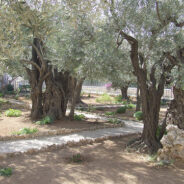
I visited Gethsemane while I was studying in Jerusalem. Today, a tiny portion of the garden where Jesus prayed is left, in the courtyard of the Church of All Nations. Inside this beautiful church, the altar has been built around the very piece of ground where Jesus is believed to have knelt and prayed before his arrest. Kneeling there, touching that ground, I imagined what it must have looked like then, when Jesus and his disciples walked to the garden after their Passover meal. The Mt. of Olives is located outside of the old city adjacent to St. Steven’s Gate, which is right behind Mt. Moriah, where the Temple once stood. Standing outside of the Church of all Nations, I could see the Dome of the Rock, so when the disciples stood among the olive trees in Gethsemane, they certainly would have been able to see the Temple. As they walked to the garden they would have walked right past the building, within easy reach of the authorities threatening Jesus. They also would have walked right past the most common place of prayer in Jerusalem to pray in a garden of olive trees on the side of a mountain, outside the city’s main walls.
Olive trees are rather small, scrawny things, and while the landscape at the base of the Mt. of Olives when I was there was dominated by the huge structure of the Church of All Nations, at the time of Jesus it would have been covered in these sinewy trees. In the dark, I can imagine that the side of this mountain, covered in these small skeletal trees, would have reminded us of a foreboding scene in a horror movie, and would have seemed an ominous setting for evening prayer to Jesus’ disciples. Likely, the same was true for Jesus himself. By this point, he has prophesied to the disciples many times that his betrayal and death were forthcoming. On these previous occasions, Jesus did not seem phased in the least by this revelation. But on this evening, he tells Peter, James, and John that his “soul is very sorrowful, even to death.”
Jesus certainly knew that he had come to earth to die for us, and he certainly knew why. But when the time came when his gruesome death was imminent, Jesus had a natural human reaction. He was afraid. And he did the one thing we are always encouraged to do when we are afraid, or nervous, or confused: he prayed. Jesus took the time to teach his disciples (and us) how best to pray; we’ve all memorized the Lord’s Prayer in Sunday School, we are often reminded by his teaching in scripture that what we ask for we will receive, that we need not worry about anything, but instead lift it up to God and trust God. But I think our most important lesson in prayer is found not in Jesus’ many lessons about prayer, but in the time Jesus was in such desperate need of prayer himself.
His prayer is simple and direct: “Abba, Father, all things are possible for you. Remove this cup from me. Yet not what I will, but what you will.” Jesus knows the pain that awaits him, and he is asking God to take it away. How many times have we asked that? We really don’t want to take that test we know we’re going to fail. We really don’t want to spend time with that person who annoys us so much. We really want our family member who has been so sick for so long to be freed from her illness and suffering. Whatever it is we’re facing, we often pray that God will take it away. And that is what Jesus says first. Jesus was human; if he hadn’t been, the sacrifice he made for us wouldn’t have worked. So he had the natural human reaction to what he was about to face. He was afraid. He feared the pain that he knew was coming, and he asked that his pain be removed. We often ask for things we fear to be changed, and we’re never told that this is an inappropriate request to make; the thing is that God’s answer to what we ask is very rarely what we expect. Very rarely does God simply remove the thing that scares us. Jesus recognizes this and prays accordingly. Jesus asks that his suffering be removed, but also asks that God’s will be done, not his own. God’s will; it’s not a difficult thing to say, but it’s a very difficult thing to actually want.
We can hardly imagine the suffering that Jesus was about to face, but he truly wanted God’s will to be done, even though God’s will meant he would stand trial and be beaten and crucified. We can’t even imagine if God’s will were that we spend an evening studying for a test rather than spending time with our friends; what would we do if God’s will were that we die for the good of others? But Jesus does just that, and he does it with an air of authority and confidence that brings many to believe in him and in God by the time the events of these fateful 24 hours were over. God’s answer to Jesus’ prayer was not to remove the suffering Jesus was about to face, but to give him the strength to bear it. Oddly enough, it takes great strength to ask for that strength. The simple prayer that God’s will be done is the best example Jesus provides of what our continuous conversation with God should look like, but it is easier to imitate than to actually believe. Whether we are simply progressing through our daily routine, or are in our own shadowy garden of Gethsemane, will we have the strength to ask for the strength to live in God’s will? Christ did it for us, our goal this Lent should be to do the same thing for Christ.
My Personal Immortality is Not the Point

Chester has been my Monday night dinner companion for the better part of five years. He’s my friend, despite having never once lifted a finger to help or encourage me or anyone else, despite having often expressed the most debauched kind of selfishness, and despite his contempt for faith.
The doctor says Chester has six to twelve months to live, but everyone knows he won’t last that long. It isn’t just that he refuses to go back for radiation and chemotherapy; he was in terrible shape already. He lives alone, he eats only fast food, and he started smoking and drinking again as soon as he got home from the hospital. His lung cancer is just the last straw.
I prayed for Chester the other night, but after all the ways he’s abused himself over the years, I wasn’t about to ask for healing. Actually, I’ve never thought prayer was very useful in terms of getting God to do the right thing anyway. It is us who need righteous motivation, not God. If God is Grace, she’s already doing her level best.
I didn’t pray for Chester’s salvation, either. Frankly, what worries me is not that his immortal soul will burn in Hell. What worries me is that I’m no longer sure he—or I—has an immortal soul to burn or save in the first place.
I always thought it was a package deal; if you believed in God, then you must believe in some kind of afterlife, too. And so I did, or at least so I told myself. While Heaven and Hell had nothing to do with my reasons for becoming a Christian, it went without saying that accepting Jesus as my personal savior meant accepting that such eternal destinations actually existed, along with my own immortal soul, which hitherto had been hanging in the balance between them. It never occurred to me that someone might put their faith in the living God without being persuaded that something awaits them beyond the day they die. It only occurs to me now, I think, because I am well on my way to becoming that someone.
It isn’t that I don’t like the idea of waking up on the other side of death, fully conscious as the one and only Bart Campolo, ready to be surprised and delighted by whatever God has in store. Actually, I like that idea very much. My problem is that it seems to me utterly impossible that my individual identity will somehow survive the inevitable demise of my physical brain.
I am no neuroscientist, but I have studied enough to know that each of the many and various parts of my personality has a physical location in my brain, and that if and when that location is altered in some way, my personality will be altered as well. Stimulate my limbic system one way, and I will become more sexually aggressive. Stimulate it a different way and I will become depressed. Damage part of my amygdala and I will become unable to form loving relationships. Damage part of my prefrontal cortex, on the other hand, and I will lose all sense of right and wrong.
In other words, my brain and my soul are essentially one and the same thing. My individual identity is a particular arrangement of particular organic matter over a particular period of time, and when that period comes to an end, that matter will be rearranged into something (or perhaps someone) else. So then, when my ashes return to ashes, and my dust to dust, I reckon Bart Campolo will be no more.
And yet, just as I still believe in a living God, I still believe in eternal life and daily strive towards that goal. I very intentionally love and teach as many children and young adults as I can, trusting that by so doing I am becoming part of each one, even as my parents and best teachers became part of me. In this way, I hope and expect to live on through their lives even after I die, and then in the lives of the younger ones they teach and love. As long as my line goes on, it seems to me, so will I. Even so, my personal immortality is not the point.
The point is that, as one who has so deeply appreciated my own human experience, I am desperate to ensure endless generations have that experience as well. I cannot breathe forever, but this air is so sweet that I want someone to breathe it always. I want someone—many someones—to taste this wonderful food, and to savor this fabulous wine. Having family and friends has been such a joy to me, laughing and dancing and making love have been so delightful, working to exhaustion and then resting has been so satisfying, and raising children so terrifying, believing in God so inspiring, and aging so interesting, that I can’t stand the thought that people might cease to do those things. I love life, after all, not just my own life.
Striving towards eternal life, for me at least, is not so much about getting God to punch my ticket for Heaven as it is about doing all I can to ensure that humanity itself endures, and in particular that best part of humanity scripture calls the image of God. It is about asking Grace to guide my thoughts and actions, to literally flow through me into the lives of those who are growing up behind me. It is about keeping the faith by loving my neighbor, and trusting that both of us are thereby becoming part of God’s endless love.
That’s right, both of us. Me and Chester, in this case. We’re in this thing together. So what if I am the lover this time, and he is the taker? I’ve been the taker plenty of other times, and besides, we all need friends like Chester to teach us about loving out of our nature and not just to get a result. I wish he had been less crude and selfish, and I wish he had done more for others during his life, but over the years Chester still became part of me, without even trying. So then, if I live on somehow, I reckon he will too. I know that isn’t fair, of course, but Grace is always better than fair.
In the meantime, however, confused as I may be about matters of eternity, Chester is on his way back to the hospital, and I am on my way to visit him. I may not always know what to believe anymore, but none of us needs to pray very long to know what to do.
Bart Campolo ministers through The Walnut Hills Fellowship in Cincinnati, Ohio. This article is reprinted with permission from his blog, which you can read here.
Shall We Gather at the Tavern?

A funny thing happened during church recently: we were invited to participate in karaoke, with the promise that everyone who sings gets a free shot of liquor. No kidding.
Church + karaoke = a free shot of booze.
Actually it was quite exciting; usually everything at church goes according to plan, and everybody knows how to behave, act, and talk. Let’s face it, “going to church” has become routine, common, and … dare I say it (dare! DARE!) … safe.
But this time was different. First of all, it was on a Tuesday evening, not a Sunday morning or even Wednesday night. Second, there was no planned music, no offering, not even a sermon. And finally, the majority of people present had no clue “church” was even happening.
This time “church” happened at Dave’s Dark Horse Tavern (Starkville, MS). We congregated in a corner booth; we were serenaded by classic rock; and we observed Holy Communion with Chicago-style deep (and I mean deep) dish pepperoni pizza and drinks.
Blasphemy? Maybe, but since Jesus was an accused blasphemer, I’m OK with that. Some friends and I have been gathering one night a month at the Tavern for discussions deeper than the deep dish pizza; and then came the epiphany – we’re having church. If church is the Body of Christ; I mean if we believe Jesus that “wherever two or more are gathered in my name,” then …
When we come together, and our time together is filled with sharing personal stories, and our time together is filled with giving thanks to God for “family” like this where we find God’s strength, comfort, healing, and community, and our time together is filled with laughter, reverence, irreverence, celebration and yes, prayer, then …
There is something both humble and holy about being not in a specially-designed place where everybody knows what’s going on, but in a tavern, filled with all sorts of folks laughing, crying, playing pool, and consuming a variety of beverages; well, there is something that liberates us from playing the roles of “Christian” so that we can be real people expressing our hurts, doubts, hopes and dreams. We are just plain folks enjoying the food and conversation.
And yet … we discover a genuine depth of holy fellowship in the presence of our Lord that I think is often absent in our planned-out, predictable and set-apart services.
Don’t get me wrong; there are many times I need to “attend church” in the formal sense; there are many times I need something reliable, comforting, and familiar because the world around me seems so strange and frightening. I’m not knocking that. I’m just saying that “church” is more than that. It’s WAYYYYYY more than that.
Sometimes “church” even happens in places where we’d never imagine – like among cursing, billiards, beer and whiskey. And sometimes, even for Baptists like me, the Lord’s Supper is not some prepackaged thin little cracker and a shot of grape juice, but deep dish pizza and refreshing beverages. Because when we meet at Dave’s Dark Horse Tavern, the Body of Christ is becoming One.
So, the next time you go somewhere out to eat with good friends, whether it’s a restaurant or even a tavern, maybe you’ll have “church,” too . . . and may God bless you for it (just remember: Jesus would tip 20%!).
This is an excerpt from Bert’s new book Psychic Pancakes & Communion Pizza (coming out in may from Smyth & Helwys Publishing).
Of Blisters and Ashes, High Heels and Lent

Love God; love yourself as God loves you; and love others as you love yourself.
As a Baptist minister, Ash Wednesday and the Christian season of Lent are unfamiliar things to me. But as I have tried to understand and embrace them, I have come to believe that Ash Wednesday and Lent are designed to do nothing more than to help us love God, love ourselves as God loves us, and love others as we love ourselves.
This past Monday (just prior to Ash Wednesday) I participated in the “Walk a Mile in Her Shoes” event at Mississippi State University. Men – students, faculty, and community leaders – donned high heels, slippers, pumps, etc., to draw attention to and stop sexual assault, rape and violence against women.
Then Tuesday morning arrived, and I became very aware of several blisters on my toes and on the bottoms of my feet. My ankles hurt. My knees hurt. My wife told me she was proud of me for doing the walk, and she was sorry I was hurting.
But as I was putting bandages on my sores, my thoughts turned to the deep hurt and unspeakable pain experienced by a college friend who was raped; my thoughts turned to a co-worker who, as a young girl, was sexually molested by a trusted family friend; and the fact that when I look out over the students in my classes, I will be looking out upon several young women who, just while being at college, have experienced sexual aggression and violence – and perhaps I will even be looking out upon some of the young men who have committed those acts.
In the days since walking that mile in women’s shoes, with each pinch of pain that comes with each step, I’ve noticed that I am praying for those women I know whose pain is deeper and far more severe than my blisters and aches will ever be. A few blisters and sore ankles created a level of empathy for others I had not had before.
I often show a documentary on Islam to my Introduction to Religion classes. In it, a Muslim man talks about Ramadan – the Islamic month of fasting. He speaks of this being a period to learn patience, humility, spirituality; a time to focus on God and prayer; a time to ask forgiveness for sins, to pray for guidance, and to take steps toward developing self-restraint.
He talks about Ramadan and fasting in the larger context of the Five Pillars of Islam, which includes almsgiving (or, charity). The man says that for almsgiving to be pure, it should not be simply done out of guilt or obligation, but out of genuine empathetic concern for others. He suggests that to be empathetic with someone who is hungry, he must first know the pains of hunger. Thus, the month of fasting helps this man focus on his sins, his repentance, and his need for God, but it also forms within him a physical connection with those who hurt and suffer throughout the year.
Being a Baptist, I’m still quite new to the rich Christian traditions of Ash Wednesday and Lent. I do know, though, that it’s more than just “giving up” something or trying to “pick up” something else. Jesus doesn’t speak of Lent (obviously, it developed in the Church), but he does tell us that everything comes down to loving God, and loving others as you love yourself.
So, whatever Lent is, it certainly has to be a means to the end of helping us love God. And with all of the “giving up” and “taking on” and fasting and discipline and confession and repentance, it is also has to be a means of helping us love ourselves as God loves us.
And, maybe it is also a means of helping us love others, too.
Maybe in our humble confessions beginning with Ash Wednesday which we remind ourselves that each of us comes from dust and to dust each of us shall return; and maybe in whatever it is we will be doing (or not doing) during the season of Lent which helps us love God with all of our heart, soul, mind and strength, and helps us love ourselves as God loves us; maybe in all of this God will also grow within us a greater sense of empathy for others.
It could very well be that in some self-denial, even with a little pain, God draws our attention to the pain and needs of others.
You may not have blisters on your feet, like I do, but many of us had ashes smudged on our foreheads recently. At the very least, may God take the ashes from our foreheads and place them in our vision so that everyone we see has the cross of ashes on their forehead – reminding us that they, just like we, come from ashes and to ashes we all will return.
And may God use whatever discipline you may be practicing to nurture a greater sense of empathy for a neighbor, a friend, a stranger, an enemy.
Love God. Love yourself. Love others. This is the purpose of Lent.
Now, if you’ll excuse me, I still have some blisters to tend to.
Marked for Death
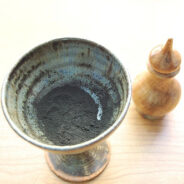
Click photo for photo credit“Remember that you are dust, and to dust you will return;
but the steadfast love of our Lord endures forever.”
On Wednesday I repeated these words over and over. Each time with a new face, a new story. Each time with a new revelation of what it means to be God’s child, to be a minister, to be human.
On Ash Wednesday, we receive ashes and think about our mortality. We ponder the ways we are like dust, like ash. We think about the end and what that means for each of us. As a minister (or minister-in-training or whatever you’d call me), I was charged with imposing ashes. In that role, I watched faces become somber as I reminded them of their humanity. Some needed no reminder. Doctor’s appointments, cancer treatments, surgerys and age have caused plenty of opportunities to think about end-of-life. Perhaps it was more a reminder for me to consider the fragile state in which all of life’s relationships reside. This week, one of our church members lost her mother. Another lost a husband. One is currently hospitalized after suffering a stroke.
Remember that you are dust.
I thought about how much I’ve come to love the people who stood in front of me. Those who have supported me in a new place, in a new role at church, as a seminary student. Those who rejoiced with me as I got married. Those who have loved me and loved members of my family before me. Those who have helped shape my husband into the man with whom I am continuously falling in love. Those who have become sisters and brothers — and perhaps crazy uncles or grandmothers. What a weighty task to remind them that life is fleeting.
And to dust you will return.
As I dipped my thumb into ash and brushed it across foreheads and palms, I was marking folks for death. The ash dripped from my fingers, dropping in places I couldn’t predict or control. Perhaps even there, death had a mind of its own.
Once the line dwindled, I walked over to Allyn, who was also imposing ashes. He dipped his finger into the bowl and began marking me. “Jennifer, you are dust.” In that moment we both realized its truth. The rest of the words came slowly, deliberately. “You can’t die.” “I’m sorry, but I will.” We sat down, hand in hand, trusting and hoping that the steadfast love of our Lord does endure forever.
Read more from Jennifer at her blog.
In celebration of Life AND Death

Two nights ago I received the sad news that my friend Cathy had passed away from aggressive ovarian cancer. Cathy and I, along with several friends in a group we call our “sacred circle,” shared an annual Christmas dinner just a few months ago. An intensely private person, Cathy, her natural hair grown once more, never told us that the cancer had not responded to treatment like doctors had hoped and it had spread. We celebrated together that night the joy of being in each other’s company and the beautiful gift of friendship –in particular, we celebrated Cathy’s life as she was there, present, with us.
Now she is gone. This reality seems incomprehensible.
Recuperating from minor surgery I am unable to attend the funeral of my friend.
Out of this heavy-heartedness I wrote to Suzanne, one of the “sacred circle” friends. Telling her that our circle of friends, as well as Cathy’s family, was in my prayers, I added that, though not physically able to be present, I would be at the funeral in thoughts, prayers and spirit.
At breakfast today, quite out of the blue, my eight year old, who did not know Cathy or that she had died, asked, “Is everything around us alive?”
“What does it mean to be alive?” I replied.
“The milk you used to make the biscuit came from a cow who was alive and the flour came from wheat that was growing, but then you bake it to be a biscuit,” he said. “so does that mean the biscuit is dead or just changed? And…bacteria can still grow on it even though it’s baked so is the biscuit still really alive??” he continued. (Clearly this child does not need caffeine in the mornings to think clearly the way I do!)
His questions caused me to ponder. It was a mystery and could be argued by any skilled attorney for the affirmative or negative. I began thinking of Cathy’s life, her influence in the lives of so many, and her legacy now that she is gone from our daily contact. It drew me back to the words offered by Jesus as recorded in the book of John:
Jesus answered them…unless a grain of wheat falls into the earth and dies, it remains just a single grain; but if it dies, it bears much fruit. (John 12:24)
How can that be? I wonder, yet I know it is true.
The mystery of life –of what it means to be alive –is not a new or foolish question. The natural cycle of death, the hard questions about death and even the importance of acknowledging death’s role in being alive, should not be pushed aside. Are we, like the wheat, really gone when we die?
I received this email from Suzanne tonight concerning Cathy’s funeral:
What a beautiful celebration of a much too short life. From the steady flow of visitors, to the sanctuary filled with family and friends, to the lovely arrangement on the Altar gorgeous with the yellow daffodils that Cathy loved, to the marvelous prayer…to moving Homily, to the final walk behind her ashes, there was so much love and so many grateful hearts filled to overflowing because of her bright spirit and beautiful smile. Thanks be to God for the gift of Cathy[’s] …presence in our lives.”
Yes, death is a part of life. Acknowledging Cathy’s death in such a memorial service also acknowledges her singular, beautiful life itself –a life lived fully and in the love and mystery of the God who created her. Acknowledging Cathy’s life and death also means acknowledging that she is now part of something greater that is to come. That mystery that we cannot understand fully, that mystery that escapes our understanding, is still full of truth, even if I do not know how it can be.
So in celebration of the life and death of Cathy today, I cling to these words: …unless a grain of wheat falls into the earth and dies, it remains just a single grain; but if it dies, it bears much fruit.
Thanks be to God for the mystery of both life and death.
Spotting God… in the Extremes

“I am alpha and omega…the beginning and the end.” It’s one of the ways God defines God’s self. It’s a short list of the places we can find easy audience with God – beginnings and endings.
I would concur with God. (Which is always a good thing.) God is easily glimpsed in beginnings and endings. Sunrises and sunsets – the beginnings and endings of a day – are mesmerizing moments displaying the artistic presence of God.
The birth of a child and the death of a loved one – the beginnings and endings of life – tug us toward spiritual affirmations and questions concerning the presence of God. Nativity and crucifixion, creation and apocalypse, baptism and resurrection, diagnosis and cure…well…you get the picture. God’s presence is more profoundly experienced during beginnings and endings – alpha’s and omega’s.
I spend most of my time, however, in between these extremes. It’s all those other letters (and their accompanying perceived divine absence) with which I struggle. They are the ones dominating the daily grind of my life – beta to psi, bet to shin, B to Y. I like God…but I do miss God sometimes…
(Excluding ‘A’ and ‘Z,’ can you think of a life-challenge that begins with every other letter of the alphabet? Post a comment and let us know.)
Jim Dant is a pastor and popular worshop, retreat and event leader. Learn more here.
This article first appeared on FaithLab Jan 12, 2009.
Photo by wildpianist.
Practicing Fearlessness

Click photo for photo credit“Hi. I’m Jennifer. And I feel called to be a pastor.” Funny how ministry discernment can feel like the intro to an AA meeting (or at least how they are portrayed in movies and TV).
Last week I flew to Atlanta to meet with other Baptist Women in Ministry leaders. In order to fit the occasion, I put on my aqua “This is What a Preacher Looks Like” T-shirt. And I wore it to the airport. It wasn’t until I hit airport security that I realized I was practicing fearlessness. Who wants to be stuck on a plane with a self-proclaimed preacher? It was too warm for a jacket, so I had nothing to hide behind. I stepped up to the metal detectors with a smile, assuming I was a walking TSA target.
I passed through security with no issues, but ended up in several conversations at the gate. “So you are a preacher?” one woman asked. She was curious to hear about the sort of classes people take in seminary. The woman scanning tickets read my shirt aloud and seemed a bit perplexed – “interesting…” she said, pausing for a moment. “We’re glad to have you.”
On the plane, I ended up sitting next to a woman who was on her way to speak at a Christian conference. While her theology seemed rather different from mine, she encouraged me and even gave me a copy of a book she cowrote with her daughter.
In Atlanta, I had a fantastic time sharing stories with women who minister in a variety of wonderful ways. We all shared struggles of following our callings – from growing up in churches that taught God does not call women to death threats from communities who were afraid of women in leadership roles. There were also stories of great hope – from a church sharing hot food and company with folks stranded in an ice storm to helping college students explore their own sense of calling.
I returned home full of hope and encouragement for the church and for my own crazy ministry journey.
This weekend, I wore my “This is What a Preacher Looks Like” shirt again for the first day of preaching class (granted, covered by a sweatshirt – it was cold!). Allyn and I attended a lecture given by one of our heroes – Walter Brueggemann. Allyn convinced me to take off my sweatshirt and show off my T-shirt. I had a group of (non-Baptist) students ask where they could get their own.
While wearing a T-shirt hardly seems a great act of bravery, it has played a strangely significant role in my journey of calling. Growing up in a tradition where women are not allowed to preach, admitting that not only does God call women, but that God has called me is huge. And scary. Just today I admitted to a minister friend that I’m not sure I have what it takes. She was wise enough to remind me that none of us do. And isn’t that an amazing act of grace?
Read more from Jennifer at her blog.
The Hardest Part

The other day I ran into Cletus, an old friend I first met four years ago, over breakfast at the local soup kitchen. I don’t volunteer there; I go for the donuts. The priest who runs the place doesn’t mind. They’ve got plenty of volunteers, he tells me, but hardly anyone who’ll just sit at the table and talk with the guys about what’s in the newspaper. So now I’m that guy, and when it comes to current events, Cletus is my main sparring partner.
His story is familiar enough that I won’t bore you with the details. Suffice it to say he traded a good family and a good job for a bad woman and a bad habit, and ended up with nobody and nothing of value. Unless you count self-knowledge and a sense of humor, in which case Cletus is a rich man.
In any case, on the day in question I was just making my rounds in the neighborhood, connecting with old friends and letting myself be seen by the folks who moved in over the winter. I was glad when Cletus saw me and called my name. It takes a few passes before new neighbors figure out that I belong here, unless they see me hailed down and hugged by an “old head” like him.
We stood and talked on the sidewalk for a while, mainly about another friend from the soup kitchen who had just gotten out of a nursing home after a stroke, and was already back on the pipe. I never saw Charlie look better and happier than in that home, I told Cletus. I wished they’d never let him out.
“Aw, Bart,” he said, “you know ol’ Charlie may have been better off in there, but what he really wanted was to be back out here, doin’ his thing.” He paused. “We all do what we want in the end.”
I nodded, and half-jokingly asked what I should say to the church people who are always asking me how they can help street guys like Charlie and him. He laughed out loud at that.
“Tell ‘em that most of us don’t want their help! Hell, I know I don’t! I had what they have and I threw it away to get high and chase women. That’s still my choice. If I ever get tired of it, I know you’ll help me, but for now I’m just as happy to have you as a friend and leave it at that.”
Then I laughed out loud too, and we left it at that.
We all do what we want in the end, says Cletus, and around here that’s the problem. For his wife and kids, and for the doctors and nurses who spent their time and your money fixing up ol’ Charlie, that’s the problem. For a guy like me, who keeps walking around wondering what I’m doing here, that’s the problem.
What am I doing here? Waiting for Cletus to want something better.
P.S. – If you are interested, you can donate online at www.thewalnuthillsfellowship.org to support our little fellowship, which is conveniently registered as a 501c3 non-profit organization.
Bart Campolo ministers through The Walnut Hills Fellowship in Cincinnati, Ohio. This article is reprinted from his blog, which you can read here.
Follow Us!