
The next day, I didn’t buy a gun

My friend Ashley and I were on our way to pick up a family for Monday night dinner when we saw a bunch of teenagers and adults at the next corner, gathered around two kids fighting over a bicycle. As we drove closer, I realized that the shirtless, crying boy clinging to the handlebars was D-man, a skinny 14-year old we’ve known since he was nine, and that the other kid, calmly sitting on the bike and shaking his head, was actually a grown man. In full good neighbor mode, I rolled up and called out, “Yo, D-man, are you OK?”
“He’s taking my bike, Bart!” D-man sobbed back. “I didn’t do nothing, but he’s trying to take my bike!”
Before I could say anything, the young man on the bike cursed him. “You know y’all stole my cousin’s bike, bitch, so I’ma take this one from you,” he said, yanking hard on the handlebars. “Now let…it…go!”
D-man got shaken off, but he chased the bike thief across the street and grabbed on again, wailing over and over, “Pleeease man, don’t take my bike!” Ashley and I followed in the van, but this time I called out to the young man. “Hey come on, give the kid his bike back. You know that’s not right.” I was hoping the scrutiny of two respectable, upright adults might intimidate him into just walking away, but he just sneered at me and shouted, “Stay out of this, man…this ain’t none of yo’ business anyway!”
I hesitated. All around me were hard-looking street corner guys, some laughing at the spectacle, others encouraging a fight. Two of D-man’s young friends were there, too, quietly straddling the fine line between not ditching your buddy and getting your own ass whipped. In a way, I quickly realized, I was straddling that same line, along with poor Ashley, whose only mistake that night was offering to come along for the ride.
Just then, out of nowhere another man appeared, much bigger than the first, his angry face covered with tattoos. “Let it go, bitch!” he shouted, as he walked up behind D-man and brutally cold-cocked him in the side of the head. The boy dropped to the street and lay there, completely motionless. The two men took his bike and disappeared down the street, as D-man’s friends screamed after them, threatening all kinds of violent retribution like a pair of miniature gangsters. I grabbed my cell phone and dialed 911, but before anyone answered Ashley called my name from where she was kneeling beside D-man. “This kid’s really hurt,” she said, “We’ve got to get him out of here.”
As the two of us were lifting D-man off the pavement and into the van, one of the street corner guys moved closer and called out to him. “Hey, little man!” he laughed mockingly, “You better toughen yo’self up, yo.”
Suddenly, I was the angry one. I turned to glare at the guy. “Shut up,” I practically spit at him, contempt dripping from my voice. “He’s just a kid. He doesn’t need to ‘toughen up.’ That guy who hit him was a grown man.” The young drug dealer’s smile disappeared and he looked back at me with dead eyes. “Who you talkin’ to, man? You don’t know me.” I knew I needed to back down, but by that point I’d had more than my fill of ghetto machismo. “You don’t know me either!” I shot back, though I kept moving back towards the driver’s side of the van. He didn’t try to stop me, but he shook his head. “Man, you better watch yo’self. People ‘round here be using guns…” I just drove away.
A few seconds later, Ashley saw a police cruiser turn the corner. We honked and yelled, but the cop kept looking straight ahead as he drove by. We tried to chase him down, but we lost him. I have nothing more to say about that.
In the van, D-man was groggy. When I asked who stole his bike, he told me the guy’s name was Shannon, but when I asked who hit him, he hesitated. “Did I get hit?” He was nauseous, too. I dropped Ashley at dinner and headed straight to the hospital.
On the way, I called D-man’s mom, who immediately reminded me that she’d moved their family out of our neighborhood just a few months before because she’d had enough “ghetto drama.” By the time she met us in the emergency room, however, she already knew the names of the thief, the hitter, the relative who stole the first bike, and the friend who had already retrieved his gun and gone out looking for revenge. To me, she seemed more concerned about street justice than about her son’s concussion, but maybe that was just her way of managing the shock. In any case, I prayed for them, hugged D-man, and left.
On my way back to the neighborhood, I asked the usual questions: Was I stupid to try to intervene? What else could I have done? Did that kid really almost die for a bicycle? Did I almost die for nothing? Would I be safer or better if I carried a gun? What is wrong with these people? What is wrong with me for thinking of them as “these people”?
I finally arrived at dinner just as the other adults were clearing the dishes and getting ready to play games with the kids. Ashley was anxious for an update, of course, so I told her what had happened at the hospital. Then we joined the game, ate our desserts, and went home for the night.
The next day, I didn’t buy a gun. Instead, I went back to that corner, looking for the guy I’d talked back to, hoping he’d let me talk first this time.
Sincerely,
Bart
Bart Campolo is minister at Walnut Hills Fellowship in Cincinnati Ohio. Read this post and others at his blog.
Smoked-up Vision

Have you burned anything lately?
Florida pastor Terry Jones had planned to do some burning on September 11—copies of the Quran; but he changed his mind—more than once. He did create a lot of smoke.
During the same week in Missouri, on U.S. Highway 60 between Dexter and Sikeston, there was an 18-car pile-up. For those of you who don’t know the area, Highway 60 is a four-lane divided highway that runs flat and straight. On even a bad day, it would take a lot of planning to create an 18-car pile-up. According to my mother, a news source I trust, a local farmer decided to burn some trash. The burning trash set the farmer’s corn field on fire. The field bordered the highway. Along came some drivers—some maybe on their way to the Hickory Log, a restaurant my Dad thought to be among the best places to eat in southeast Missouri. They were just minding their own business and doing their own thing, as was the farmer; but his thing created smoke—so much smoke that the drivers couldn’t see the road or each other.
Smoke is like that. It obscures vision, and what one can see through the smoke becomes distorted. Sometimes seeing things distorted can be worse than not seeing at all.
Was Pastor Terry Jones seeking publicity? Some see what he did as nothing more than an effort to get publicity. He certainly succeeded, which makes you wonder if many in the media have not already been affected by smoke. Personally, I believe Pastor Jones acted out of his sincere belief that in the name of Jesus it was time for someone to take a stand. His problem was that he was looking at Jesus through smoked vision.
Somewhere along the way to 9-11, the smoke cleared for Pastor Jones. He has now stated that he will not burn the Quran, “now or ever.” That good news; except that there is still smoke out there. According to another news report, his statement was “now is not the time,” which leaves me wondering when next we may hear from Pastor Jones or another like him.
All this talk about burning and smoke has gotten me to thinking about the church. The more I read the New Testament, particularly the Gospels, the more convinced I am that the church is lost in a smoke that is the consequence of fires it has set. We have lost sight of who we are and of what our purpose is. We’ve turned our churches into clubs where the saved can sing their songs, rehearse and tell their stories, lose their excess weight, build up those abs, and be entertained. We’ve turned inward and forgotten that he whom we claim to follow came not to condemn the world but that the world through him might be saved. We’ve installed lights in our sanctuaries and locked the world out, forgetting that the call of Jesus is for us to carry the light into the darkness.
I would like to be a faithful follower of Jesus. I confess the idea of wanting to be so frightens me. The cost seems high which leads me think that it would be less costly to stay inside; but that may be because I still have smoke in my eyes.
By the way, I didn’t burn a Quran this week. I had the novel idea to buy one and begin reading it.
Hurricane Katrina Recollections: Terry Gamble
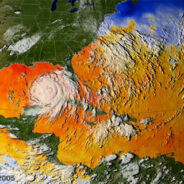
Since last fall (2009) Bert Montgomery, a native of New Orleans and the River Parishes, has been collecting stories from his childhood friends, high school classmates, neighbors and church family about their experiences during and after Hurricane Katrina. FaithLab is working with Bert to produce a book (in both traditional print and e-book formats) and an interactive website to honor his friends and their experiences.Throughout this fall – five years after Katrina – FaithLab will be posting excerpts leading up to the book’s publication. This is the first of several to come…
The first time I met Terry, I remember him telling me, “last name, ‘Gamble,’ like ….” and he pretended to roll and toss dice. Terry was a junior at Destrehan High when I started there as a sophomore; he was quite a good lead trumpet in the marching, jazz and concert bands. By the time he was graduating, he was also playing bass guitar in a heavy-metal band – big hair, spandex and the works.
Terry moved from Kenner to St. Rose when he was thirteen. He lived in and around the River Parishes and the New Orleans area all of his life, until Katrina hit. After Katrina, he lived in Missouri for two years; he now lives in Alabama.
Tell me about the week leading up to Hurricane Katrina: What were you hearing on the news and from neighbors? What were your initial thoughts? Did you initially plan to evacuate? Why or why not?
I worked at a printing company on Jefferson Highway in New Orleans. We watched the news that Friday, and Katrina was supposed to hit Pensacola. We did the usual thing before a storm: put stuff on top of our desks and got equipment off the ground in case we got a lot of rain and it flooded. We thought we’d just be back at work on Monday. We never evacuated for a storm, so it didn’t even cross my mind. Little did I know I would never go back there.
As Katrina approached, and evacuations became mandatory, what were you thinking and feeling, and how did you prepare to leave?
We didn’t leave until Sunday, the day before it hit. My wife was the manager of the Hilton downtown, and her boss wanted to her stay at the hotel for the storm. I didn’t want her to be down there. We fought about it; her family begged her not to go. All of the guests were out of the hotel by then so it didn’t make sense for her to be there. Her boss chewed her out and she cried, but we decided to leave and go to Florida. We left our cat there that we had for about 18 years. Figured we’d go to Florida, hang out on the beach with our two girls, and then be back for work on Monday.
Where did you go, and where did you stay?
We got caught in the traffic, and it took about sixteen hours to get to Jacksonville, Florida. No hotels had rooms until we got to the other side of Florida.
As you watched/heard news reports, what were you thinking/feeling?
Our house was in Slidell – we didn’t have flood insurance because we didn’t need it. We saw on the news that a hotel near our house had water on the second floor. We thought then that we lost everything . . . including our cat.
Were you able to maintain close contact with family/friends, and how long were you away from home?
My parents stayed in St. Rose; we were not able to make contact with them. Even the cell phones were out (after that, my dad’s company made it a policy for them to have cell phones with a 318 area code instead of 504 so they could keep in contact with each other). All the towers were down. We were not allowed to go home for two weeks. We went to my father-in-law’s house in Ozark, Missouri, and stayed there. Actually, we stayed at his neighbors’ house. My father-in-law had thirty (30!) people at his house staying with him from New Orleans. We finally got in touch with my parents, and they made it OK; except they didn’t have any power for a couple of weeks. My mother isn’t in great health, and the heat was not good for her. My brother and his family came with us to Missouri, also. He has two young children. If not for our kids, none of would have left.
In Missouri, we picked up a generator and some food and water to take back to my dad’s . . . there weren’t any generators anywhere around Louisiana. We also got some large fuel containers.
When did you and your family get to return? What was it like driving home?
When we went back to Louisiana, we were really nervous about what we would find; we figured a dead cat for sure. We left the kids at my father in-laws house in Missouri.
There wasn’t ANY gas to be found in northern Louisiana, and we were getting very nervous – so many cars were on the side of the road; probably just ran out of gas. Huge lines at gas stations. We got lucky and found a gas station in LaPlace with one pump that was working – probably because a lot of police and rescue people were staying in some hotels in LaPlace.
My parents in St. Rose were fine. Their house didn’t flood. They even had electricity when we got there. When we went to our house the next day it was strange – like living in a different country. Nothing looked the same; on the way to Slidell there were debris, tree limbs, and cars toppled over everywhere. New Orleans East was unbelievable.
We got to Slidell and the National Guard was there with machine guns checking our IDs. Scary. We had to dodge junk in the streets to get to our house. A cemetery is located a mile or so from our house – there were caskets on side of the street. I suppose they floated away from the cemetery during the storm.
What was the condition of your house when you got there?
You couldn’t even see our house with all the trees down. I left my truck there, and it was fine, no damage at all. Our house didn’t flood; our neighbors, though, had four-feet in their house. We just happened to be situated on a little ridge high enough to avoid the water.
We had trees down, a broken window, and a fence down from a tree falling on it. Other than that, the house was fine. Unbelievable. Our cat was still alive too! I guess she just drank toilet water for two weeks.
What was your work status upon your return?
The company I worked for got flooded really bad. The roof over my office flew off and everything in it was destroyed. My boss was living in Houston and decided to stay there. No telling how long if ever the business would reopen.
The Hilton where my wife worked was looted and damaged. Someone broke into her office, spray painted stuff on the walls, and even took a dump in there.
We looked at the situation, and with two small girls, decided it was best for them to stay in Missouri. We both found jobs there. Everyone there was great and very helpful. The neighbor we stayed with in Missouri let us live there for another six months until we got jobs and found a house to buy. We were able to sell our house in Slidell.
Missouri was nice at first but it wasn’t home. My wife got a job offer in Alabama, so we moved there. At least we were only five hours away from home instead of twelve! The girls managed changing schools and homes remarkably. They miss home, too. They don’t understand why they have to go to school on Mardi Gras and why there aren’t any parades.
© Bert Montgomery, 2010
Welcome

Welcome to the new FaithLab.com! We’ve updated our design to make the site even easier to navigate, and to build a foundation for the new services and products that FaithLab will soon be offering.
Our blog continues to be front and center in the new site. That’s because we believe the sharing of our faith stories is at the core of our mission. We also offer services, such as website development (and coming soon: publishing services) that help you tell your stories of faith (and those of your congregation or organization).
So welcome. We’ll be updating our blog regularly in the days ahead, and will also continue migrating our article archives from the previous FaithLab website.
We hope you enjoy the new FaithLab!
Write Once, Use Everywhere

Ministers, how many of you write an article or letter for your newsletter each week? If you are only sharing it in the printed newsletter, you are missing opportunities to reach persons.
In today’s culture, there is no one way that everyone gets information. Some still prefer the printed newsletter, while others would rather have an email or catch an update in their Facebook or Twitter stream. You’ve taken the effort to write a thoughtful article: why not share it as widely as possible?
The easiest way to share your writing more widely is to make sure your writings are posted on your church website, or a blog you maintain (and you really should have a blog as part of your church website). When you write a new article, also post it to your website/blog. Now, take another 30 seconds and grab the web address for the page containing your new article, and paste it as a link into your Facebook page (or your ministry’s “fan” page, or both), and then post the article title and link to your Twitter feed. When people click on either link, they will be taken to the page on your church website/blog where they can read the article. If your article is particularly interesting to your readers, they may “like” (in Facebook) or re-tweet (in Twitter) your post, thereby opening up your ideas to a whole new audience.
The goal isn’t just to encourage people to read your writing (as nice as that is), but also to bring the church to their minds. While they are visiting your site to read your article, they may also notice another ministry opportunity, or an event to attend.
With just a few extra minutes of effort, your writing has a chance to reach many more persons, and to connect with persons in the midst of their busy week.
A Work in Regress

It’s common to hear a person speak of himself as “a work in progress.” I’m sure I’ve said it, too, because that‘s generally the way I’ve seen myself. And why not? It’s allowed me to think of myself as both humble and goal-oriented, a pretty admirable combination.
The only problem is that it’s a partial truth. It’s equally true that I’m a work in regress. Whatever progress I may have made in my work, in continuing education, and the pursuit of various goals, I’ve let other things slide, often in big ways. Sometimes my most important relationships, though high on my official priority list, aren’t allotted much in the way of hours–or even minutes. Other times it’s spiritual disciplines or exercise. I once had time for them, but now they’re more theoretically than actually important, because the latter would require giving them a block of time each day.
Regress doesn’t happen because I want it or plan for it. It often happens because I’m not paying attention. I think that if I’m busy doing good things, if I’m tired at the end of the day, everything must be okay. But busy days and fatigue can be acquired year round at bargain prices. They’re common in the business world, and in medicine and education, as well as in fine arts and non-profits.
Regress also happens when jumping through religious hoops becomes a substitute for character. When I was a child in Sunday School, we checked boxes on our offering envelopes as a measure of positive activity for the week. Many of my Catholic friends attended Confession and Mass on Saturday or Sunday. Jewish friends observed the Sabbath and High Holy Days. All of these things are good, but if they aren’t accompanied by growth in character, including commitment to God and others, they’re merely a mirage.
During one period of my life, I met regularly with a group of women. We enjoyed being together and laughed a lot, but our primary task was accountability, aka, honesty. We sat around a table and answered a few set questions about relationships, service, spiritual disciplines, and character. As I look back on that time, I think there may have been less regress during that period of my life than most–because I was willing to be honest with God, myself and others.
The spiritual life, which is just another way of saying life, can’t be lived well without careful attention and helpful companions. But it can be lived well with them. Saying you’re a work in progress may hint at humility, but realizing you can’t make progress alone is the real deal.
What is That to You?

There are some interesting points in the Gospels that I have never understood. We all like to proof-text Jesus’ words to make one point or another, and, beyond that, I really love the Sermon on the Mount/Plain, and the Story of the Ungrateful Servant that follows it in Matthew. They form a significant part of the foundation of my relationship with Christ. At the same time, some of the passages in there confound me and perhaps always will. I’ve never really comprehended the idea that God would reward people who already have everything while taking from those who have little, though I’m pretty sure that this story from Matthew 25 refers to people who reflect the love of God, instead of people with material wealth.
So when I think about the idea of “Big Tent Christianity,” one of the more obscure passages of John immediately comes into my head. Peter refers to John and asks Jesus “what about him?” and Jesus responds that if it is his will that John stay until Jesus comes back, “what is that to you?” It lead to some speculation about John’s place in the big picture, which he is quick to clear up, but I find myself coming back to it more and more often these days.
It seems that there are all too many people who cannot accept a faith that will accept people who do not share their values and beliefs. We hear quite a it about how certain people cannot be in a church, cannot be “saved,” cannot be ministers, cannot be married, cannot take communion, or just cannot be as fully “Christian” as the rest of us. If you press us on it, we run back to some Bible text, usually one that, in context, really doesn’t support the situation to which we’re trying to apply it. Sometimes, we can find a text that does perfectly apply, and we climb over a mountain of scriptures that tell us that we have no right to pass such judgment in order to use it. Basically, we make a choice to value one thought over all the others that we find in scriptures, because in doing so we have a weapon against people we refuse to accept.
Worse yet, when we abuse the scriptures in this way, we often do so as a basis for building a belief system that forces our faith into the mold we make with our prejudices. We gather with like-minded people to exclude or otherwise hurt others, but even that is not good enough for us. When we take this as far as it usually goes, we start believing that God must share our thoughts on these people and we cannot follow a God who does not. We start arguing about what constitutes an “orthodox” creed that must be believed by all “true” believers, including how the Bible must be interpreted and what God must be like. It puts us in a trap from which we may never escape, since we have made a stand on what God must be and if that’s not what God is, we don’t really have a God anymore.
So in the midst of this tendency on our part to determine everyone’s place in our neat little faith, Jesus asks us, like he asked Peter.”What is that to you?” A “Big Tent Christianity” is one where people of faith do not feel diminished because someone else is different from them or is “getting away with” something that they feel is a “sin” to them. It’s a faith that recognizes that we really do make our own choices as to what we accept and don’t accept, that other people’s choices will be different from ours, and that we have a common mission that is more important than those things we would choose to separate us. At the end of the day, our faith boils down to the relationship that we have with God through Jesus Christ, and you have no more right to dictate someone my relationships than I have to dictate yours.
If people do not share your way of seeing things and doing things, what is that to you, really? Is your faith really that shallow? Is your God really that small? In a world where there are so many people who are hurting and needing so much, is it more important to be “right” in your own eyes, or be the person God calls you to be?
What is That to You? There are some interesting points in the Gospels that I have never understood. We all like to proof-text Jesus’ words to make one point or another, and, beyond that, I really love the Sermon on the Mount/Plain, and the Story of the Ungrateful Servant that follows it in Matthew. They form a significant part of the foundation of my relationship with Christ. At the same time, some of the passages in there confound me and perhaps always will. I’ve never really comprehended the idea that God would reward people who already have everything while taking from those who have little, though I’m pretty sure that this story from Matthew 25 refers to people who reflect the love of God, instead of people with material wealth.
So when I think about the idea of “Big Tent Christianity,” one of the more obscure passages of John immediately comes into my head. Peter refers to John and asks Jesus “what about him?” and Jesus responds that if it is his will that John stay until Jesus comes back, “what is that to you?” It lead to some speculation about John’s place in the big picture, which he is quick to clear up, but I find myself coming back to it more and more often these days.
It seems that there are all too many people who cannot accept a faith that will accept people who do not share their values and beliefs. We hear quite a it about how certain people cannot be in a church, cannot be “saved,” cannot be ministers, cannot be married, cannot take communion, or just cannot be as fully “Christian” as the rest of us. If you press us on it, we run back to some Bible text, usually one that, in context, really doesn’t support the situation to which we’re trying to apply it. Sometimes, we can find a text that does perfectly apply, and we climb over a mountain of scriptures that tell us that we have no right to pass such judgment in order to use it. Basically, we make a choice to value one thought over all the others that we find in scriptures, because in doing so we have a weapon against people we refuse to accept.
Worse yet, when we abuse the scriptures in this way, we often do so as a basis for building a belief system that forces our faith into the mold we make with our prejudices. We gather with like-minded people to exclude or otherwise hurt others, but even that is not good enough for us. When we take this as far as it usually goes, we start believing that God must share our thoughts on these people and we cannot follow a God who does not. We start arguing about what constitutes an “orthodox” creed that must be believed by all “true” believers, including how the Bible must be interpreted and what God must be like. It puts us in a trap from which we may never escape, since we have made a stand on what God must be and if that’s not what God is, we don’t really have a God anymore.
So in the midst of this tendency on our part to determine everyone’s place in our neat little faith, Jesus asks us, like he asked Peter.”What is that to you?” A “Big Tent Christianity” is one where people of faith do not feel diminished because someone else is different from them or is “getting away with” something that they feel is a “sin” to them. It’s a faith that recognizes that we really do make our own choices as to what we accept and don’t accept, that other people’s choices will be different from ours, and that we have a common mission that is more important than those things we would choose to separate us. At the end of the day, our faith boils down to the relationship that we have with God through Jesus Christ, and you have no more right to dictate someone my relationships than I have to dictate yours.
If people do not share your way of seeing things and doing things, what is that to you, really? Is your faith really that shallow? Is your God really that small? In a world where there are so many people who are hurting and needing so much, is it more important to be “right” in your own eyes, or be the person God calls you to be?
Learn more about Big Tent Christianity and their upcoming conference.
Going Inside the Big Tent with Charlie Manson
I clearly remember buying Vincent Bugliosi’s now legendary book Helter Skelter in paperback from my local grocery store when I was about twelve years old (I’m forty-one now, if you must know). I spent a good many hot summer days in St. Charles Parish, Louisiana, spread out on my comfortable bed in my air conditioned room, captivated by Bugliosi’s story. It wasn’t too long before the made-for-TV movie would make it’s occasional airing, and then I saw that, too.
I guess this was the beginning of my sociological imagination. I have always wondered, What can make a little kid grow up and commit murder? And in the case of the Manson Family, what can make little kids grow up, become obsessed with a crazed madman, and then commit such unspeakable acts of violence and torture? Following those questions, one more followed: what can make a little boy grow up into a crazed madman with such hatred and paranoia and mental instabilities that he would recruit young followers and then convince them to willfully carry out his apocalyptic biddings?
I remember pondering all these things at that young age, and I remember asking, Is there anything keeping me from falling into such traps? After all some of Manson’s “family” were good school kids, middle-class kids, even church kids . . . Then I also began looking around at some people I knew at school and in the neighborhood – and, they weren’t very different than some of the family members who had a rough life growing up and found somebody who would take them in unconditionally . . .
I guess what I am getting at is that I am a murderer, too. That’s hard for me to say, because I have never stabbed anybody, shot anybody, poisoned anybody; nor have I ever tried. I’m actually a bit of an easy-going pacifist, truth-be-told.
But I have really, really been filled with hatred towards a person or two before. I have really, really wished I could turn into the Hulk and beat somebody to a pulp who was bullying me. I have imagined how much nicer the world would be if a few people just didn’t exist anymore.
And I’ve heard Jesus say to me, then, that I have committed murder in my heart; so who am I to judge?
Not long ago I saw the latest publicized mugshot of Charles Manson at CNN.com. Even in not-too-long ago prison mug-shots, Manson still gave off really bad vibes – he continued to convey hatred, venom, almost pure evil in his stare . . . but this one is different. Oh, the swastika is still permanently scarring his forehead, but apart from that, he’s an old, old, sad-looking man.
I still hurt for the many families who have been forever tortured by Manson’s actions and his memory; those of the victims’ families, of course. And I also hurt for the families who had to endure the news that a child they loved, a son, daughter, brother, sister, cousin, nephew or niece, had committed heinous crimes and would spend the rest of their lives in jail.
But, for the first time ever, I felt pity for Manson when I saw this picture. I tried not to, but I couldn’t help it. Because underneath that swastika, and underneath the twisted paranoid hallucinations, and beneath the hatred . . . before there was a madman with a messianic complex; before there was a violent adult seducing young hippies with lots of drugs and sex; before there was a frustrated singer who couldn’t get a record deal; years and years before all of those things, there was a little boy and an angry world around him. And now, there’s an old pathetic, pitiful man, and a still angry world around him.
I kind of felt like he’s that sorry, old uncle we all have – you know, the mean drunk that most people despised and nobody in the family could tolerate much – though occasionally we might recall a glimpse of goodness in his heart.
I remember hearing a preacher ask a long time ago, “If God is love, and grace is real, then what about somebody like Charles Manson?”
And for the first time, I think I understand what that preacher was trying to say; and I think it has something to do with God’s grace being an enormous, always expanding tent …
© Bert Montgomery, August 10, 2010
Learn more about Big Tent Christianity and their upcoming conference.
Bert Montgomery is an author/speaker/pastor/teacher living in Starkville, MS. A slightly different version of this blog will be featured in his second book, Psychic Pancakes and Communion Pizza: Further Mutterings from a Church Misfit, due out from Smyth & Helwys Publishing in early 2011.
Big Tent Christianity
A man dies and goes to heaven. Upon arrival, he is met by Peter, who tells him that he will be a guide to help him get acclimated. Together they stroll past a large open area where there are several people dancing the hora, singing, enjoying a great feat, and generally having a good time. Peter turns to the man and says, “those are all Jews. After all they’ve been through throughout the centuries, they’re genuinely happy to be here.” Moving on, they come to another area where all manner of people are drinking, playing games, celebrating, and thoroughly enjoying themselves. Peter says, “Those are Catholics. They come together every now and then to celebrate their inclusion in heaven and the great sense of personal fulfillment that they each feel for being here.” They proceed to another area, where a number of people are sitting quietly, staring at a wall. The man asks who those people are and Peter responds “Shhhh! Those are Baptists. They think they’re the only people here!” That’s the way I first heard the joke. Of course, you can substitute nearly any church or religious group in there, and it will still make the point. When I’m asked what is meant by “Big Tent Christianity,” I think about the fact that we have, most assuredly, not practiced a “Big Tent “ mentality for a very long time. Sometimes, when I see what various Christian sects have done regarding each other, I can’t help but hear Mick Jagger sing something like: “When I’m watching my tv, and a man comes on and tells me, how bright my soul could be, but he can’t be a man ‘cause he does not go to the same little church as me, I can’t get no satisfaction.”
So why a “Big Tent?” I think that it talks about having a faith that is big enough to accept people and practices that are different. It means that whatever label you put on your faith is not as important as the author of that faith, and that “belief” is no longer the standard by which faith is measured, so much as “relevance.” This is a tough leap for many of us to make, since we have for so long defined ourselves by our differences. However, we need to get past the juvenile conceit that the particular relationship that we have with God through Jesus Christ is the template for the only way to have such a relationship.
For the longest time, Christians have focused too much on belief. If you sit in on enough worship services, even today, you’re bound to hear someone say that all the world’s problems can be solved, and all the world’s people can “saved” if they can only hear the message of Jesus Christ. It’s a drum that Christians have beaten for a very long time! Sometimes, though, today’s churches don’t seem to understand that we live in a world of cell phones, satellites, and the Internet, where few, if any messages are “unheard” anymore. What we need now is for Christians to make that message relevant, but, instead, many of us respond with something like “well, if you just heard the message the way we understand it….”
And there is where the problem lies. When we think that our personal interpretation of Christ is superior to everyone else’s, we fall into the trap of fighting amongst ourselves, instead of being the people Christ has called us to be. We spend so much time finding reasons to exclude others that we have precious little time to spend doing the things that we’re supposed to be doing. Given all the troubles that our world faces, our tendency to focus on our ultimately irrelevant differences makes us irrelevant as well, and if anyone is still out there asking how “sectarian atheism” is doing so well these days, your answer starts here.
We probably won’t agree on many things. In fact, if you look within any Christian congregation, you are bound to find points of belief on which they disagree. But our shared faith in Jesus Christ demands that we set aside our differences and live by that faith by working together. “Big Tent Christianity” is a faith that is as radically inclusive as Jesus was with his initial followers. Those terrorists, thieves, prostitutes, lawyers, fishermen, carpenters, betrayers, and whatever else they were – showed us that faith in Christ is for everyone, whatever their backgrounds, values, and habits. Failing to embrace the unconditional love inherent in our faith seems a betrayal of that faith. So open up, work, and celebrate with your fellow faithful, no matter how “weird” or “wrong” you think they might be. You are not the only ones here!
Learn more about Big Tent Christianity and their upcoming conference.
When Words Don’t Work

The church in Starry Night is the only building without yellow light emanating from the inside and one of the only places throughout the painting where there is not a hint of yellow. Maybe not too significant until you realize that Van Gogh used the color yellow to represent God. The Church at Auvers is of a beautiful church building but with no doors and the path splits instead of leading to the church building, Vincent Van Gogh painted Eternity’s Gate as a representation of himself sitting in a chair with his head in his hands seeming to be in anguish. He finished painting it three days before he shot himself.
I admired the beauty of each of these paintings before I knew the meaning behind them. The story that Van Gogh tells through his brushwork is beautiful. They are stories of life that he best could tell through the stroke of a brush on canvas.
There are a lot of times when I can’t put words to what I am thinking or what I am feeling but I can picture it in my head. Colors come to my head. Images flash across my memory. Emotions that cannot be put to words come alive through images.
Art tells a story.
What images would you use to tell your story?
Follow Us!