
The Ballad of John… and John (Ode to John Lennon)
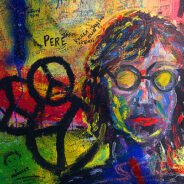
Today is the 30th anniversary of the death of John Lennon. FaithLab’s Bert Montgomery muses about the message of John Lennon, and also thinks a bit about another “John.”
The following is an reading of “The Ballad of John and … John (Ode to John Lennon)” from Elvis, Willie, Jesus & Me: The Musings and Mutterings of a Church Misfit (2009, Smyth & Helwys).
Click “read more” to listen to the audio reading.
Used by permission from Smyth & Helwys Publishing, Inc.
Advent in Whoville

Dietrich Bonhoeffer is well known for writing about “religionless Christianity.” It wasn’t that he was walking away from the faith, of course. He only wanted to jettison trappings that did nothing to help people live as citizens of God’s Kingdom, the kind of distracted and dangerous belief that allowed churches to remain open and unmoved while moral atrocities occurred on their doorsteps. In his estimation, a pared-down “religionless” faith required two essentials–prayer and works of righteousness.
This Advent, with my family living in two different states, most of our Advent and Christmas trappings are having a sabbatical year. The tree’s staying in the garage and the ornaments in boxes. I have only limited access to the music I always look forward to, from The Messiah to John Denver and the Muppets. Even the beautiful copper Advent candle stand that my brother made us remains packed away. Though I don’t feel qualified to bring anything to a discussion of religionless Chrisitanity, my circumstances have led me to contemplate the possibility of a sentiment-free Advent and Christmas.
My feelings are mixed as I imagine a year without the three Baby’s 1st Christmas ornaments, various wreath and reindeer ornaments made by little hands, and the original Starship Enterprise ornament, which I received as a seminary graduation present and always hangs in a place of honor easily visible from my favorite reading chair. I’m like the Whos down in Whoville after the Grinch stole everything, including their roast beast. I’m a little bewildered as I look around for the artifacts that have always seemed synonymous with the season. But, like the Whos, I know lack of stuff can’t keep Christmas from coming. Advent has arrived right on schedule and Christmas will, too.
I wonder, though, what a pared-down Advent should look like. If there are no Advent candles or calendars, what must there be in order for the season to leave its mark? When I was in marching band at Baylor, we would always do a pre-game show before home football games. We had to be ready to go as soon as the prayer was said over the loudspeaker. Our instructions were to stay alert. We weren’t to bow our heads. We never knew how long the prayer might last. So we’d stand at attention and whisper to each other: “Pray, pray, pray. Watch, watch, watch.” At the amen we moved into action.
Those whispered reminders strike me as a pretty good motto for Advent: “Pray, pray, pray. Watch, watch, watch.” And while you’re at it, commit a few acts of righteousness.
Be Still

Well, here we are. The time of Orthodox Advent, Traditional Advent, Ashura, Hanakkuh, Kwanzaa, Christmas and the like. It is wrapped for us in glitz, busyness, and noise. Just thinking about it can make one tired, right?
In the hullabaloo that has become this “holiday” time of year, it seems appropriate to consider again a passage recently offered in the Revised Common Lectionary. In Psalm 46, the Psalmist addresses the time in which we are suspended: between God’s revealing himself at Creation and the time when all is set aright and made complete. We live in a time when the seas roar and nations war one with the other.
Eugene Peterson’s interpretation of this well known Psalm tells us to stop what we are doing and, “Step out of the traffic! Take a long, loving look at me, your High God, above politics, above everything.”
Stop? Be still? Take a long, loving look? Who has time for that?? That is so counter-holiday-cultural and weird. It’s so … unproductive…so…uncomfortable for some of us!
In Advent, Christians embrace the time between Emmanuel’s birth and the time when Christ will be “all in all” at the completion of God’s work begun at creation. We recognize again that we live in a time of spiritual waiting. In this time of waiting, we are faced with turmoil within our personal lives and conflict visible all around us. We can feel lost. We can feel consumed. We can easily lose our focus. If we are truthful with ourselves, we can have doubts, asking “Who is God? Is God there? Do I really believe?” (We are in good company with the doubts. Remember the Apostle Paul? John of the Cross’s “dark night of the soul?” Martin Luther? Mother Teresa?)
Taking to heart the words of the Psalmist, however, we need to take the time to be still and know God in order for everything else to be in focus. We can emerge from the stillness with clarity, with renewed strength, knowing God and thus, God’s peace.
The stillness we are to employ is not borne out of boredom or obligation, however. It is rather an engaged stillness, a purposeful stillness. In her book “The Religious Potential of the Child” Dr. Sofia Cavalletti notes that the kind of silence necessary is an interior silence, an intentional settling of oneself, and it is accompanied by listening. (p.136). Cavalletti goes on to say that listening in the silence is “a leaning towards…” and is “the opening of ourselves in a receptive attitude towards” God.
Amid mounting holiday tensions, final exams, traveling, speculating on bowl games, wiki-leaks, unrest overseas, financial difficulties and the weight of the many lists before us, let us heed once more the words of the Psalmist during this Advent season. May we listen in intentional stillness, leaning in towards God a bit and away from the world for a while. Let us breathe in God’s presence with us. Perhaps then, we will know that God is exalted –God is above politics, and above everything, and we, like the Psalmist, will emerge from that stillness with God with clarity, renewed strength, and peace for the days ahead.
Pushing the Envelope
I have a pen pal who lives about seven miles away as the crow flies and about eleven as the crow drives a car around the hills and curves of our metro area. Given as how I tend to write quite, it’s a bit strange for me to have a pen pal, but there he is, a quick fifteen minute or so drive fro my home, and we’ve never met. We’ve published a number of his things here at Faithlab, but it’s mostly because he is a very good writer, who happens to have some compelling stories to tell. The other part of it is that he’s doing a very compelling ministry with people at the margins of society, and such stories deserve telling loudly and often.
I remember how, when I was serving local churches, I was always trying to find ways to help people push the envelope in finding new ways to participate in ministries that were outside their comfort zones. Obviously, that didn’t go over very well. Some local church folk don’t like to be encouraged to meet face to face with homeless people; to open their doors to people who are not welcome elsewhere; to encourage urban poor to farm on their property; or even to tolerate an adult with Aspergers’ who doesn’t always react perfectly at every social situation.
There are some limits to how far we are able to go in ministry, no matter how good our intentions, and we need people who are willing to push the envelopes that we are afraid to approach. I think that’s part of the idea that has shaped our concept of missions for a very long time. For many of us, missions are an adventure, and adventure, as it has been said, is someone else having a very hard time far away from where you are.
With that in mind, I remain fascinated by my pen pal’s ministry. His is a difficult struggle with difficult people, and it seems like he gets nowhere near the recognition or gratitude that he deserves for such work. Of course, he’s not the kind of person who seeks such things from ministry, but I’m pretty sure that he could use all the support he can get. I have ambitions of taking him out to lunch and talking about things, but I probably need to dream a bit bigger on that point.
Why am I telling you all this? I have long believed that people of faith have a “mission” to affect the world around them. It’s all well and good to send money or representatives to far-off lands in hopes that they can make a difference in the lives of the people to whom we’ve sent them, but it’s also very easy to forget, sometimes willfully, that people very close to us need our ministry as well. Yes, it it might creep us out a bit, and it’s sometimes hard to get people to interact with the kinds of people in your community that they basically try to avoid, but that’s what real “missions” is supposed to be: becoming the presence of God to people who need to sense that presence in their lives. It’s not something that we’re supposed to ship off somewhere else, so much as something that we’re supposed to embody wherever we are. Whether you know about them or not, there are people very near you who need the kind of ministry that you probably cannot do in the “normal” run of church life. They need you as a person more than an institution, so opportunities are always there.
More than that, we need to understand that thanks are something that we need to give rather than receive. I think that the best way to give the gratitude that we should is to take on thankless actions and under-appreciated ministries, and let the thanks that we don’t get serve as the balance for the thanks that we can never sufficiently give.
Of course, that’s all my opinion. How about being my new pen pal for a few minutes and sharing yours?
A Lesson from the Muse of Advent

They said it was so. I didn’t believe them. What did they know? They were old.
I’ve become one of them and now I know they knew what I did not. What I now wonder is: Did what they know make any difference or did they just keep on doing what they were doing in the manner they had always done it? There is a bigger question. Now that I have become one of them and now know that what they knew was true will it make any difference in what I do or the manner in which I do it?
Life is short and time moves swiftly. That is what they knew and I now know. It wasn’t always so. Once upon a time, a zillion years or so ago in a magical land called childhood, life was forever and time stood still.
Life wasn’t forever, which I should have figured out—great grandparents died and pets were buried; but the great grandparents were very old and the pets met with misfortune (a neighbor with a short fuse and a fast trigger). For the most part, time stretched out beyond the horizon. There was no end in sight.
What I didn’t understand was that the horizon was curved and that time’s line didn’t just keep on going forever. I know now. Time has circled and kicked me in the butt. It’s threatening to pass me. What happens when it does?
I don’t know, and I’m not too much bothered by the unknown. Along with the recognition that life is short and time moves swiftly, age has brought something else . . . an appreciation of the present. It is all I have, all I’ve ever had. My sin regarding time is not that I failed at an earlier age to understand its fleeting nature. My sin is that I spent too much of each present striving for the future.
The world’s gone crazy . . . or maybe it has always been crazy. What else explains throwing away life in Eden for the taste of one forbidden fruit? The craziness begs me to bring sanity; and for much of my life, I’ve sought to do that—ever striving to find a way to make tomorrow a better, saner place. As I look around today, it appears I’ve not been all that successful. Crazy still seems to reign. Young people who don’t know better live as if they have all the time in the world; and old people who do know better sigh at what they know and do again what they’ve done before. Oh, my . . . .
Wait! From somewhere amidst the craziness a voice is heard. Awake! Awake! Salvation is nearer than you think. The night is far spent. The dawn nears. Awake! It is the call of the muse of Advent, bidding us see our lives and our world from a different perspective.
The muse of Advent dares us to believe that time is saved only by living it and that the future is secured and redeemed only in the present. Awake! Live! Life is a gift from God and it is yours. Live it. The rest belongs to God. Leave it.
Can this be true? It must be for once upon a time, a time present in history, a child was born and came to live among us. They say he was the Son of God. What say we?
Does Anybody Really Know What Time it is?

Does anybody really care?
Have you heard of the term, “Body Burden”? It is a term that describes the impact of the accumulation of toxins in our bodies – the pollution that permeates everyone in the world. You carry a certain level of “body burden” just from the fact that you breathe air, walk on carpets, cross streets, eat food, drink water and have permeable skin.
In 2005, a group of researchers at two major laboratories tested umbilical cord blood from 10 babies born in August and September of 2004 in U.S. hospitals. The 10 children in this study were chosen randomly, from among 2004’s summer season of live births from mothers in the Red Cross’ volunteer national cord blood collection program. They were just a random, American sample of blood collected by the Red Cross after the cord was cut.
Well, the tests on the umbilical cord blood of these 10 children revealed some 287 chemicals found in the blood among them. They harbored pesticides, consumer product ingredients, and wastes from burning coal, gasoline, and garbage. Among the chemicals were eight perfluorochemicals used as stain and oil repellants in fast food packaging, clothes and textiles, dozens of widely used flame retardants and their toxic by-products; and numerous pesticides. Of the 287 chemicals detected, 180 are known to cause cancer in humans or animals, 217 are toxic to the brain and nervous system, and 208 cause birth defects or abnormal development in animal tests. And the real trouble is that the dangers of pre- or post-natal exposure to this complex mixture of carcinogens, developmental toxins and neurotoxins have never been studied. This 2005 study represents the first reported cord blood tests for 261 of the targeted chemicals and the first reported detections in cord blood for 209 compounds.
In short, we live in a time where we are born polluted.
And it is such a quiet, invisible pollution, isn’t it? It’s not like smoke from a smokestack or dead fish by the side of a river. Births still look like births. Babies still smell like babies. It’s hard to know how the clock is ticking on this. It’s hard to know what time it is about this – whether there is urgency or not, whether we should be doing something now or not. That’s how it often is, you know. The political and social debate surrounding these kinds of things is not really about whether this sort of thing is good or bad – no one likes pollution. The debate is around what time it is – how urgent and pressing? How much priority compared to other things? How demanding of action? Is it time to stand up and shout or wait it out for a future solution or better time? Is it time to deliberate, distract and deny? Or, recently – Is it really the time to focus on jobs to the exclusion of all else?
Does Anybody Really Know What Time it Is?
This brings to mind an encounter Jesus had in Herod’s temple with his disciples. In Luke 21, we find a crowd of people admiring the temple – Herod’s beautiful temple, build with stones literally as large as busses – 10 feet high, 20 feet long, stacked one upon another. An enormous building, seemingly as permanent as the earth itself. To big to fail. Too endorsed by God to ever meet destruction. Certainly a safe place to invest one’s entire heart and soul and that of your children and your children’s children. A structure with plenty of time.
Jesus stops to teach a different viewpoint on what time it was:
“As for these things that you see, the days will come when not one stone will be left upon another; all will be thrown down.”
The question Jesus wanted his disciples to ask was, “What time is it here?” What time is it for this temple and the people in it? How should one live in such a time as this?
The church is always been challenged with this same situation – what time is it? Is it time for repentance? Is it time for quiet prayer and waiting? Is it time to take a stand for some form of justice or some toxic reality? Is it time to resist a change, accept a change or promote a change? When we look around at our world today – what time is God saying it is? What hope and perseverance are we called to maintain in this day, and what good are we not to grow weary of doing? This is a crucial question for the church in our day. If the church could just agree on what time it is, in it, it would find ways to unity, purpose and vital mission.
Let Us Agree Upon the Time
I would like to propose that it is now time for the church to open its eyes and hearts and hands to the next generation of living things on this planet. I would like to propose, in view of Jesus and the Temple in Luke 21, that life as we have known it, and this planet’s hospitable ecosystems, are not too big to fail as a place for future human habitation.
If we would but open our eyes to what time it is, the seeds of these challenges in this present day could infuse new life into the stewardship of our Christian lives, our time, our health, and our relationships. If we but lend our hands to the tasks this present time demands of us, we will find a path to righting our upside down values and restoring right relationships to ourselves, each other, and those beyond our doors. If we would but let this present day speak to us about what time it is, we would find clarity for our gospel message and a renewed relevance for the church in the world.
We would discover ways of recovered holiness, and find, from the Holy Spirit, the power to choose lives of meaningful simplicity and reverence. We would find ways to bridge the gap between the generations about what church is for and why we might bother to come at all, and agree upon how to connect with relevance, validity and authenticity.
The churches opportunity is not just change light bulbs and recycle trash, but to change our language, change our faith priorities, recycle our worn out habits, renew our sense of mission, plant not just trees but ideas, clean up not just the water but our complicity in consumption, and love ourselves by loving all our neighbors – the two legged and the four legged, the finned and the rooted.
So, what says the church? Is now the time?
On Being Ourselves

Rabbi Zusya, a pious and revered sage, was lying on his deathbed, weeping. His students stood by him confused.
“Rabbi, why do you weep?” one of them ventured to ask, “Surely if anyone is assured a place in the world to come, it is you!”
The sage turned his head toward his beloved students and began to speak softly: “If, my children, when I stand before the heavenly court, I am asked ‘Zusya, why were you not a Moses?’ I shall have no hesitation in affirming, ‘I was not born a Moses.’”
“If they ask me, ‘Why, then, were you not an Elijah?” I shall speak with confidence, ‘Neither am I Elijah.’”
“I weep, friends, because there is only one question that I fear to be asked; ‘Why were you not a Zusya?’”
The question is, how each of us can be, most authentically, who each of us is or is supposed to be.
I do not want to minimize the difficulty that we can have figuring out who we are and what our true path in life should be. Unlike Jonah, we do not usually have G-D tell us exactly what we should do. Indeed, even if we think we have heard a divine call, we are sometimes mistaken. But let us assume that we have a sense of who we should be or, at least, in what direction we should move.
Jonah knew what he should do, who he should be. Yet he ran away. He did not want to save the people of Nineveh, the capitol city of our enemy, Assyria. He knew what he should do: call the people of Nineveh to repentance. He knew who he was: a Prophet and servant of G-D. Yet he ran. He did not want to be who he was called to be.
Some of us have found ourselves in Jonah’s position in the following way. We know we should do something, change something, be somebody. But we also know that answering that call will be uncomfortable; some people will be angry with us and we may hurt others we care about. But not to answer the call means stuffing our ears to a truth that is crying out to us and living in conflict with who we are.
What happens when we ignore the call to be our authentic selves? Jonah fled on a ship. The storm sent to stop him endangered those around him and his own life. Only by owning up to his mission and what he was supposed to do and leaving the ship was Jonah able to calm the storm.
When we try to ignore a call to be our authentic selves, we too generate storms. The storms of our own simmering discontent, the gloom of deceit, when we pretend to things we do not feel and desires we do not have. The ever falling rain of the despair of recognizing our own empty role playing. Make no mistake, sometimes seeking to follow the call to authenticity will generate storms, but they will be the storms of creation and growth.
As Jonah was swallowed by the great fish, we sometimes will find ourselves in periods of darkness, whether in doubt over our direction, in sadness for the pain we might cause others by doing what we must do, or merely the darkness and fear inherent in any period of transition.
The kicker is that seeking to live authentically will not guarantee happiness or even contentment. Look at Jonah in his booth. In fulfilling his destiny, Jonah found misery. But this was his choice. He could have found satisfaction in being who he was supposed to be but chose to be angry and resentful instead.
No path in life can promise us happiness. Every road we travel will have its share of pain, sadness, and disappointment. It is up to each of us to cultivate a spirit of gratitude. We can seek to find what little joys and beauties are offered up in each moment of existence.
We are, each of us, walking steadily to death. But as a man walking beneath the sun to the gallows, we can weep over our mortality and lost time and opportunity or we can note the brightness of the day, the cool hint of autumn in the breeze, the song of a distant bird floating in the air. We can chose.
I cannot say that life is made easier or happier by trying to live an authentic life. I can say that by heeding the call to be who we are, our eyes can see the beauties of the world more clearly and hear the song of existence more sharply. Whether to take joy and comfort from that is up to each one of us.
Thanks
In the movie Shenandoah, James Stewart plays farmer Charlie Anderson. In one scene the family is gathered at the dining room table and Charlie offers grace before they eat.
Lord, we cleared this land. We plowed it, sowed it, and harvest it. We cook the harvest. It wouldn’t be here and we wouldn’t be eating it if we hadn’t done it all ourselves. We worked dog-bone hard for every crumb and morsel, but we thank you Lord just the same for the food we’re about to eat, amen. (credit)
Charlie Anderson may have thought the Lord was getting a bit too much credit for the meal before them; but Martha, his wife, wanted the children raised as “good Christians.” He was doing his part . . . and maybe more. While Charlie’s faith was not as publicly demonstrated as Martha’s, it was visible in the way he lived, the love he had for his family, and his ethics. Charlie’s prayer that day may have come at the end of a long frustrating day, week, or year; but, in spite of the frustration seen in his face and heard in his voice, he prayed truth. In the end, no matter how much we do ourselves, the food we eat, the water we drink, and the air we breathe come from the Lord.
If there is any good to the economic turndown through which we’ve been going, it may be that it has forced us to recognize that our fortunes are not as self-made as we thought. Life is precarious, sometimes harsh, and often unfair. Good men and women can do all things right and still end up jobless and facing need they never imagined. When cable TV, internet connections, and smart phones can no longer be afforded, can we still give thanks?
Well, a lot depends on what matters. Too much of what elicits thanksgiving from us is the stuff with which we surround ourselves, and under which we often end up submerged. Am I the man I am because I sit in a nice leather desk chair clicking away on a fine laptop computer while surrounded by my books I’ve accumulated over a lifetime? If I’m not careful, I may be; but I am careful . . . more careful today than in the past.
Today I know that I am the man I am because my true identity flows from the One to whom I have pledged my life. Come what may, I am the Lord’s. I am the man I am because of the parents who birthed me and guided me to believe in the goodness of God and his all-encompassing love. I am the man I am because of the people of a tiny rural church in Tallapoosa, Missouri, who nurtured my young faith. I am the man I am because of the woman with whom I have shared the past 41+ years. I am the man I am because of the church that has shared an amazing faith journey with me for the more than 31 years. I am not self-made. I am who I am because of God and the blessing of riches—the people—with which he has wrapped me.
Thank you, Lord.
Pulling Out My Hair

I think I’m going bald.
No, not naturally. (I am getting just a few little gray hairs enough to be cute at this point. I look forward to the day when I have enough that people stop commenting that I look like a teenager…or a baby.)
No, I’m concerned about hair loss because lately I’ve been tearing out big chunks of hair from frustration.
According to a report recently released by the U.S. Department of Agriculture, 50 million people in the United States are hungry (“food-insecure” is what we’re calling it these days). 17 million of them are children. Half a million of them have inadequate diets, even missed meals for lack of money to buy food.
Yes, you read that right. “in the United States.”
It’s not just the staggering scale of the problem of hunger that’s making me tear my hair out. It’s the location. I would not have believed this possible in my own country.
I’m also struck by the observation of a grocery store checkout clerk named “Mama” who lives in Washington, D.C. that those paying with SNAP, (the Supplemental Nutrition Aid Program, what used to be called food stamps) are better dressed than ever. It’s a disquieting sign that the problem is spreading, worsening, and affecting people that it didn’t before. Hunger is gaining on us, closer to home than we like to believe.
Naturally, people of faith like us consider it our sacred obligation, our mitzvah, to use the Jewish word, to feed the hungry as part of our mission to heal, repair and transform the world. Naturally, we’ll be out there to do our part this holiday season. From Dec.13-18, members of my congregation, Temple Emanuel in St. Louis, MO, will be assisting our neighbors of St. Elizabeth’s Parish in north St. Louis City to distribute food, clothing and toys to about 500, maybe 600 people a day…for a week.
There is nothing like seeing hungry people to jolt us out of our own doldrums, to make us realize how petty, even childish, of most of our complaints,
But feeding hungry people is not the whole issue when there are so many to feed. When did “the pursuit of happiness” cease to be an inalienable right? Who is free to pursue happiness when they are hungry? (or, “food-insecure”?) We can’t fail to answer the call to help others, because it’s in our Torah, in the call of our prophets, in our very nature, yet we know something is wrong. Something is all wrong when public policy fails so many of our fellow citizens so catastrophically and leaves it to organized religion to fill the gaps. Don’t we realize that by the terms of the founding documents of American civic religion, the situation is grounds for another revolution?
In the aftermath of yet another bitter and acrimonious political campaign that resulted in the usual tossing out of the bums, I don’t feel like proposing any political solution except to say that this is everyone’s problem. There are no winners in elections if our politics is so paralyzed that it becomes an irrelevant sideshow. Tzedakah is a mitzvah. But so is Tzedek, righteous action. “Justice, justice, shall you pursue,” exhorts Moses in the midst of Deuteronomy. This holiday season, please don’t just give to Tzedakah. Give to Tzedek. Demand real honesty in political discourse, and expect solutions, not posturing, from elected leaders.
The Wedding Day

I get to be in the pulpit so rarely these days, that I’m just looking for an excuse to do minister stuff. As luck would have it, I was contacted over a year ago by one of my former youth group members about performing his wedding. I quickly agreed, and we communicated over the year, making all our plans until, at last, the big day arrived last weekend.
As weddings go, it was one of the most fun I can remember. When big families were involved, I used to prefer to do funerals to weddings. As long as I didn’t try to treat funerals like a Billy Graham crusade, no one ever complained, but if you get a big family at a wedding, you can find yourself fighting off a devastating horde of competing opinions.
I used to use a coaches’ whistle to get their attention and remind them that I was only going to respond to the wishes of the bride. Sometimes it worked. This wedding was a lot better in that regard since there was a planner who got to tell everyone where to go and I just had to talk them through the ceremony. What luxury!
Or at least you’d think it was a luxury. We (the guys) were supposed to enter through a tunnel under the sanctuary and come out from behind the pulpit. When the time came for the wedding, after all the rehearsals, I was hearing the music that was supposed to be playing right before our entry, so I turned to the guy next to me and asked, “who’s the guy we’re waiting on before we go into the tunnel?” He replied with “I’m that guy,” at which point, I started shoving the groom’s party down the steps into the tunnel. We get to the end of the tunnel, I turn on the mic, and I can’t get them to be quite. I doubt that any of them heard me as I covered the microphone and stage-whispered “live mic!!!!” Somehow, we got out there in order and almost stood in the right places as the ring-bearer (a very young child with a toy firetruck) and the rest of the people made it to the front. The bride and her father were smiling as they came down the aisle, to the point were they seemed about to laugh. The ceremony? What ceremony? I went through things so fast, stopping when the groom misheard me once, that I had to keep cutting line after line from the pre-approved ceremony, just to keep up. After the pronouncement, any thought of prayer or ceremony went out the window, as the couple was practically dancing in their eagerness to run down the aisle and start their life together.
The reception afterward was fun, too, once we found it. Although it was held in a place of uttermost darkness and evil (Papa John’s Stadium), it was a largish party with all the trimmings, music, people and whatnot. I had a lot of good talks with people who I had not seen in a very long time, and the bride and groom were practically radiant, as they participated in all the usual post-wedding rituals and dancing. A good time was pretty much had by all.
So, through all the exciting events of the rehearsals, the wedding, the parties, and everything else, something exciting emerged. This couple, which was by every measure a fun-loving, irreverent, and light-hearted pair, chose to celebrate their marriage in their church, with all the relatives and significant people in their lives invited to attend. A lot of people would like to share their good times with their inner circle, but how many people share them with God these days, and really mean it? These people really feel that God is an integral part of their marriage, and it’s hard to argue with a marriage that starts on that basis. They also understood that, for all the seriousness that comes with their mutual commitment, there is abundant room for serious fun. Joy is sometimes in limited supply these days, but the happy couple, and their extended family had it, and they brought it into the marriage.
Hopefully, in the future, they will remain the kind of people that you just want to hang around with. For now, I am still really happy to have been a part of their star
Follow Us!