
Dorthy Day, Conver, Mother, Champion of the Disenfranchised
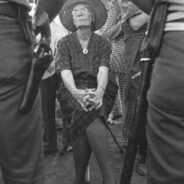
Life didn’t feel like what Dorothy felt it should. It felt like there was something missing–something askew–and that she was constantly and consistently on the verge of true happiness but never breaking through. It felt like happiness should be such a natural thing but that it still eluded her. As a child, she had been baptized Episcopalian but had never really been a part of the Church. As she aged, she became concerned with the plight of the poverty stricken and disenfranchised. Seeing the oppression of the people that surrounded her struck her with a vague desperation but watching churches ignore this same issue only further convinced her of the irrelevance of most Christians. So, she sought change and had left the Church behind because the Church was leaving her and her concerns behind.
Yet, something felt different as she sat alone in her apartment. Her boyfriend wasn’t around and she was pondering something she hadn’t yet told him: she was pregnant. Dorothy was pregnant and her boyfriend was the father. She enjoyed her bohemian life but was aware that a child might change things. Yet, in spite of all of the looming change she was quietly and powerfully happy. She later described the feeling as being “natural happiness.” This happiness combined with an increasing realization that her life wasn’t a solution to poverty so much as a desperate reaction to the Church’s inattention effected a conversion within her. Soon, she realized that though she had been running away from God she had been running toward God because God had promised the Kingdom to the poor and the outcast. She decided to have her baby baptized into the Roman Catholic church and followed along with her child in 1927.
Yet, she was still uncomfortable with the Church’s inattention to the plight of the poor and the causes of social justice. A self-proclaimed anarchist and pacifist, Dorothy was unafraid to break down existing structures that no longer served any beneficial purpose and it became clear that Dorothy would not sit by and watch the Church protect itself at the cost of the lives of the needy and its own damnation. She prayed that she might do something about it instead of simply talking about it and in 1932, she met Peter Maurin. Peter gave her the idea she needed to get started about the business of changing the Church and the world. Soon, Dorothy was publishing a newspaper entitled The Catholic Worker that connected the people of the Church to the people of the Kingdom. She opened up the Catholic Worker offices as a house of hospitality to provide shelter and food for the poor. She committed herself to vows of poverty, obedience, and chastity but never became a nun or took a position in the Church.
 She remained active in protesting wars and acts of vast inattention and ignoranceconcerning the needy and outcast.She was investigated by the FBI and CIA as a spy and a revolutionary. Though her citizenship was truly in another Kingdom, she was not promoting insurrection anywhere except in the souls of the people whose hearts had been hardened to the cries of the needy. She was shot at, threatened, and assaulted because of her radical stance of peace and love as superior to vengeance and control. She actively resisted people who tried to insist that it was possible for her to do great things but impossible for them.In a very real way, Dorothy called everybody she met to live a life worthy of the Gospel and the cross of her Lord.Though she had rejected the Church as a youth because of its inattention to the poor, she spent the majority of her life (all the way until November 29, 1980) reforming the Church she loved to care for the people she loved.
Taking Risks

Matthew 25:14-30
Preached Sunday at CAC Friendly Baptist Church
(CAC Friendly is a church made up mostly of children — this manuscript was prepared for a 10-year-old audience — the actual congregation was more youth-aged, so my sermon Sunday morning was more grown-up, but based on the same ideas.)
How many of you like pizza? Have you ever been at a meal where you were told how many pieces you could have? I remember a lot of church events where we were told to “take only 2 slices so that everyone can have some.” Have you been in a situation like that? What would happen if you took an extra piece of pizza? If someone was watching, you might get in trouble – but something else would happen, wouldn’t it? Someone else might leave lunch hungry, because there wasn’t enough pizza.
In our gospel reading today, Jesus is telling a parable – a story. And this story might sound a little funny to us because it keeps using the word “talent.” When we say the word talent today, what do we mean? Something you are good at, right? You might have a talent of singing or of writing or of playing basketball. But a talent meant something else when Jesus told this story – a talent was a coin – it was money. And it was a LOT of money. Think you can guess how much it was? One talent was worth more than a normal person would make after 15 YEARS of work.
Jesus’ story is about a man with a LOT of money. He calls in his three best servants and gives them each talents – HUGE wads of cash – to look after. He gives one servant 5 talents – the amount of money someone would make in over 75 years! To another he gives 2 talents. And to the third guy, he gives one talent. He hands off ALL that money, tells the servants to take care of it and then he leaves!
The first guy immediately goes and “trades” with the money. Maybe he is gambling, maybe he is just buying things and selling them at a higher price. We don’t really know, but he DOUBLES his master’s money – he now has 10 talents.
The second guy did the same thing. He took his two talents and made two more.
The third guy buried the one talent in the ground. Doesn’t that sound funny? But have you ever heard pirate stories of buried treasure? You know, the ones with maps that lead through dangerous places and traps? All to end where “x marks the spot?” Back then, if you had something valuable and didn’t want anything bad to happen to it, you buried it. It sounds funny to us – if I came up to you and said I’d just buried all the money I’d made in the last 15 years, you’d probably laugh at me – and then go try to find it. But if I’d told the people back then, they’d tell me that I’m smart – that I was doing exactly what I should be.
So then the master comes back. He is really proud of the first two guys and gives them even more money to look after. But he gets really angry with the third guy – the one who buried the money. He says “you knew I was a harsh man who reaps where I do not sow and gathers where I did not scatter – in other words, that he was the kind of man who took money that he did not earn – why didn’t you at least try to make a little more?
And then he took the talent from the servant and threw him out into the darkness.
Who is the bad guy in this story? Some people say it is the third servant, calling him lazy. They say that God is the master in the story. But Jesus never says that the master in the story is God – and the master doesn’t sound like the God I know.
Remember how we were talking about pizza earlier? What if instead of pizza, there was only so much money to go around. What if you wanted more than your share of the money? What would that mean? It would mean that someone else wouldn’t have enough money, right?
The master in this story wants more money than is his. He tells the servant that he takes money that he does not earn – and he wants his servants to help get that money. This master is bullying the servants into bullying other people.
Have you ever been asked to do something that you knew wasn’t right? Or maybe no one asked, but everyone else was doing something – maybe picking on someone at school — and you knew that you could either join in on the teasing or everyone else would start talking about you, too? Has that ever happened? I’ll tell you a secret – it happens to grownups, too.
This story tells us we have a tough choice to make. Sometimes when we decide to do the right thing, we are punished for it. Sometimes – like at school with bullies – it can be really lonely to be the one person who does what’s right. But Jesus asks us to do the right thing anyway. He says that our actions can help or hurt other people. The third servant decided to do the right thing even though he knew his master would get angry. Will you be that brave?
Photo Credit
Idea Credit — Dr. David May introduced me to this understanding of the parable.
How To Satisfy Jesus (via the Gospel of Elvis)

I wish I had a nickle for every time God spoke to me through Elvis. Like Elvis’ song “A Little Less Conversation”:
A little less conversation, a little more action please;
All this aggravation ain’t satisfactionin’ me;
A little more bite and a little less bark;
A little less fight and a little more spark;
Close your mouth and open up your heart,and satisfy me.
Sure, on the surface it’s just another Elvis song pleading with a woman for some more active lovin’; but when paired with the Gospels, with repeated teachings of Jesus, and particularly Jesus’ parable of the Sheep and the Goats (see Matthew 25:31-46), it’s just as clearly a song that can be heard as Jesus’ pleading with the Church for some more active… well… lovin’.
Mohandas Gandhi read the Gospels, particularly the Sermon on the Mount, and was forever changed. Jesus is the Way to follow! But you know the rest of the story: Gandhi looked up and saw the British Empire with swords drawn oppressing and exploiting the people and the land of his beloved India, all in the name of Christianity.
Gandhi declared that he, therefore, could not be a Christian.
Novelist Anne Rice not long ago became a Christian; she turned her attention to writing fiction about Jesus’ childhood. Everybody was so excited that the novelist known for her incredibly dark vampire stories had become a Christian … Until about a year ago when she publicly stated that she quit being a Christian, because she’d rather follow Christ.
One cannot help but wonder if Jesus, like Gandhi and Anne Rice, would look around at popular Christianity today and say, “if this is Christianity, then…”
One has to ask of Americanized Christianity, “What Would Jesus Do?”
Imagine Jesus sitting in the wings at one of our big stadium-filled “I’m-a-Christian” prayer celebrations, when a superstar walks up to the microphone and reads from Matthew’s Gospel, chapter 25:
Then the king will say to those on his right hand, “Come you that are blessed by my Father, inherit this great kingdom prepared for you by your founding fathers,
for I was a Christian politician, and you voted for me;
for I was a Christian businessman, and you spent your money at my store to support ‘Kingdom Values’;
I was a cute slogan bumper sticker and you proudly put me on your car;
I was a bill protecting ‘Christian values,’ and you helped to get me enacted into law…
Of course, that’s not what Matthew 25 actually says. It’s about feeding the hungry, welcoming the stranger, caring for the sick, visiting the prisoner – about anytime we do anything for “the least of these” we are serving Jesus Himself; and when we don’t do anything for “the least of these” we’re also walking away from Jesus Himself.
We all know the great song, “They will know we are Christians by our love.” We’ve been taught in our churches, though, that what that really means is “They will know we are Christians by our loud proclamations.”
A Christian athlete recently shared his testimony with a group of Christian students. The athlete spoke of hard decisions he has had to make as a Christian. He spoke sincerely of tough decisions which tested his commitment to his Christian faith.
The athlete talked about his friend who, after some struggling, decided she was not a heterosexual. The athlete wondered what he should do; he remembered the story of Jonah – how when Jonah was running from God and was on the ship, the crew of the ship threw Jonah overboard. Thus, the athlete shared that it was his Christian duty to “throw” his friend “overboard” … meaning he couldn’t be her friend anymore based on her sexuality.
The Christian culture we live in teaches us how to talk a lot about Jesus, yet it has hardly anything to do with helping us learn how to love like Jesus. Would Jesus throw someone overboard? Of course not! Our churches, though, teach us how to throw all kinds of people overboard everyday.
It doesn’t take long to conclude that if Jesus stood here today, He might well say “If this is Christianity, then I am NOT a Christian.”
When it comes to a Christ-like message, very much in keeping with the Sheep and the Goats, few things can match the simple message of Elvis’ hit, “A Little Less Conversation.”
Want to serve Jesus? Talk less; love more. Close your mouths and open up your hearts.
“Satisfy me, Baby!”
The Words of our Lord (paraphrased by Elvis). Thanks be to God.
Preparing for Advent: Journeying with the Magi (excerpt)

Editor’s note: the following is an excerpt from the introduction to the just-released FaithLab ebook: Finding Our Way with the Magi: A Daily Guide Through the Season of Advent.
In America, as soon as merchants take Halloween merchandise from the shelves, they begin putting up the first signs of Christmas, nearly two full months before Christmas Day. You can’t fault them for getting such an early start. Sales in October, November, and December can account for as much as half of their yearly sales.
By and large, Americans have bought into the idea that Christmas is about giving and receiving gifts. Should we give credit or blame to the astrologers who followed the star to the place where Jesus was born for starting this Christmas tradition? After all, they came bearing gifts of gold, frankincense, and myrrh on that first Christmas.
While gift giving is a joyous practice, some have made this the central part of the holiday season. We can’t find the baby wrapped in swaddling clothes because He is buried under a mountain of wrapping paper, bows, and ribbons that lie beneath hundreds of shining lights, which we hang on our trees and in our homes.
In the midst of all the gift giving, decorating, and other Christmas festivities, if we do not intentionally focus on our relationship with Jesus during the days leading up to Christmas, we will fail to allow the One whom the season is all about to cast any light on our lives. Consequently, darkness will crowd out any real joy, peace, love, and hope that we might give or receive. Most of us will hang lights to decorate during the holidays, but more importantly, we need a Light to shine in the darkness of our lives to help us find our way through Advent.
Unfortunately, too many people move through these days before Christmas, called Advent, to Christmas Day and beyond, and find that the season feels as artificial as the trees they place in their homes. Like clowns, many people paint on their smiles. Many go from party to party looking for an escape to numb their feelings of loneliness and emptiness. They pretend to be happy right through New Year’s Day.
Finally, when the holidays are over, they peel off their fake smiles and awake to the realities of huge credit card debt, empty houses, trees they have no desire to take down, but no desire to leave up, and the beginning of what feels like depression. Some even think they hate the holidays and are grateful for one thing—that the holidays come only once a year. Isn’t there something we can do to prevent such a thing from happening?
Even if the above doesn’t describe you totally, many of you have experienced enough of the holiday blues to know that the season brings its own set of challenges in the midst of its promised good cheer.
We are all on a journey, just like Joseph and Mary so long ago. We all have plans, but our plans get interrupted; they can change in an instant, for good or bad. The couple didn’t plan on making a trip to Bethlehem in the ninth month of Mary’s pregnancy. Thanks to Caesar Augustus, Joseph had no choice but to travel back to his hometown to be counted for tax purposes. They didn’t plan on there being no room in the inn. With no way to call ahead for reservations, there was no way to plan for Mary to have a comfortable place to bed, as her labor pains increased, and the intervals between labor pains shortened.
We all know what it’s like for plans to suddenly change. All it takes is for one of our kids to fall down the steps and break a tooth, and our morning is spent at the dentist’s office, instead of visiting Santa at the mall. All it takes is for a college daughter to come home for the holidays without an understanding that there are still curfews at home that must be obeyed. Otherwise, the peace of a holiday evening is filled with worry and anxiety as we wait and wait, far past midnight, for her to arrive home. All it takes is for an ex-spouse to change the day he or she wants the children to visit or for the boss to change his or her mind about the time we can have off from our job.
Life is full of changes we didn’t plan. The Christmas bonus is cut. The store that promised the special gift you had ordered for your child called and said it wasn’t coming after all. The spouse who promised he or she wouldn’t drink during the holidays is not only drinking, but is drinking more than usual. The receptionist called from the doctor’s office and said the biopsy was positive, and they need to schedule you for a follow-up appointment to discuss the next step. Plans get changed, and life can be turned upside down in a heartbeat. This Advent, at some point, your plans will get changed, too. It may not be life changing, but one never knows.
Of course, plans can also change for the better. We don’t tend to think a lot about these times because we absorb them into life like a hummingbird joyfully sucking sugar water from a feeder. Most of us don’t stop often enough to flag these God-given times and give thanks: an unexpected Christmas bonus, friends who call and offer to keep your children so that you and your spouse can enjoy a night together, a child or grandchild who hops in your lap and shows love to you without any coercion on your part. It’s those blind-sided, “I had no choice in the matter” changes that throw us off track and push us to our knees.
We are all on a journey, so we all need a light to shine in the dark places and in the shadows to illuminate our paths. Many people run their lives like a car, with no lights burning, going eighty miles per hour down a dark road. When they hit something, they say, “I didn’t see it coming.” They act surprised.
Others live a more measured, calculated life. Yet not even these people can be prepared for every event of life.
On that first Christmas, those who were living the measured, calculated lives were the Magi. They had studied the stars, and all their indications pointed them toward the birth of a Savior, so they came looking for the Christ Child to worship Him. They came bearing gifts. They weren’t caught up in anything materialistic. Their gifts were genuine expressions of adoration. Unlike much of our gift giving, they weren’t looking to receive anything in return other than the satisfaction of worshiping a child their signs indicated would grow to become a world ruler.
The journey was long. In the year 8 BC, Cuneiform tablets from Sippar in Babylonia revealed the foretelling of the rare conjunction of Jupiter and Saturn that would occur the next year, a phenomenon that happens only once in 794 years. To the men of antiquity, this aligning of the planets had a special meaning. The planet Jupiter represented a world ruler while Saturn was considered the star of Palestine. The astrologers saw this as a sign that a world ruler would be born the next year in Palestine. Thus, they showed up in 7 BC in Jerusalem, just down the road from Bethlehem, looking for the birth of this king.1 (Scholars debate the exact date of Jesus’ birth.)
The journey likely took a month, maybe two. That meant it would have taken that long to return. Think of the sacrifices and planning that went into making the long, risky journey, just to worship, just to see this child, just to bring Him and His family gifts.
While we cannot prepare for every situation that has the potential to harm us, we can learn to stop being our own worst enemies. We can identify some of the “fast driving at night with no headlights” kind of living and eliminate those times in our lives. Secondly, we can learn to be intentional with the Light and shine Christ in the areas of our lives where we need to see the path with more clarity.
If we are going to find our way through Advent, we need the intentionality of the astrologers, who journeyed to worship the newborn King. How do we become more like the astrologers, whom we meet in Matthew’s gospel, the “Magi” as they are often called?
It’s not much of a stretch to imagine that the Magi must have spent many months, perhaps even a year in prayer, planning, and preparation for a trip that would take a couple of months across various terrain in unpredictable weather. Remember, they didn’t have a global positioning system. As men of faith, they probably began their trip by asking for God’s guidance. If so, they had the best model G.P.S. (God’s Positioning System) to help put their plans and preparation into action. We do know that God came to them in a dream, warning them not to return to Herod as they had planned.
We are also in need of God’s Positioning System. Advent is filled with planning and preparation of meals, trips, purchasing and exchanging gifts, parties, socials, and visits to see Santa. With all the demands of our time, the One in the center of the manger scene gets pushed further and further out of our picture so that the birthday for Jesus is more of a Christmas mourning than a Christmas morning for Him. He mourns that we’ve lost Him in the midst of it all.
Advent is a season designed to change that. It is a time of preparation for Christmas Day. Advent means “coming” or “arriving.” It’s a countdown of sorts to the birthday of Jesus. It’s an opportunity to reflect on the coming of Jesus in Bethlehem, the coming of Jesus in our everyday lives, and the promise of Jesus’ Second Coming.
There is no doubt that America has begun to crumble under her own weight of greed and self-indulgence. We are a country where self-sacrifice is becoming a laughable concept, and every person for himself or herself is the norm. We are the country where the executive often gets the golden parachute while the employee who’s worked for the company for twenty-six years gets the shaft. We are becoming a nation of greedy people who care only about self-preservation.
We have allowed greed to become so widespread that our financial institutions are crumbling around us to the point that the foundations of our society have been threatened. While our nation has focused military power on those countries that can attack us from without, the cancers of greed and unethical practices have been growing from within.
Consequently, companies have collapsed, driving down the stock market. Our prisons are running out of room to house inmates. Families are falling apart, and children find pleasure and attention in all the wrong places. The bar for dignity and decency has been lowered so low that we are no longer shocked; we seem to be headed for disaster.
However, there is one thing greater than all the evils of humanity; it is the hope of humanity, the hope that the greatest of evil minds and intentions of evil can be overcome by the hope and love of men and women, boys and girls, who refuse to allow circumstances of hardship and suffering to overwhelm their lives and steal all their joy. The suffering and hardship can be overcome only through the Advent of Christ.
What lies ahead for our world in the next decade? More suffering. I’m sure of it. But to the extent that we become like the Magi, there is hope. To the extent that we plan and prepare for the Advent of Jesus, we can find peace. To the extent that we begin a journey where our paths cross His path, there will be joy. To the extent that we put into action the changes our encounter with this Holy One of God has had on our lives, love will abound, true love can be known, and the world can be changed.
Begin your own journey with the Magi this Advent. Find the ebook of the devotional guide here.
John Michael Helms is the senior pastor of the First Baptist Church of Jefferson, Georgia, and the author of numerous books, including the just-released Finding Our Way with the Magi: A Daily Guide Through the Season of Advent.
Running for a Reason


Editor’s note: Our own Jim Dant is running in the Leukemia & Lymphoma Society ‘s Team In Training program, and is working to meet a fund-raising goal. If you can help, please do!
———–
Happy Thanksgiving!
And with that said, allow me to say – THANK YOU! THANK YOU! THANK YOU!
to each of you who have donated to my fundraising efforts with The Leukemia & Lymphoma Society ‘s Team In Training program! I’m 2/3 of the way to my goal of $3450!!!! THANK YOU!
Some of you have asked if I participate in this program because I have a family member who suffers from this disease. The answer is – no. No one in my family suffers from blood related cancers. I run and fundraise for friends who have the disease…and….in gratitude that no one in my family suffers from the disease. Thanksgiving isn’t a bad motivation!
So…whether you’re supporting someone in your family who has the disease or you’re just thankful your family has avoided this particular struggle….either circumstance is a great reason to give.
If you planned to send a donation my way but juuuuuuust forgot, here’s the website where you can make a quick, safe, tax deductable donation….
http://pages.teamintraining.org/vtnt/anttry12/jimdant
I’m thanking you ahead of time for your generous gift!
Again, thank you,
Jim Dant
The Dead and the Living Together

When I committed my life to the ministry, no one told me there would be so many funerals. Some days, it seems that the majority of the folks to whom I’ve provided ministry have died. Rumor has it that those who haven’t, will. I’m even beginning to suspect that I may someday be among the dead rather than the living.
There are so many deaths that most of us who are not dead spend at least part of our time thinking and wondering about those who are. Where are they? How are they? Will I see them again? Many to whom I minister assume because I am the pastor that I will have answers to their questions about life beyond; and all who ask are hoping that I will have the answer they want to hear—the one upon which they’ve chosen to hang their hope.
I disappoint a lot people. I don’t have many answers . . . at least not the answers that many want. What I have is faith. By faith, I believe this life and this world is not all there is. Jesus, upon whom I have staked my life, said there was more in the Father’s house. He promised his disciples he would prepare a place for them and come again in order to take them there. Long before Jesus, there were those who held that there was life after death. I’ve joined their numbers. I just don’t know what it will be like.
I don’t know what life beyond—what heaven—will be like, and I don’t care. I am thoroughly enjoying my life on earth. I look around me and in spite of all we humans have done to mar God’s creation, I see evidence of God. God’s beauty of creation emerges even from the scarred soil of a strip mine and from the ashes of a forest fire. I don’t worry about what heaven will be like because a God who can create the beauty I see around me and who can give me the life I am enjoying can be trusted with the hereafter.
However, life after death is not just about heaven. This I know. So many of the people I’ve known who have died keep hanging around. No, I’m not speaking of ghosts. My maternal great grandparents, who died in my childhood, my grandparents, both my father and Donna’s father, and a host of friends have all died. They are gone, but they are not. They are part of me. I often see glimpses of them, occasionally in dreams of living color. I look at my hands and see Dad’s (though his were larger), and at my wrists and see Grandpa Knapp’s. I can occasionally hear their voices. In some ways, these folks who have preceded me in death are more vividly present in death than they were in life. In life, our togetherness was limited to our sharing the same space. Now, I can be with them, one at a time or all at the same time.
I would rather have these folks with me as they once were, but their presence as they are gives me a glimpse into eternity and a new meaning to one of the Bible verses I learned as a child:
Wherefore, seeing we also are compassed about with so great a cloud of witnesses, let us lay aside every weight, and the sin which doth so easily best us, and let us run with patience the race that is set before us, Looking unto Jesus, the author and finisher of our faith . . . (Hebrews 12:1-2 KJV).
Formerly, I saw that “cloud of witnesses” as a great photographic gallery of remembrance. That was before so many in that cloud had faces I know. I don’t need a photographic gallery. The writer of Hebrews was correct. I am “compassed about with so great a cloud of witnesses.” The dead are among us. The dead and the living are together now and forever. Thanks be to God!
Soren Kierkegaard, Philosopher, Christian Opponent of Christendom

Soren was born to a wealthy man and his maid in Copenhagen, Denmark in the early 19th century. Soren’s mother had an indubitable effect upon his outlook yet is conspicuously absent from his later writings. Perhaps this is because Soren’s father–Michael–was such an enigmatic and powerful figure.Michael had an incredible impact upon Soren and would enter into his later writings with force and a distinct voice as Soren struggled with the hardest questions he could find armed only with ink and paper. Michael clearly felt that he had lived a life worthy of punishment and fully expected the punishment for his own sins to be visited upon his children. It is likely that he suffered under this feeling for most of his life and remained haunted by it even as his wife and some of his children died before expected. The effect that this had on Soren must not be underestimated and it brought a fierce passion into his writing and analysis. Further, it filled him with an existential dread that likely helped to launch a whole system of philosophical thought.
Soren received an excellent education because of his father’s wealth yet this only happened because it was a sizable inheritance left to him and his family after Michael’s death. As Michael lie dying on his bed, he expressed to Soren that his great wish was that Soren might become a pastor and serve the people of God as a leader and minister. Indeed, Soren felt obligated to acquiesce to his father’s desire and attended school and studied Latin, history, and theology. Yet, it became increasingly clear that God had another calling for Soren. Soren would be a Christian leader but would do so by attacking the Church he alternately loved and despised even as his older brother became a pastor (later, a bishop). Carrying the burdenthat his father had carried, Soren was overwhelmed with angst and confusion brought about by the disparity between the ideal and the real.
He met a beautiful woman named Regine and was immediately struck breathless by her. Apparently, she was attracted to him as well. They courted for some time before Soren enthusiastically proposed to her. She gladly accepted and they began planning a wedding. It seemed that Soren was never as happy as when he was with his beloved Regine. Yet, he was haunted by a feeling that he was unfit for such happiness. The high calling of the ideal made his melancholy even more bitter and he broke off the engagement a little over a year after he proposed. He regretted it for the rest of his life. Soren felt himself unfit for marriage and perhaps unfit for happiness. Consequently, he became so.
Soren’s philosophical career is especially notable. His works have had an inestimable impact upon all of Western philosophy and countless students who become enamored with the ideas he laid out in his meticulously clear writing. His devotion to “what should be” in the face of “what is” constantly drew his vision upward and he guided countless others to look skyward as they considered calling and the way things should be. He sparred with the likes of Hegel and Socrates with little fear but much trepidation. His work was appreciated in his lifetime and his thoughts laid the groundwork for all of existential psychology.
Soren was a vocal critic of Christendom as the end of his life approached. It was not Christianity that he lampooned with his pen but churches that operated as morgues and social clubs. His fury with the Danish State Church can be felt fresh and hot as one reads over his critiques and outrage. He insisted that there was no value in community if the individuals were dehumanized. In other words, simple communion of faceless people was worthless. Rather, community found value in uniting the separate and different without stripping them of their uniqueness. Soren cringed at the thought of a Church that expected everyone to look the same and sound the same. Soren saw this for what it was–conversion to another gospel and conversion away from Jesus who proclaimed release for captives and sight for the blind. An indifferent group of people was no community but, rather, a collection of those who had turned over their selves to escape their dread and anxiety. As Soren lanced his opponents, he lanced himself. He was painfully aware of his own dread and melancholy and the burden it was to him. Yet, he continued to push forward and look upward for “that which should be” instead of settling for “that which is” and mediocrity of spirit.
Soren died in 1855 and was buried by the Church he had opposed and railed against.
Read more from Joshua at his personal website and the website of Grace and Main Fellowship, the non-traditional community he ministers with.
Moving Toward God

A wind from G-D sweeping over the water.
From G-d.
To reach what we seek,
What we long for,
Hunger for,
Thirst,
We move against the wind.
But,
If we did not partake of G-D
We would not be moved by that same wind,
Breathed into our nostrils.
We would not long.
A stone,
A dead thing,
Is not moved by wind.
Only because we are more than stone,
Than dirt
Are we moved,
Do we ache.
As a ship that must move forward,
We tack,
We move off to the right
We move to the left,
And return again.
Sabbath after Sabbath,
Festival after festival,
We move,
Move forward.
Not in a circle,
But in a pattern,
A path that moves us closer,
Closer to the MOST HIGH.
G-d said, “Let there be light”
Seeking light, we move against the wind.
A wind that,
Mysteriously,
Moves us forward.
Dinner With Paul
I like having dinner with friends. The menu is immaterial, though a tasty meal well-served is nice. The best part of dinner with friends is the conversation. No matter how often I share dinner with a friend or friends, there is always something new to learn and share; and there is, of course, the joy of revisiting a shared past.
I recently decided to mix things up a bit and invite the Apostle Paul to dinner. Yes, the Apostle Paul who wrote nearly half the New Testament. I wasn’t sure he would come. After all, he’s an Apostle and I’m just a local pastor of a relatively small church in a small town. But, nothing ventured, nothing gained. So, I asked. He accepted.
There was the usual small talk, but by the time dessert was served, I was ready to get down to the real stuff. “Tell me about the Damascus Road experience.” (Dear Reader, you can find the story in the Bible, Book of Acts, chapter 9.)
“There isn’t much to tell other than what I’ve written. You have read that, haven’t you?” Paul asked with a mischievous twinkle in his eye.
“Yes, I’ve read that, but I mean . . . did it happen like that, really? The light, the voice? That’s pretty dramatic stuff.”
“I wouldn’t have written that it happened that way if it hadn’t.” Paul didn’t seem to be warming up to this conversation as quickly as I had hoped. I was about to change the topic, when he added. “I was on my way to Damascus to arrest and silence those noisy Christians. They and their new faith were causing quite an upset. I’d been about the persecution business for some time. As for what happened, I can’t testify to what anyone else saw or heard, but the light blinded me and the voice was the most real thing I’d ever heard. I thought I was about to die . . . that this Jesus I had been persecuting was going to take me out.”
“Did you already have an idea that the persecution of Christians was not a good idea?”
“No! I thought it was the right thing to do. My faith had always been important, and from my perspective and that of many like me, Jesus had been just another troublemaker. When you find yourself dealing with troublemakers, particularly those who are spreading heretical teachings, it’s the wise person who acts to silence them. I saw what I was doing as pleasing to God.”
“Pleasing to God . . . killing people?” I mused.
“It’s seems odd to me, too, now, but it didn’t then.” Paul paused pensively a moment, taking a bite of his peanut butter pie, and seeming to think. “The truth is that ever since we stoned the deacon named Stephen, I had been struggling with my work. That man shook me to my very foundation. Stoning is mean business and we had plenty of folks willing to pick up the largest, most jagged rocks they could find and hurl them at the man. He was bleeding all over. He prayed that God would receive his spirit and then he fell. I remember thinking that it was finally over, but he wasn’t finished. From his knees, with the voice of a healthy man he cried out, ‘Lord, do not hold this sin against them’ (see Acts 7:60). At the time, I thought it was just the cry of man delirious from his pain. As the days passed, I began to wonder
“Paul, as I’ve read those accounts in Acts, I’ve often wondered if Stephen’s prayer may have played a role in the experience you had on the Damascus Road.”
“When the light blinded me and I heard that voice, I wasn’t thinking about Stephen. I had never believed the stories about Jesus; I had never seen or heard him; but the moment that voice spoke, I knew who it was. I knew, and I figured it was the end of the road for me.”
“But Stephen’s prayer had to have had some affect on you. Surely!” I’m not sure I believed that, but I hated to have my theory break down. I had often used Stephen’s prayer and its influence on Paul often to illustrate the importance of our saying and doing the right thing. I really didn’t want to have to give that up. Some things are just too good not to be true.
“Oh, I’m sure it did—both his words and the look on his face. Dying in agony, the man looked to be at perfect peace with himself and with us. It was a powerful witness to a faith that made no sense to me. As to how his prayer changed me, it bugged me. I could push it away for a while, but it—the face and the words—kept popping back to the front of my mind.”
“Well, the faith certainly makes sense to you now. What changed that?” I asked to keep the conversation going.
Paul’s response was a bit sharp. “You are a preacher, right? Also a Christian, I presume?”
“Well, yes to both,” I blurted out, “but . . . .”
“But you want to hear it from me. Okay. The Christian faith makes sense to me because I met Jesus. I didn’t meet him like Peter and John and the rest of those early apostles met him, but I met him. I knew who he was and he knew who I was. Don’t ask me to explain how I knew. I just did.” Paul paused, tears filling his eyes before continuing. “Pretty amazing, isn’t it? He knew me and knew what I was and he wanted to save me, not kill me. I’m stilled awed by that.”
“Well, Paul, it is amazing, and just as amazing is the kind of follower of Jesus you became. I just hope I can become that kind of follower
“If you want to be follower like me, all you have to do is do what I did—sell out to Jesus. Obey him, take up your cross, and follow where he leads. Oh, and you will have to stop worrying about what it will cost. He told you—your life.”
I had other things I wanted to talk about, but it just didn’t seem like the right time. Besides, I needed to digest that last response. It’s one of the things about Jesus that I sometimes try to forget.
Maybe Paul will come for another dinner.
Teresa of Avila, Mystic, Nun, Doctor of the Church

Teresa was brought up as a Christian by parents who were converts from Judaism.They had worked hard to assimilate into Spanish Christian culture because of her paternal grandfather’s condemnation as a denier of the faith and one who returned to Judaism.Teresa found great comfort and inspiration in the stories of the martyrs and greatly desired to imitate their lives. At the age of nineteen, she left her family and joined the local Carmelite monastery as a nun.
Teresa knew sin well. In fact, she spoke about it passionately as a subject she had received divine inspiration on. She described sin in terms of estrangement and alienation from God. Teresa, the one who said “It is love alone that gives worth to all things,” knew that sin was essentially a lack of life-giving love, mercy, and grace. However, Teresa was best known for her ecstatic and mystical moments. She had visions and felt that the way to union with God was through love and through self-abnegation and resignation. She taught first that to find God we must begin by focusing on our own failures with a penitent and contemplative heart. She called this part of the ascent of the soul to God “heart’s devotion.”
The second stage of the ascent of the soul to God through the self is called the “devotion of peace.” In this, God delivers a state of spiritual peace upon the person as they continue to meditate upon love, grace, and mercy knowing that they cannot save themselves but that salvation is assured to those who trust in God. This peace does not mean the destruction of distraction but only that the person is becoming closer to God and being helped along the journey toward God by God’s prevenient grace. Memory, reason, and imagination are still humanly focused.
The third stage of the ascent of the soul to God is called the “devotion of union.” In this state, the reason of the person becomes subsumed by God’s will and the person becomes further united with God and, therefore, less united with sin. As they walk the path of love that leads to God–and God alone–they find that sin has less of a hold on their life. As they give more of themselves over to God, they find that it rests securely in God. In this stage of mystical union with God, the soul begins to rest comfortably in the overwhelming love of God.
 Finally, the soul ascends to the “devotion of ecstasy.” In this place of prayer, the soul divests itself of all that is self and becomes intimately associated with God who is Love. Teresa described this state as being a type of sweet and happy pain. The person is changed and sin is ripped from them as they no longer have a place where it can dwell. Of course, they must again return to the world as we know it but their momentary intimacy with God has fortified them and strengthened their growing faith. In many ways, this was the essence of Teresa’s teaching. There was hope for escape from sin but only in providing less room for it to dwell. Ultimately, sin was only destroyed by the soul’s ascension to God and the incubation of love within the heart.
Read more from Joshua at his personal website and the website of Grace and Main Fellowship, the non-traditional community he ministers with.
Follow Us!