
Dinner Guests

If you could have any person who is living or who has lived as your dinner guest, who would you invite?
For me, that is not as easy a question to answer as I once thought it was. Who would I invite? I might invite Abraham Lincoln. What was it like for this socially awkward country boy to rise from frontier poverty to the Presidency? How would he view his place in history?
. . . or maybe my guest would be Nelson Mandela, the former President of South Africa, who came to that office only after spending decades in prison for his protest against apartheid. What is it that keeps a man’s spirits up when he is denied freedom and normal human contact with family and friends? What keeps one from merely giving in to the circumstances of life and giving up?
. . . but I also would enjoy spending an evening with Andy Griffith, particularly if he brought his guitar and was willing to move to the front porch after dinner. Who knows, we might think about going down to Gomer’s filling station to get a bottle of pop . . . or we might just sit and rest in the cool of the evening.
What about Jesus? Wouldn’t he be a great guest with whom to spend an evening? Maybe; though as I think about the dinners at which he was a guest, I recall that more often than not he made his hosts uncomfortable and, I suspect, more than a few of the other guests.
The truth is that any one of these might-be guests could cause me to be uncomfortable. Lincoln might remind me that the price of union is the willingness to tolerate difference while assuring all people freedom no matter what their race, culture, or religion.
Mandela might well challenge me to discover that inner peace is not determined by outward circumstances but by the causes to which one gives one’s life.
Dear, gentle Andy might dare to suggest that community means putting people first and that doing so sometimes means bending rules, being true to the troublesome folk who are part of the community, and finding goodness in the smelly town drunk.
I can’t have dinner with Lincoln and it’s very unlikely that Andy or Nelson Mandela will be sitting down to a meal at our house. Jesus does eat here—each and every day. Each and every day, he makes me uncomfortable. I’m sometimes tempted to disinvite him; but, while I sometimes try to ignore him, I never tell him to leave. Am I masochistic?
No, I am hope-filled. If I eat and walk with him long enough, it may be that I will walk more like him and that those at my table will be those whom he would welcome to His.
Ah, that may make me the source of someone else’s discomfort.
Umm! If there were more uncomfortable Jesus-followers, might the world be more comfortable?
Help for Haitians
The terrible earthquake that devastated Haiti may have slipped from the front pages of newspapers, but the real needs of the people continue. Many congregations continue to find ways to provide food, shelter and medical supplies to the Haitian people.
One congregation is using a video to raise awareness of the ongoing needs of Haiti, and to motivate persons to be part of the caring.
This church could have continued their program of support in Haiti without the video. But using a video to help tell the story of their ministry is smart. Because it is one more way to engage and involve people in these good works.
The video also gives the surrounding community a sense of the nature and values of this particular congregation in middle Georgia. So many times, we leave public perception of the church to those who seek it (usually extremists). While this quiet piety is admirable in its humility, the reality is that congregations must do a better job of telling the stories of their work and ministries. It is a part of defining the church, and of defining the Christian faith to the larger culture.
I applaud the way Lizzie Chapel is using media to raise awareness and support for this critical ministry. What stories should your congregation be telling?
Changing My Mind

People say that I have a mind like a steel trap, and I’m beginning to think that they’re right. It’s impenetrable, can only be worn down by time, and I might hurt myself or others if I use it. Lately, though, I have been encountering things that are changing my mind. For now, I’d like to focus on the way my mind has changed about environmentalism. I grew up in the Boy Scouts, and spent the majority of my formative years camping, fishing, and hiking. Since nature and the outdoors have always been such a significant part of my life, I have always been a proud environmentalist, bending over backwards to be as “green “as possible. Recently, however, I read a book titled Whole Earth Discipline: An Ecopragmatist Manifesto, that convinced me that my “green” ideals, well-intentioned as they were, were hopelessly out of date.
If you’ve not read the book, I highly recommend it. It’s not often that someone can come along and, in a scrupulously apolitical way, argue you into re-thinking things that you thought you had firmly settled in your mind. In my case, i was forced to revisit my thoughts on the environmental effects of large cities; the “danger” of nuclear power; the “population crisis,” and the “threat” of genetically modified crops. 20 years ago, I would have unthinkingly bought into any of these concepts, and, once settled, I was inclined not to truly think about them any more. Being a happy “green,” I had no need to really think about some of the more important issues of the day, and then came this book.
I’ll spare you some of the intimate details, since you really should read this book for yourself, but here are some of the things that I took away from it, For starters, big teeming cities with slum areas are not “bad” in the larger sense, since they are engines of community and innovation that cram a lot of polluters in one place, instead of spreading them out all over the countryside. It’s sort of like the way a huge, smoke-belching bus is not as bad a polluter, since it moves so many people at once, rather than having them all in separate cars. “Population crisis?” What population crisis? In some areas of the world, we don’t have enough people, and birthrates are declining everywhere. “Dangers” of genetic modification? Really? We’ve been doing this for thousands of years and are just now getting worried about it? In reality, every food crop in the world is “unnatural,” growing as they do in cultivated fields. And what of the thousands of people who are condemned to starvation while the “greens” deny them this so-called “frankenfood?” Finally, it’s about time that we admit that global warming is a deadly serious problem, but it’s not new. Human activity has been driving temperatures up for a very long time. We’re just a lot better at it now. In the face of this undeniable danger, we are a LOT better served embracing the still theoretical danger of nuclear energy (especially thorium-based nuclear energy) than the proved danger of pumping megatons of coal-based pollutants into the air.
I’m not saying that your mind has to change, as mine has, on these issues, but I encourage you to read the book and start re-thinking some of the things it talks about. In the midst of all this, I wonder what else we’re missing. Churches are notorious for becoming places that teach “comfortable” theological positions that rarely, if ever, change. Many people come to congregations precisely because they are looking for that kind of comfort and reassurance. But when you look at the big picture, does that attitude really help? Should we not, instead, become places that work to change hearts and minds, including our own? Or should we not think about that, since it’s uncomfortable and messy? How is your mind going to change?
A Way to Walk

Remember when you were a student and had a big paper or project due? Remember hanging out with your friends, or reading that novel, or watching that movie, or playing that game instead of working on the paper? Remember the panicked feeling as the deadline approached and you had not yet started work? Consciously, you knew that you could have had all of the fun, without the uneasy undertone, if you had done the work first. Yet, for one reason or another, you procrastinated until the deadline towered before you to push you into action. Procrastination remains one of my besetting sins.
Remember when you were a kid and there was a toy you really wanted? Or perhaps you were a teen and worked doing chores for neighbors to save for game or piece of equipment you knew would be really fun, but when you got the toy, the game, the special scooter or bike, it turned out to be not so special. Perhaps it ended up gathering dust and you regretted the effort of pleading for a gift or the sweat invested in working to save for the special thing. This is a sadder case than the one of procrastination. In procrastination, there is at least some level of choice-here one is working for a goal one truly thinks will bring a measure of enjoyment of even happiness and one finds that the goal is flawed and a disappointment.
R. Aryeh Kaplan translates the beginning of the 55th chapter of the book of Isaiah from today’s Haftorah as follows:
Say there! Every one who is thirsty, come and drink. He who has no money, come, buy and eat. Come, buy wine and milk without money and without price. Why do you spend your money for that which is not bread, and your labor for that which does not satisfy? Listen carefully to Me, and eat what is good. Let your soul delight in abundance.
This Haftorah is clearly tied into the beginning of the Torah portion in Deuteronomy 11:26: See, I am placing before you a blessing and a curse.
Isaiah is saying to us, in G-D’s Voice, “Listen here, Dweezel, you know what to do. You have a clear choice between blessing and curse. Just follow the rules you have been given and all will be fine. It ain’t that hard!”
There is a problem with that. We are working with old maps. The terrain has changed, there are new roads, old roads have been consumed by forest or waste, and seismic shifts have blocked off formally open land. Time and again, throughout our history, we have had to rework our maps, striven to follow the course that has been laid for us in a world that shifts even as we set our sights on the next goal. Some courses, such as the command to wipe out some other peoples, have become repugnant to us. Much of the time, though we may have a sense of direction, we are stumbling about in that part of the chart marked “here there be dragons.”
Even when we know what we should do we often don’t do it, as in the case with procrastination. We know we should get down to work, but for any number of reasons we delay. We are tired of working, we need a break, we are worried that we will not do the kind of job we want to do, or we just want to have some fun. We may think there will be plenty of time later, only to have the hours slip away or something come up that swallows up that plenty of time and turns it in to a heart pounding race to the deadline.
Worse than this is the case were we think we know what we should do, what the right road is. We work hard, are focused and dedicated. We reach our goal, sometimes after years of work, only to find it is not where we want to be. Think of all those people who seek only wealth to find, even great success, unsatisfying in the end. There is the saying that he with most toys at the end wins and the response that he with the most toys still dies in the end. Don’t get me wrong, we are supposed to enjoy life and material pleasures, but the emphasis on this aspect, sold so vigorously in our consumer society, often finds us with a sense of unease and unfulfillment—a sense of the lurking abyss of meaninglessness that can reach up an grab the wealthy and the poor alike.
The problem is, perhaps, in seeing happiness and meaning lying in some goal out there or up ahead. There is nothing wrong with goals; I frequently set them and work to achieve them. They can give direction and impetus to life. Yet, we are foolish to think, “If only I have this or achieve that I will be happy.” I have no prescription or method for finding the right goals in life. It seems to me that neither does Judaism. We are not selling salvation in this sanctuary. I suggest that the previous analogy of a map is no longer valid, if it ever was.
What we have for sale is a set of rules of the road. Indeed, we are giving them away for free. General rules such as “Love your neighbor as yourself”, “Love the stranger, for you know what it is to be a stranger”, “What is hateful to you, do not do unto others”, “In a place where there are no human beings, strive to be a human”, and specific rules about rituals that help keep us in touch with our people and G-D, rules about eating that keep us mindful about the way we interact with the Earth and the other species living here, rules about rest to help us balance the doing and being in our lives. We are not always rigorous in our adherence to these rules—who has not set that cruise control at 69 mph in a 65 mph zone, or changed the radio station when driving though we have been urged not to. Yet, as the traffic laws, when generally adhered to, keep driving safe and pleasant, these rules of life can help us moving along life’s highway and take pleasure in the journey, even if we do not know where we are going or even why we are traveling at all.
Our driving test is the living of our lives. Every road can be a path of kindness; every highway a trail of justice. It is all in how you choose to drive it. The Hebrew word for Jewish law is halacha, which comes from the root for walking. We are literally offered a way to walk through our lives. Yes, as with the maps we have been offered, some rules may be out dated, need to be changed or reinterpreted, yet, as we wrestle to adapt them to our ever shifting world, they can make the way smoother even when we feel lost in the journey of our lives.
We pray that we have the wisdom to know what our tasks and directions should be in the grand course of our lives. May we have the strength to do what we should do when we discern what it is. Remember, though, even if you do not know where you are going and are unsure of your direction, you can always walk in kindness, always take pleasure in the beauty and joys, no matter how small, that present themselves along the way, you can choose to be a good traveling companion to those who walk beside you, even if it is only for a little while. You will find that the best way to be blessed in your travels is to be a blessing yourself. Good journeys, my friends.
From a sermon given by Seth F. Oppenheimer, student Rabbi at Congregation B’nai Israel in Starkville, MS.
I Want To Sing You a Love Song

Songs have a way of speaking to us in ways that nothing else can. When I’m happy, when I’m sad, when I’m frustrated, when I’m lacking the ability to feel emotion… I turn to music. There have been many nights when I’ve played a single song on repeat – driving family, roommates or neighbors crazy, I’m sure. But there was something about that particular song that resonated, that spoke healing to the dark places of my soul. And so I listened, trying to glean every last ounce of the balm that the combination of notes and poetry offered.
I hardly think I’m alone in that. Movies – even “silent” varieties – are filled with song. Restaurants, shopping malls, dentist offices – even elevators – showcase music designed to put us in a better mood. Many of us are so surrounded by music, that we hardly hear it. Like the movie characters, the songs that surround us are merely part of the action – a soundtrack to our lives.
Isaiah must have known something about music (Isaiah 5:1-7). He doesn’t just speak his message – he sings it. He announces to the crowd, “I have a love song to share” and they gathered in to hear his sweet sentiments. The women gathered were prepared to swoon. The men were hoping to pick up a great line to try out. The skeptics in the crowd were waiting for an opportunity to tease the poor, unfortunate sap.
The song started well enough. Isaiah describes the beloved’s vineyard. While a vineyard might seem a strange image of love to us, it was very familiar to the Israelites. While we sing “you are my sunshine” or “I want to hold your hand,” the Israelites compared their special someones to vineyards. Unless you are a particularly skilled poet, I don’t recommend trying this today. Very few people melt when compared to a viney plant.
Nevertheless, the vineyard that Isaiah sings of is beautiful. The gardener chose the perfect location. The hill overlooks a gorgeous valley. The soil is ideal for planting. The gardener has spent countless hours pulling weeds, removing rocks and tilling the soil. He then purchases the best vines that money can buy and carefully planted them. He built a watchtower so he could keep an eye over the whole vineyard. He was so confident that the vines would produce that he dug out a wine vat to store the wine he would make.
As he sings, Isaiah paints a picture of deep love. This beloved is deeply cared for. In our terms, the lover is prepared to “climb the highest mountains” and “swim the deepest seas” – only, planting a vineyard is actually believable – so perhaps the ancient writers knew something about love songs after all.
Just as we are beginning to really admire this gardener – and perhaps get a bit jealous of the amazing relationship this couple must have – the song turns. “He expected it to yield grapes, but it yielded wild grapes.” The gardener has been so careful – so caring. The result is obvious – vines full of beautiful, sweet grapes. But instead the vines are full of wild grapes – a grape with a large seed and little meat. They are bitter and maybe even rotten.
The object of the beloved’s affection does not return his love. We might understand if the grapes just didn’t grow or if they politely suggested that they had different interests from the gardener and would prefer to be sliced up in a vat of chicken salad. But these grapes – this desired individual – didn’t politely reject affection. Instead, the grapes spit in the face of the caregiver.
This reminds me of Anne Lamott’s latest novel “Imperfect Birds.” The story focuses on two desperately broken individuals – a mother and her teenage drug-addict daughter. The book is heartbreaking and ugly as it describes the girl’s continuous search for her next high, while Mom is beside herself trying to figure out how she can possibly help her daughter. It seems each attempt pushes the daughter farther down the rabbit hole of addiction.
The mother’s heartbreak is evident. Every time she hears a siren, she fears the police are coming to tell her of her daughter’s death. Her attempts at love, at rescue are met with whines and cries and more and more and more destruction.
While this mother is certainly flawed, she continues to love her daughter even when it seems she shouldn’t; even when she feels it is beyond her ability, she loves.
The heartbreak the gardener feels is perhaps similar. He has done everything imagineable to care for his loved one. He tended and tilled and watered – and was careful to provide space for growth. His actions were perfect. His loved one, on the other hand, laughed and spat and ripped out his heart.
He cries out “why? Why has this happened to me? Why did my garden yield such heartbreak?” And, of course, it is an unanswerable question. We don’t understand why a person could respond so harshly to such evident love.
But before we can take up our stakes and go after this horrible person, Isaiah turns the story yet again. God is the gardener, and we are the vile individuals.
At this time in Israel’s history, the nation is in crisis. They are at war – and losing. Israel is on the verge of destruction – and will be, in fact, destroyed. Isaiah is letting the people know that they are responsible for this, that God is leaving them with their desires. And he offers reasons – “he expected justice, but saw bloodshed; righteousness, but heard a cry.”
The Israelites aren’t caring for one another. They have become more concerned with themselves and their own desires and are ignoring the pain and suffering of their brothers and sisters. By giving up on each other, the Israelites showed that they had given up on God.
And lest we believe this is an indictment on some other nation at some other time, let’s examine our own neighborhoods. I tried to research the homeless population in St. Louis. I couldn’t find any actual statistics for the City of St. Louis, but did learn that Gateway Homeless Services served over 1,000 individuals from 400 households in 2009. Think about that: one organization provided housing for more than 400 different families. How many sought help elsewhere – or didn’t find help at all? In parts of our city, people know to stay inside on certain nights because a shooting is scheduled to take place. Young, single mothers work multiple jobs to provide food and shelter for their children. We are surrounded by hurting people. The writer Mary Pipher has suggested that “We have cared more about selling things to our neighbors than we’ve cared for our neighbors. The deck is stacked all wrong and ultimately we will all lose.”
The end of this song makes it seem like all hope is lost. God has given up – walked away from God’s people. But the book of Isaiah doesn’t end here. While the metaphor in the song makes it clear that God has every right to abandon the Israelites – to abandon us… God’s love is too strong. This song isn’t about the God who walks away, but is a wake-up call to a nation that doesn’t recognize what it has. It’s a call to remember the God who has given everything, the God who relentlessly loves a broken, messy, seemingly worthless crop of people; the God who dreams of a restored vineyard – spoken of later in Isaiah 27.
This God is waiting outside the gate, ready to return to the watchtower, continuously singing a new love song. How will God’s people respond? Will we continue to spit in the face of the divine? Or will we begin to see others in our own community the way God does – with love, compassion and a yearning for justice? The planting has been done. The watering and feeding has occurred. Predators have been kept from the garden. What will our vines produce?
Read more from Jennifer at her blog.
The next day, I didn’t buy a gun

My friend Ashley and I were on our way to pick up a family for Monday night dinner when we saw a bunch of teenagers and adults at the next corner, gathered around two kids fighting over a bicycle. As we drove closer, I realized that the shirtless, crying boy clinging to the handlebars was D-man, a skinny 14-year old we’ve known since he was nine, and that the other kid, calmly sitting on the bike and shaking his head, was actually a grown man. In full good neighbor mode, I rolled up and called out, “Yo, D-man, are you OK?”
“He’s taking my bike, Bart!” D-man sobbed back. “I didn’t do nothing, but he’s trying to take my bike!”
Before I could say anything, the young man on the bike cursed him. “You know y’all stole my cousin’s bike, bitch, so I’ma take this one from you,” he said, yanking hard on the handlebars. “Now let…it…go!”
D-man got shaken off, but he chased the bike thief across the street and grabbed on again, wailing over and over, “Pleeease man, don’t take my bike!” Ashley and I followed in the van, but this time I called out to the young man. “Hey come on, give the kid his bike back. You know that’s not right.” I was hoping the scrutiny of two respectable, upright adults might intimidate him into just walking away, but he just sneered at me and shouted, “Stay out of this, man…this ain’t none of yo’ business anyway!”
I hesitated. All around me were hard-looking street corner guys, some laughing at the spectacle, others encouraging a fight. Two of D-man’s young friends were there, too, quietly straddling the fine line between not ditching your buddy and getting your own ass whipped. In a way, I quickly realized, I was straddling that same line, along with poor Ashley, whose only mistake that night was offering to come along for the ride.
Just then, out of nowhere another man appeared, much bigger than the first, his angry face covered with tattoos. “Let it go, bitch!” he shouted, as he walked up behind D-man and brutally cold-cocked him in the side of the head. The boy dropped to the street and lay there, completely motionless. The two men took his bike and disappeared down the street, as D-man’s friends screamed after them, threatening all kinds of violent retribution like a pair of miniature gangsters. I grabbed my cell phone and dialed 911, but before anyone answered Ashley called my name from where she was kneeling beside D-man. “This kid’s really hurt,” she said, “We’ve got to get him out of here.”
As the two of us were lifting D-man off the pavement and into the van, one of the street corner guys moved closer and called out to him. “Hey, little man!” he laughed mockingly, “You better toughen yo’self up, yo.”
Suddenly, I was the angry one. I turned to glare at the guy. “Shut up,” I practically spit at him, contempt dripping from my voice. “He’s just a kid. He doesn’t need to ‘toughen up.’ That guy who hit him was a grown man.” The young drug dealer’s smile disappeared and he looked back at me with dead eyes. “Who you talkin’ to, man? You don’t know me.” I knew I needed to back down, but by that point I’d had more than my fill of ghetto machismo. “You don’t know me either!” I shot back, though I kept moving back towards the driver’s side of the van. He didn’t try to stop me, but he shook his head. “Man, you better watch yo’self. People ‘round here be using guns…” I just drove away.
A few seconds later, Ashley saw a police cruiser turn the corner. We honked and yelled, but the cop kept looking straight ahead as he drove by. We tried to chase him down, but we lost him. I have nothing more to say about that.
In the van, D-man was groggy. When I asked who stole his bike, he told me the guy’s name was Shannon, but when I asked who hit him, he hesitated. “Did I get hit?” He was nauseous, too. I dropped Ashley at dinner and headed straight to the hospital.
On the way, I called D-man’s mom, who immediately reminded me that she’d moved their family out of our neighborhood just a few months before because she’d had enough “ghetto drama.” By the time she met us in the emergency room, however, she already knew the names of the thief, the hitter, the relative who stole the first bike, and the friend who had already retrieved his gun and gone out looking for revenge. To me, she seemed more concerned about street justice than about her son’s concussion, but maybe that was just her way of managing the shock. In any case, I prayed for them, hugged D-man, and left.
On my way back to the neighborhood, I asked the usual questions: Was I stupid to try to intervene? What else could I have done? Did that kid really almost die for a bicycle? Did I almost die for nothing? Would I be safer or better if I carried a gun? What is wrong with these people? What is wrong with me for thinking of them as “these people”?
I finally arrived at dinner just as the other adults were clearing the dishes and getting ready to play games with the kids. Ashley was anxious for an update, of course, so I told her what had happened at the hospital. Then we joined the game, ate our desserts, and went home for the night.
The next day, I didn’t buy a gun. Instead, I went back to that corner, looking for the guy I’d talked back to, hoping he’d let me talk first this time.
Sincerely,
Bart
Bart Campolo is minister at Walnut Hills Fellowship in Cincinnati Ohio. Read this post and others at his blog.
Smoked-up Vision

Have you burned anything lately?
Florida pastor Terry Jones had planned to do some burning on September 11—copies of the Quran; but he changed his mind—more than once. He did create a lot of smoke.
During the same week in Missouri, on U.S. Highway 60 between Dexter and Sikeston, there was an 18-car pile-up. For those of you who don’t know the area, Highway 60 is a four-lane divided highway that runs flat and straight. On even a bad day, it would take a lot of planning to create an 18-car pile-up. According to my mother, a news source I trust, a local farmer decided to burn some trash. The burning trash set the farmer’s corn field on fire. The field bordered the highway. Along came some drivers—some maybe on their way to the Hickory Log, a restaurant my Dad thought to be among the best places to eat in southeast Missouri. They were just minding their own business and doing their own thing, as was the farmer; but his thing created smoke—so much smoke that the drivers couldn’t see the road or each other.
Smoke is like that. It obscures vision, and what one can see through the smoke becomes distorted. Sometimes seeing things distorted can be worse than not seeing at all.
Was Pastor Terry Jones seeking publicity? Some see what he did as nothing more than an effort to get publicity. He certainly succeeded, which makes you wonder if many in the media have not already been affected by smoke. Personally, I believe Pastor Jones acted out of his sincere belief that in the name of Jesus it was time for someone to take a stand. His problem was that he was looking at Jesus through smoked vision.
Somewhere along the way to 9-11, the smoke cleared for Pastor Jones. He has now stated that he will not burn the Quran, “now or ever.” That good news; except that there is still smoke out there. According to another news report, his statement was “now is not the time,” which leaves me wondering when next we may hear from Pastor Jones or another like him.
All this talk about burning and smoke has gotten me to thinking about the church. The more I read the New Testament, particularly the Gospels, the more convinced I am that the church is lost in a smoke that is the consequence of fires it has set. We have lost sight of who we are and of what our purpose is. We’ve turned our churches into clubs where the saved can sing their songs, rehearse and tell their stories, lose their excess weight, build up those abs, and be entertained. We’ve turned inward and forgotten that he whom we claim to follow came not to condemn the world but that the world through him might be saved. We’ve installed lights in our sanctuaries and locked the world out, forgetting that the call of Jesus is for us to carry the light into the darkness.
I would like to be a faithful follower of Jesus. I confess the idea of wanting to be so frightens me. The cost seems high which leads me think that it would be less costly to stay inside; but that may be because I still have smoke in my eyes.
By the way, I didn’t burn a Quran this week. I had the novel idea to buy one and begin reading it.
Hurricane Katrina Recollections: Terry Gamble
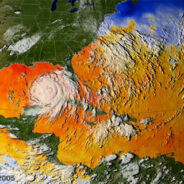
Since last fall (2009) Bert Montgomery, a native of New Orleans and the River Parishes, has been collecting stories from his childhood friends, high school classmates, neighbors and church family about their experiences during and after Hurricane Katrina. FaithLab is working with Bert to produce a book (in both traditional print and e-book formats) and an interactive website to honor his friends and their experiences.Throughout this fall – five years after Katrina – FaithLab will be posting excerpts leading up to the book’s publication. This is the first of several to come…
The first time I met Terry, I remember him telling me, “last name, ‘Gamble,’ like ….” and he pretended to roll and toss dice. Terry was a junior at Destrehan High when I started there as a sophomore; he was quite a good lead trumpet in the marching, jazz and concert bands. By the time he was graduating, he was also playing bass guitar in a heavy-metal band – big hair, spandex and the works.
Terry moved from Kenner to St. Rose when he was thirteen. He lived in and around the River Parishes and the New Orleans area all of his life, until Katrina hit. After Katrina, he lived in Missouri for two years; he now lives in Alabama.
Tell me about the week leading up to Hurricane Katrina: What were you hearing on the news and from neighbors? What were your initial thoughts? Did you initially plan to evacuate? Why or why not?
I worked at a printing company on Jefferson Highway in New Orleans. We watched the news that Friday, and Katrina was supposed to hit Pensacola. We did the usual thing before a storm: put stuff on top of our desks and got equipment off the ground in case we got a lot of rain and it flooded. We thought we’d just be back at work on Monday. We never evacuated for a storm, so it didn’t even cross my mind. Little did I know I would never go back there.
As Katrina approached, and evacuations became mandatory, what were you thinking and feeling, and how did you prepare to leave?
We didn’t leave until Sunday, the day before it hit. My wife was the manager of the Hilton downtown, and her boss wanted to her stay at the hotel for the storm. I didn’t want her to be down there. We fought about it; her family begged her not to go. All of the guests were out of the hotel by then so it didn’t make sense for her to be there. Her boss chewed her out and she cried, but we decided to leave and go to Florida. We left our cat there that we had for about 18 years. Figured we’d go to Florida, hang out on the beach with our two girls, and then be back for work on Monday.
Where did you go, and where did you stay?
We got caught in the traffic, and it took about sixteen hours to get to Jacksonville, Florida. No hotels had rooms until we got to the other side of Florida.
As you watched/heard news reports, what were you thinking/feeling?
Our house was in Slidell – we didn’t have flood insurance because we didn’t need it. We saw on the news that a hotel near our house had water on the second floor. We thought then that we lost everything . . . including our cat.
Were you able to maintain close contact with family/friends, and how long were you away from home?
My parents stayed in St. Rose; we were not able to make contact with them. Even the cell phones were out (after that, my dad’s company made it a policy for them to have cell phones with a 318 area code instead of 504 so they could keep in contact with each other). All the towers were down. We were not allowed to go home for two weeks. We went to my father-in-law’s house in Ozark, Missouri, and stayed there. Actually, we stayed at his neighbors’ house. My father-in-law had thirty (30!) people at his house staying with him from New Orleans. We finally got in touch with my parents, and they made it OK; except they didn’t have any power for a couple of weeks. My mother isn’t in great health, and the heat was not good for her. My brother and his family came with us to Missouri, also. He has two young children. If not for our kids, none of would have left.
In Missouri, we picked up a generator and some food and water to take back to my dad’s . . . there weren’t any generators anywhere around Louisiana. We also got some large fuel containers.
When did you and your family get to return? What was it like driving home?
When we went back to Louisiana, we were really nervous about what we would find; we figured a dead cat for sure. We left the kids at my father in-laws house in Missouri.
There wasn’t ANY gas to be found in northern Louisiana, and we were getting very nervous – so many cars were on the side of the road; probably just ran out of gas. Huge lines at gas stations. We got lucky and found a gas station in LaPlace with one pump that was working – probably because a lot of police and rescue people were staying in some hotels in LaPlace.
My parents in St. Rose were fine. Their house didn’t flood. They even had electricity when we got there. When we went to our house the next day it was strange – like living in a different country. Nothing looked the same; on the way to Slidell there were debris, tree limbs, and cars toppled over everywhere. New Orleans East was unbelievable.
We got to Slidell and the National Guard was there with machine guns checking our IDs. Scary. We had to dodge junk in the streets to get to our house. A cemetery is located a mile or so from our house – there were caskets on side of the street. I suppose they floated away from the cemetery during the storm.
What was the condition of your house when you got there?
You couldn’t even see our house with all the trees down. I left my truck there, and it was fine, no damage at all. Our house didn’t flood; our neighbors, though, had four-feet in their house. We just happened to be situated on a little ridge high enough to avoid the water.
We had trees down, a broken window, and a fence down from a tree falling on it. Other than that, the house was fine. Unbelievable. Our cat was still alive too! I guess she just drank toilet water for two weeks.
What was your work status upon your return?
The company I worked for got flooded really bad. The roof over my office flew off and everything in it was destroyed. My boss was living in Houston and decided to stay there. No telling how long if ever the business would reopen.
The Hilton where my wife worked was looted and damaged. Someone broke into her office, spray painted stuff on the walls, and even took a dump in there.
We looked at the situation, and with two small girls, decided it was best for them to stay in Missouri. We both found jobs there. Everyone there was great and very helpful. The neighbor we stayed with in Missouri let us live there for another six months until we got jobs and found a house to buy. We were able to sell our house in Slidell.
Missouri was nice at first but it wasn’t home. My wife got a job offer in Alabama, so we moved there. At least we were only five hours away from home instead of twelve! The girls managed changing schools and homes remarkably. They miss home, too. They don’t understand why they have to go to school on Mardi Gras and why there aren’t any parades.
© Bert Montgomery, 2010
Welcome

Welcome to the new FaithLab.com! We’ve updated our design to make the site even easier to navigate, and to build a foundation for the new services and products that FaithLab will soon be offering.
Our blog continues to be front and center in the new site. That’s because we believe the sharing of our faith stories is at the core of our mission. We also offer services, such as website development (and coming soon: publishing services) that help you tell your stories of faith (and those of your congregation or organization).
So welcome. We’ll be updating our blog regularly in the days ahead, and will also continue migrating our article archives from the previous FaithLab website.
We hope you enjoy the new FaithLab!
Write Once, Use Everywhere

Ministers, how many of you write an article or letter for your newsletter each week? If you are only sharing it in the printed newsletter, you are missing opportunities to reach persons.
In today’s culture, there is no one way that everyone gets information. Some still prefer the printed newsletter, while others would rather have an email or catch an update in their Facebook or Twitter stream. You’ve taken the effort to write a thoughtful article: why not share it as widely as possible?
The easiest way to share your writing more widely is to make sure your writings are posted on your church website, or a blog you maintain (and you really should have a blog as part of your church website). When you write a new article, also post it to your website/blog. Now, take another 30 seconds and grab the web address for the page containing your new article, and paste it as a link into your Facebook page (or your ministry’s “fan” page, or both), and then post the article title and link to your Twitter feed. When people click on either link, they will be taken to the page on your church website/blog where they can read the article. If your article is particularly interesting to your readers, they may “like” (in Facebook) or re-tweet (in Twitter) your post, thereby opening up your ideas to a whole new audience.
The goal isn’t just to encourage people to read your writing (as nice as that is), but also to bring the church to their minds. While they are visiting your site to read your article, they may also notice another ministry opportunity, or an event to attend.
With just a few extra minutes of effort, your writing has a chance to reach many more persons, and to connect with persons in the midst of their busy week.
Follow Us!