
Teens as Media Creators

Click photo for photo credit
Let’s face it, if you want to know how to solve a computer problem, learn how to use a feature on a smartphone, or how to approach using your church’s Facebook page, you’ll often get the best answers from teenagers. And why not? They were born into a world where these digital goodies already existed, while adults have had to learn and adapt to them.
I often encourage churches to use digital tools to do more storytelling. Our faith is often best shared through stories, and our websites and church events benefit from using photos, music and video to tell these stories.
Yet, many ministers and adults just don’t feel comfortable shooting or assembling a video, or gathering photos into a meaningful presentation, or using a smartphone to capture audio or video. And too often, that’s why we stick to just “telling” people stories. And while that’s better than nothing, visual storytelling is so much more powerful. Would you rather hear a lecture about the culture of Ireland, or see a video of it? Or, when returning from a mission trip, is it more powerful to have people stand at a microphone at talk about it, or to record their stories and place them on images and videos of the trip? One is easier, one is more powerful.
You have a competent production crew sitting in your church, and most of them are under 18.
Teens today make videos for school projects, videos to place on YouTube or Facebook, videos just for fun. They know how to use the tools at their disposal, whether they are video cameras, still cameras, or the recording features on their smartphones. They have the skills, and they have the time.
At our church here in Macon, we have built a tradition of using images and videos to tell stories. For the first several years, various adults (including me) did the heavy lifting. We had videos to kick off and offer updates on building programs, videos celebrating mission trips, videos that celebrate VBS week, videos that supported retreat content, and, of course, the annaul Family Christmas Party video.
Over the last three years, the bulk of the production work has shifted to our teenagers. Adults and youth often shoot photos and video together, but in the end, the teens do the production work of putting it all together. There’s always an adult or two that help offer guidance and suggestions, but the truth is that this oversight is needed less and less. And the videos keep getting better.
Maybe our youth are unique in having these skills (they are certainly gifted!), but I don’t think so. I’ll bet that there are budding photographers and videographers in your youth group too. With a little encouragement and guidance, they can show real gifts and leadership by helping tell the stories of your congregation.
Photo Tip: Catch Those Autumn Skies

Photo by FaithLab
Autumn is one of the best seasons in which to take outdoor photos. Sure, the leaves can be colorful, and the temperatures are comfortable, but the real reason is over your head… literally.
Go look outside (but be sure to come back). If you can see sky, it’s probably a rich, deep blue. Unless you pay attention to the sky all year, you may not realize just how blue the sky can be during the Fall. In the summer, we tend to spend more time outside, and because of that, cameras stay busy. But if you watch the summer sky, you’ll notice that the sky can often be grey, or a pale blue. Deep blue skys are much more appealing than the grey ones, especially in photos.
The culprit is humidity. Autumn tends to bring cooler temperatures and lower humidity (especially for southern states). When there’s less moisture in the air, the blue color of the sky is intensified. If you want the richest color, be sure to use a polarizing filter. It will help saturate the color of the sky, making your photos even stronger.
So, keep your camera handy during the Fall events with your congregation… this deep blue sky won’t last forever.
Want to learn more? Check out this article.
Live-Blogging a Mission Trip

Photo by FaithLab
Each summer my congregation engages in direct missions work. Sometimes the focus is in our city, while at other times we travel to other parts of the USA or the world. Not everyone can participate in these efforts, although many are interested. When these trips are completed, we always have a service where stories and photos can be shared from the journey. It always struck me that there was always so much more that had happened than could be shared during the service. Why not use new tech tools to help share more of the story?
In 2009, I traveled to Boston with our youth group to participate in a Passport missions camp. The camp format involves youth in a variety of missions projects in the area, as well as Bible study, worship and recreation.
Before the trip, I chatted with our youth minister about the idea of my live-blogging the event. It would allow parents and interested church members to connect with the mission trip through viewing regular posts of notes, photos and info about what was happening each day. He thought it was a great idea.
Several days before the trip, we posted the link to the live blog on the church website, and also sent it to all youth families.
Here’s how we did the live blog:
- I set up a new account on Friendfeed for our youth group. Friendfeed is free, and you can set your page to be private (invitation-only) or public. It also provides an easy-to-remember URL for sharing. Friendfeed also makes it easy for readers to post comments to posts. (Update: since the trip, there are new tools, such as Tumblr or Posterous, both free, that do more than Friendfeed).
- I used my iPhone for posting. The iPhone I used was a second generation model, not the newer and faster 3gs or iPhone 4 models. I installed the “Buddyfeed” app ($2.99 on the iTunes store) on the iPhone and configured it for our Friendfeed account. The app makes it easy to post notes and photos to a Friendfeed page. There are similar apps for other smartphones, too.
- Then, from the moment we started the trip, I started posting. There were photos from loading the vans, moving through the airport, and grabbing a bite to eat. I posted “hi mom” greetings from youth throughout the week, along with a photo. At work sites, during recreation, and even during Bible study, I was posting notes and photos from my iPhone. When something noteworthy (Emma won “honor camper” today!) or funny (a seagull just pooped on Burgess’ head!), a photo and note immediately was posted. On average, I posted around 8-15 items per day, scattered throughout the day.
- It was surprising how many parents and church members followed the blog, many leaving comments (“way to go,” “we’re proud of you”) or clicking the “like” button. When we returned from the trip, there was a feeling that a portion of the church had been vicariously enjoying the week along with our youth.
There are other ways to do live-blogging on trips, and the tools are growing in power. For example, the new iPhone also captures video, and allows for basic editing right there on the phone.
In the end, the goal of the live-blogging was to engage all those who had interest in participating in our mission trip. They found meaning (and appreciation of our teens) through the blog, and our youth were blessed through the constant support of those back home.
Missions and ministry generate stories, and those stories have the power to change lives. Live-blogging mission trips is one way to share these powerful stories.
Missions & The Digital Generations
One of the primary purposes of the Faith Lab is to help churches effectively use the powerful communications tools of the internet age. But does the church really need to be good at using these new digital tools?
Let’s come at the issue from a different – and more important direction: missions.
Any missionary worth his or her salt will tell you that one of the first things a missionary must do is learn the language of the culture in which they minister. It allows for real communication, and shows a respect for the indigenous culture.
The reality is that, in American culture, the majority of those in leadership in churches are, at best, “digital immigrants.” We were raised without computers, the internet, iPods and cell phones. We’ve worked to learn how to use these tools (well, most of us have tried), but it’s been a learning process.
But for a growing number of people, they have never know a time without these digital tools. They are truly “digital natives“.
The first generation of “Digital Natives” – children who were born into and raised in the digital world – are coming of age, and soon our world will be reshaped in their image. Our economy, our politics, our culture and even the shape of our family life will be forever transformed. (From Born Digital)
To communicate effectively with these persons, the church needs to speak their language, and show a real respect for their culture.
Do digital tools define these generations? Certainly not. They are flesh and blood people with dreams, flaws, fears, illnesses and souls. They have family, friends, and loves. The grace, support and meaning offered through following Christ is just as valuable to them.
The church doesn’t have to become a geek club, or a nerd haven. Our strength with relationships, support, service and worship are still vital for ministry. The Church’s mission to share the love of Christ hasn’t changed.
But if the church wants to remain relevant to the digital generations, we’re going to have to become a community that learns and speaks their language. What’s the best way to learn a language? Let a resident teach it to you, and practice regularly.
What are ways your congregation is involving digital natives and working to speak their language?
Interview with Oteil Burbridge (part 2)
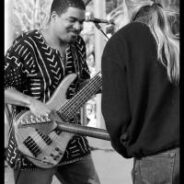
In part two of our interview with Oteil Burbridge, Oteil shares about when he started playing instruments, how reading William Barclay and Abraham Joshua Heschel has guided his journey of faith, what Peter Sellers told him on the set of Sellers’ movie Being There, and his thoughts on African Americans and the Republican Party. Oteil is interviewed by Bert Montgomery.
Click “read more” to hear the audio interview.
To hear part one of the Faith Lab interview with Oteil, click here.
Photo courtesy of Jessica Shouse (www.jessicashousephotography.com)
Of Pea Pods and Hurricanes

Disclaimer: The following musing was composed in September 2005 while I was a student at the Baptist Seminary of Kentucky. It was based on a news report that Pat Robertson publicly declared Hurricane Katrina was God’s judgment upon New Orleans because Ellen DeGeneres is gay. That news report was quickly pulled (but not until after I wrote my thoughts) when it was discovered to be a piece of satire not based on fact. However, as even snopes.com acknowledges, there wasn’t much (if any) exaggeration involved to suggest Pat Robertson would say such a thing (click here to read the snopes.com article).
Just a few short weeks ago my old college friend Renee Sappington and her partner spoke briefly at the Annual United Methodist Conference in Mississippi. They spoke of a particular congregation that has welcomed them, loved them, and helped nurture them in their faith. Understandably, their testimony has created a bit of a stir. While I support dialogue and civil disagreement, and, technically, I “don’t have a dog in this fight,” (I’m a Baptist, not a Methodist, minister) I cannot remain quiet while some openly question the integrity and the faith of a friend.
So, acknowledging that the basis of this musing is actually fictional (Pat Robertson never really said this – but again, see snopes.com link above), I maintain the spirit of this piece and the message I intended to convey are relevant and truthful. Furthermore, this musing represents my journey and viewpoint, and I do not speak for Baptists nor for any particular congregation.
Now then, Renee – how about we grab a cup of coffee sometime?
~ ~ ~ ~ ~ ~ ~ ~ ~ ~
September 2005
The Rev. Pat Robertson and I have a lot in common. We both hail from and still live in the South – I’m from Louisiana and now live in Kentucky; Pat’s from and still lives in Virginia.
We both value higher education – I love classrooms so much I’m working on a second master’s degree; heck, Pat values education so much he owns an institution of higher learning.
I live in a state that races valuable horses; Pat breeds valuable racehorses.
And, as if all of that weren’t enough, Pat Robertson and I are both ordained Baptist ministers. Yep, me and Pat, Pat and me: like two peas from the same pod.
It just so happens that I also have a lot in common with Ellen DeGeneres. Ellen enjoys having her own television shows; I enjoy watching Ellen’s television shows.
Ellen’s brother, Vance DeGeneres, used to be in a rock band called The Cold; I once saw Ellen’s brother, Vance, play with his rock band The Cold.
And, as if TV and rock n’ roll weren’t enough, Ellen DeGeneres and I were both born and raised in the New Orleans area. Yep – me and Ellen, Ellen and me: just like two peas from the same pod.
But then that would make Pat and Ellen from the same pod, too, wouldn’t it?
I read somewhere that Pat blamed Ellen for Hurricane Katrina (say it ain’t so, Pat!). Hmmmm…. I guess it’s a stretch to think that Ellen and Pat share a pea pod.
I wish I could help these peas get together. I wish I could get Ellen to… convince Ellen to… well, Ellen’s not really at fault here as far as I can tell. So I’ve got to address Pat.
Pat, from one Baptist preacher to another, I must say with all due respect, put a lid on it!
You see, I’m worried, Pat. I’m worried about us – two Baptist preachers from the Southland.
I’m worried because I read the Gospels, and it is clear that Jesus saves his judgment for the religious leaders – good, upstanding, righteous folks who feel they are too “good” to love others, too “good” to serve others, too “good” to be friends with others. Jesus saves his words of judgment for those religious folks who are so “good” that they freely pass judgment on others who aren’t “good enough.”
It’s really quite simple, Pat: Jesus has a whole lot to say about money, power, arrogance and self-righteousness, but doggone that Savior of ours, he never says one blasted word about sexual preferences. Not one! Go look it up for yourself.
Yes, I’ve got hang-ups and concerns – we all do. But Pat, I’ve got to take all of this into serious consideration, because, after all, I’m called to be like Jesus. And Jesus spends more time hanging out with, having fun with, living among and loving the real people in the world – people who are not “good enough” by religious leaders’ standards – than he does with religious leaders who have high opinions of themselves. And don’t ever forget, Pat, it’s religious leaders like us who lead the charge to execute our Lord.
Pat, all I’m going by are your public statements, but your declarations seem to me to be pretentious, arrogant and self-righteous. Besides, Pat, with all that wealth you’ve accumulated from your television station, your TV ministry, your books, your horses, and let’s not forget your fascination with political power – well, it’s easy to imagine Jesus having a few choice words for you as he walks off to enjoy a cup of coffee with Ellen.
Pat, I love you my brother, my pod-sharing pea friend, but I’m choosing to follow Jesus on this one. And if I hurry, I might be able to catch up with him and Ellen. I sure hope they have some chicory at that coffee shop…
Interview: Kofi Burbridge
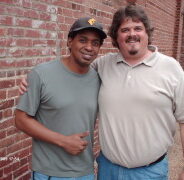
Kofi Burbridge and Bert MontgomeryFaithLab is excited to begin a new project exploring faith, music and spirituality. For our first audio interview, our own Bert Montgomery sat down with Kofi Burbridge, who plays flute, keyboards and organ with the Derek Trucks Band. Kofi shares about musical influences growing up, the themes and spirituality of the Derek Trucks Band, and even a few words about his brother, Oteil, who plays bass with the Allman Brothers Band.
Click “read more” to hear the interview.
Requires Quicktime player. Get Quicktime here.
Dear Richard – Goodbye, Farewell, and Amen (Ode to Richard Delisi)

The first song I heard when I turned on the car radio was “Tunnel,” the Third Day song proclaiming:
There’s a light at the end of this tunnel
Shinin’ bright at the end of this tunnel
For you, for you
So keep holdin’ on
That’s the honest truth.
I just got off the phone with a total stranger; the sister of an old friend and former next-door neighbor of ours. She found some old letters from us, and our phone number, in Richard’s rented duplex and decided she should notify us. Richard, our one-time Memphis neighbor and our friend for about twelve years, committed suicide this week.
I get in the car to pick my up my wife and to inform her of the bad news, and this Third Day song is playing on the radio.
While I normally really like the song, and it speaks to me and other friends of mine who often try to ward off those nasty dementors collectively known as deep depression, all I could say was, “well, that light just didn’t shine quite brightly enough for Richard to hold on any longer.”
Music was essential to Richard – it was ingrained in his soul. And so, it has been music that has been speaking to me (or, haunting me) for the past twenty-four hours since I received the call. Ironically, it has not been Richard’s music, per se. Richard loved simple three-or-four piece jazz ensembles. He played bass guitar. And, he loved the Beatles. When we were next-door neighbors (very CLOSE next door neighbors with only a single-car driveway between our side doors), we could hear Beatles or jazz music playing any time he was home.
But instead, songs about pain, despair, and suicide have been on my mind. Like this one from Simon and Garfunkel (“A Most Peculiar Man”):
He died last Saturday
He turned on the gas and he went to sleep
with the windows closed so he’d never wake up
to his silent world and his tiny room…
That was Richard. In some ways the whole song is Richard. While we knew and loved Richard – he was so gentle, caring, and selfless – he was also a solitary and self-described “lonely” man. And that’s exactly what he did… turned on the gas so he’d never wake up to his lonely and silent world…
Then there’s this one from Kate Campbell:
if the heart is a bottomless pit, you gotta watch what you put in it
how much can one heart hold?
before you know it you’re carrying around, a ton of stuff that’ll weigh you down
how much can one heart hold?
Richard came to see us not quite two weeks ago. We went out to eat and talked about classic movies (he was excited that we’re raising our children on Hitchcock and Jimmy Stewart and Frank Capra). We showed him around Starkville hoping we could help him find a job here, and that he would stay with us until he got back on his feet. But as we talked privately, it was obvious his heart was carrying around so much pain and hurt and rejection… and no matter how much we and another friend tried to help carry his weight, his heart just couldn’t hold any more.
He and I went out for coffee while he was here. After some tears and a lot of despair, something spurred us into a conversation about George Carlin and Richard Pryor. Richard began to laugh. He laughed hard. We shared favorite Carlin and Pryor quotes with each other and spoke of the deep insightfulness of the two comedians. He became animated as he told stories. It was a moment of pure grace.
But it didn’t last very long.
He came on a Friday night and left before we could even buy him lunch on Sunday. There was something about the way he hugged each of us – my wife and me; long, tight hugs, with a very heart-felt expression of “thank you”; and he eased away, looked deep into our eyes, and said, “goodbye.”
I think, then, I knew…
We called our mutual friend in Memphis who was having daily contact with Richard – buying him groceries, inviting him over for dinner, even trying to help him admit himself into a hospital. Our friend, Dan, continued that regular and deeply caring contact for the next week and a half (even calling and leaving Richard a message on his answering machine about a job fair… on the same day Richard’s sister called me).
My family and I have been watching a whole lot of M*A*S*H episodes together, and well, you know where this is going…
The sword of time will pierce our skins
It doesn’t hurt when it begins
But as it works its way on in
The pain grows stronger, watch it grin
Suicide is painless…
I’m at least thankful that for Richard, with all of the pain and sorrow and loneliness that all seemed to grin as they were destroying him, his suicide was painless. He is finally a soul at rest and peace.
And lest anyone express any judgment upon Richard, think about these words from Frederick Buechner, a minister and author: “Taking your own life is not mentioned as a sin in the Bible. There’s no suggestion that it was considered either shameful or cowardly. When, as in the case of Saul and Judas, pain, horror, and despair reach a certain point, suicide is perhaps less a voluntary act than a reflex action. If you’re being burned alive with a loaded pistol in your hand, it’s hard to see how anyone can seriously hold it against you for pulling the trigger.” (Whistling in the Dark: A Doubter’s Dictionary. HarperSanFrancisco, 1993,115-116)
Quicktime required. Get it here.
Interview with Oteil Burbridge (part 1)

 Photo courtesy of Jessica Shouse Photography
Forty years after Duane Allman formed a band with his brother, Gregg, and some friends, the Allman Brothers Band is still going strong. Oteil Burbridge was just a little kid when original bassist, the late Berry Oakley, laid down what is now the legendary opening to “Whipping Post.” For the last twelve years, though, Oteil has been driving the bass line for the Allman Brothers.
(click “read more” to hear the audio interview).
Prior to joining the Allman Brothers Band, Oteil was an original member of the Aquarium Rescue Unit. He has shared the stage with some of the greatest musicians alive today, and in his “free time” he leads his own jazz-funk-gospel group – Oteil and the Peacemakers.
In October, we caught up with Oteil when the Allman Brothers Band pulled into Knoxville, Tennessee. In part one of this two-part interview, Oteil shares his personal faith journey, the importance of music to his spirituality, and the story behind his Oteil and the Peacemakers song “Blue-Eyed Savior.”
To catch Oteil and the Peacemakers doing their song “Thank You,” click here.
To catch Oteil with the Allman Brothers Band playing the classic “Midnight Rider,” click here.
Click here to listen to part two of the interview.
Files, Files and more Files

Click photo for photo credit
Files multiply like rabbits. We create them daily, whether they are word processing docs, PDFs, photos, videos or music files. We make notes to ourselves, store our logins to websites, wifi hotspots and more. Over time, these files just pile up, and they may even become hard to find — or worse, at risk of loss.
I’m writing this near the end of the year, a great time to do some annual clean-up of your file storage, to make sure your back-up strategy is working, and to do better file sharing. This article offers tips for each of these.
Storing and Finding
Disk drives are larger and less expensive than ever before, and truthfully, unless you are shooting a lot of videos, your files take up a very small amount of space. More important is the ability to find what you need.
One time-honored approach is to keep files neatly stored in their appropriate folders. And if you are the neat and organized sort of person, you’re likely already doing this.
However, it still can be hard to find a file (perhaps you look for a file that is over a year old), because you aren’t sure into which folder you placed it. What seemed like an obvious spot a year ago, is now a mystery.
Or, you may be the messy type. Moving fast, you drop files on your desktop with abandon, and then, when the clutter becomes overwhelming, you shove the pile of files into a folder and promise to go look through them later (which seldom comes).
The good news is that search tech has gotten really good, and really fast. Whether you are the organized or the messy sort, powerful file search tools are really handy.
If you are on Mac OS X or Windows 7, you have access to the built-in search tools. (In OS X It’s the little Spotlight magnifying glass in the upper right corner of your screen. In Windows 7, just use the search box in the Start menu). Whatever you type in the box is searched across all file types, and not just the file names, but what’s inside the files too. So if you can’t remember a file name or where you placed it, you can just search for a word (or set of words) that you know are in that file, and boom… it’s found. These work on connected external drives too.
Storing Other Data
All of us generate a ton of login data across time. Logins for websites, licenses for software, logins for wifi hotspots, and on and on. Keeping up with these can be a real chore. Rather than seeing each item of data as an opportunity for a new file, I recommend using a program that’s designed as a catch-all for these bits of info.
There are a lot of good programs out there to help with this task, and most allow you to not only store login and license data, but also webpage content, screenshots, URLs, graphics, recipes, how-to steps, model numbers and pretty much anything else you can think of.
My favorite tool for this is Evernote. Evernote has a free version that’s great for most people, and if you are a heavy user (or want enhanced data security), there’s a very affordable upgrade. Evernote will capture and hold files, text, images, photos, webpages, audio recordings, and more. When you name an entry, you can also tag it. Or, you can be lazy (like me) and just make sure the main words you’d use to later search for this info are somewhere in the note. When you search, Evernote searches the full contents of your notes, and not just the titles or tags. If you have multiple computers, Evernote will keep your notes synced across them. There are also mobile versions for iPhone, iPod Touch, iPad, Android and more. Check it out.
Backup. Backup. Backup.
Any hard drive can fail. Most eventually do. Even the new SSD drives can fail. The only way to prevent data loss when a drive fails, is to have a good backup handy.
Setting up an automatic backup routine is the best way to ensure your data will be protected. There are tons of programs for any OS that will allow you to schedule a regular backup to an external drive. And, external hard drives are really affordable these days.
Laptop users have a harder time with automatic backups than desktop users, since the laptop may or may not end up at the same location each day. In that case, get one of the smaller, more portable drives (some are smaller than a deck of cards) to keep in your laptop bag, and choose at least one day a week to do a backup.
Another approach to backup is to use an online backup option. If you are only wanting to backup files, DropBox is a great option. For larger backups, you can try a service such as Carbonite.
When You Want to Share
In the good old days, sharing files with others usually involved a floppy disk of some sort. Then, flash drives became popular. Or, you could email files.
I’ve become a Dropbox fanatic. That’s because I share a lot of files. Sometimes I share files with others, and sometimes it’s between my desktop, my laptop and my iPad. Dropbox is the easiest and fastest way I’ve found to share files. There’s a free version that will do what most people need, and if you want more space, it’s available for a modest fee.
Here are some ways I use Dropbox:
- I keep all of my current working project folders in Dropbox. This way, it doesn’t matter what computer I’m working on, I can get to the same files. No moving files around or worrying which is the latest version.
- I share files with others. Last week my 16 year old daughter was working on a photo slideshow for church, and she needed some photos from me. Too many to email, and (since I’m lazy) I didn’t want to get off the sofa. So I just dropped the files in a folder called “Photos for Megan,” and shared that folder with her. In minutes, the photos were in her Dropbox folder, and she just dropped them in her slideshow.
- Peace of mind. Because Dropbox keeps a copy of the files both on my computer(s) and on their server, I don’t have to worry about losing those files. If my hard drive crashes, I just pop a new drive in, and login to Dropbox. In minutes, my files are available to me again as if nothing had happened.
Files, files, files. They’re everywhere. But they don’t have to create chaos. I hope some of these tips help you tame your files!
Got your own file tricks and tips or favorite programs? Please share your thoughts in the comments area.
Follow Us!